
Chocolate Ball Mill (Batch Refiner for Chocolate Production)
A chocolate ball mill is a batch wet grinding machine used to refine chocolate mass — a mixture of cocoa liquor, fat, sugar, milk powder, and additives. It reduces particle size through intensive shear and friction generated by continuously agitated steel grinding media inside a water-jacketed vessel. This machine brings chocolate fineness to 18–25 µm, the result set by grinding time, and sits in the chocolate production line after ingredient pre-grinding and pre-mixing, and before conching, storage, or tempering. Model selection is driven by build class first — Compact or Industrial — then by electrical supply within Compact, or cooling configuration within Industrial.
VIDEO I VIDEO IISelection: First Decision — Compact or Industrial
Build class determines the group. Capacity and electrical supply determine the model.
Compact — RBM20 / RBM40 / RBM80 / RBM160. Built-in cooling standard, no external cooling source required. Batch range 30–180 kg. Selecting Compact above 180 kg leaves no model; that demand belongs to Industrial.
Industrial — RBM300 / RBM500 / RBM750 / RBM1000. Cooling is specified at order, not standard; the machine cannot be commissioned without a cooling configuration. Batch range 350–1000 kg. Selecting Industrial below 350 kg oversizes the machine and raises cost and footprint with no benefit; that demand belongs to Compact.
LabBM10 is the R&D / laboratory unit (≤15 kg, 220 V single-phase, external cold-water supply). It is not part of this selection — specify it directly only for recipe development and trials.
Compact Branch: Single-Phase vs. Three-Phase
Single-phase 220 V — RBM20 / RBM40. 60 kg is the batch ceiling for 220 V single-phase. Suitable for pastry shops and small workshops without industrial three-phase. Above 60 kg no single-phase model exists; the requirement moves to three-phase.
Three-phase 380 V — RBM80 / RBM160. Required for batches above 60 kg within the Compact range. If demand exceeds 60 kg and only single-phase is installed, no model runs until the supply is upgraded — a transformer or converter is not specified for these models.
Then match batch size: 30 kg → RBM20, 60 kg → RBM40, 100 kg → RBM80, 180 kg → RBM160. Loading above nominal capacity is not possible. Selecting below your required batch volume undersizes the machine; the line then runs longer per day or needs a second mill to reach the same output.
Industrial Branch: Match Capacity, Then Configure Cooling
Capacity selects the model. 350 kg → RBM300, 500 kg → RBM500, 750 kg → RBM750, 1000 kg → RBM1000. Loading above nominal capacity is not possible. Selecting below your required batch volume undersizes the machine; the line then runs longer per day or needs a second mill to reach the same output.
Then configure cooling for the selected model. Cooling is not standard on Industrial models. One configuration is specified at order. A machine ordered without one cannot be commissioned.
Built-in (factory option). Cooling installed inside the ball mill frame. Built-in fan-cooled water battery or built-in chiller on RBM300; built-in chiller on RBM500 and above. No external piping required.
External (factory option). Brazed plate heat exchanger installed as the water-jacket interface; the customer connects an external cold-water source on the facility side. The source must be in place before delivery. Suits facilities with existing cold water or shared cooling between machines.
Cooling specifics by model are in the comparison table and the FAQ.
Share
 LabBM10
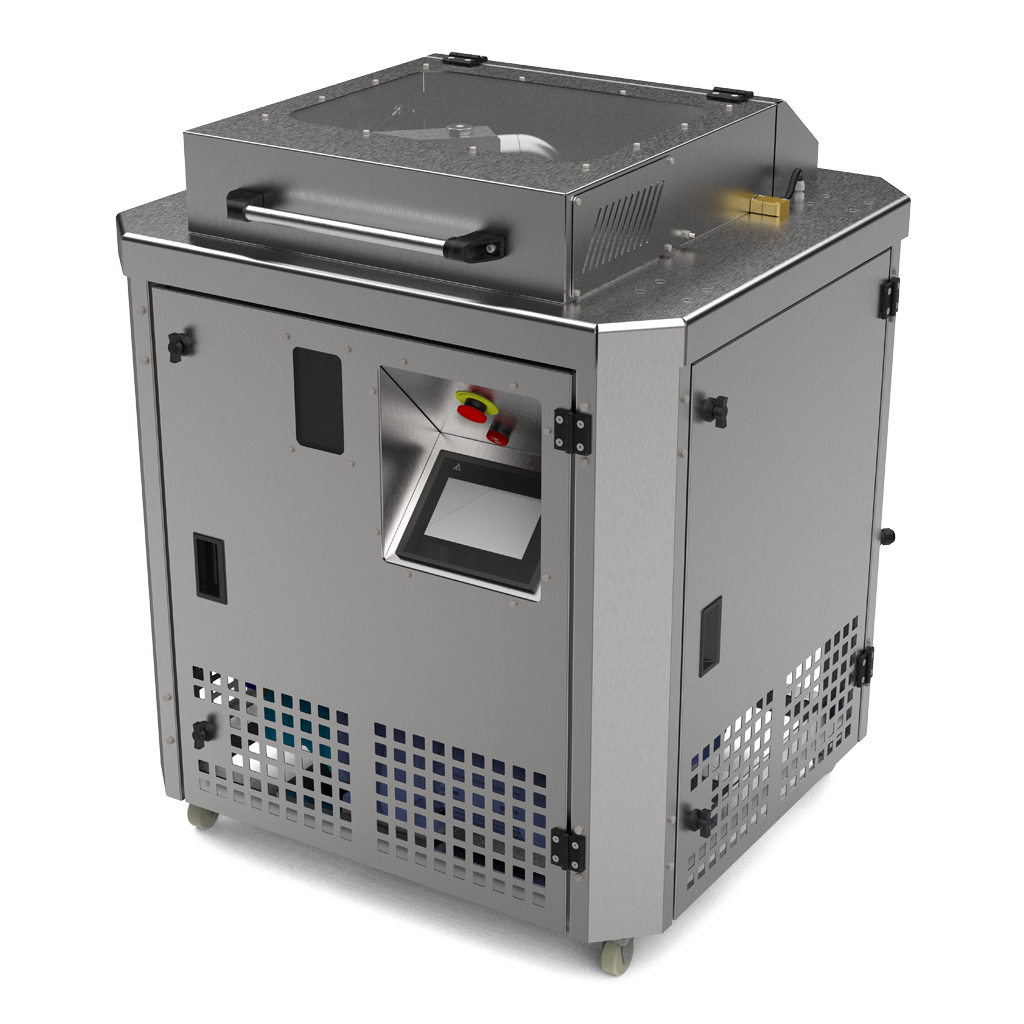 RBM20
RBM20
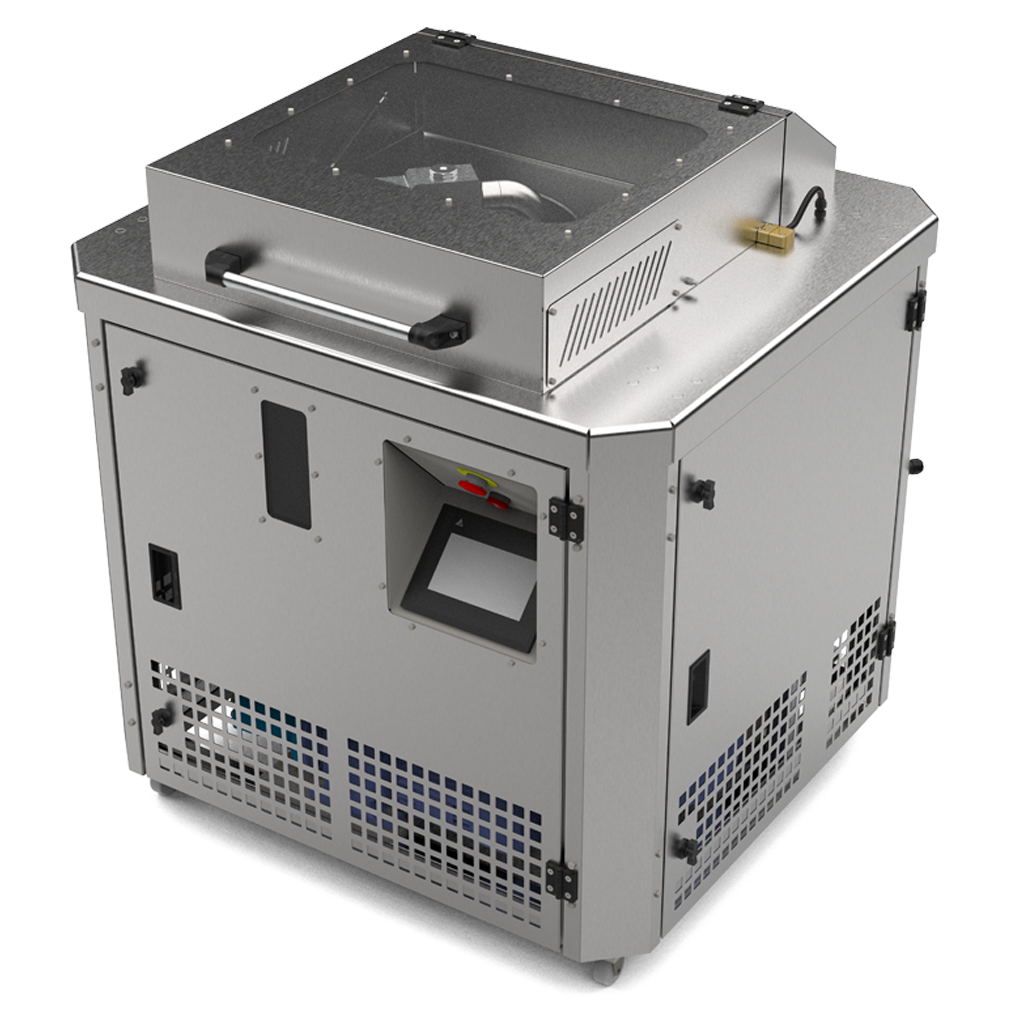 RBM40
RBM40
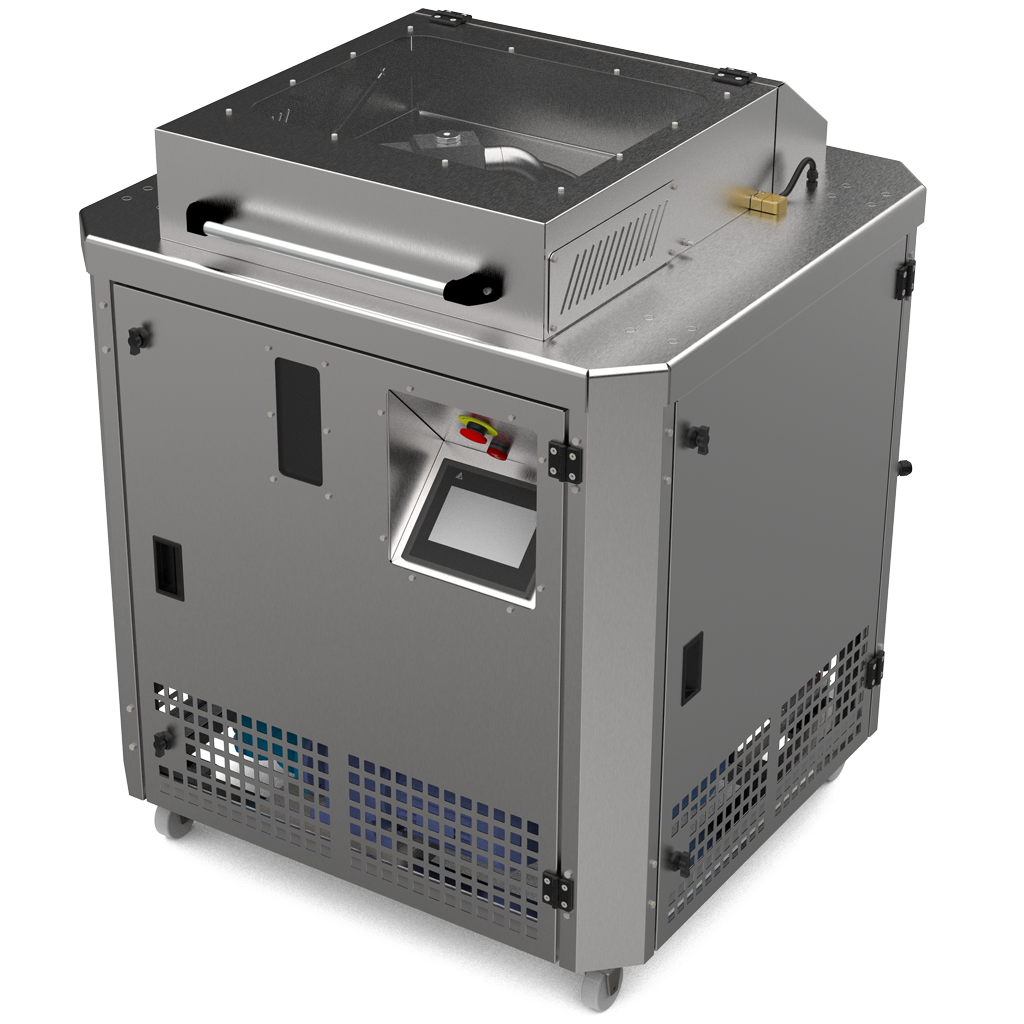 RBM80
RBM80
 RBM160
 RBM300
 RBM500
 RBM750
 RBM1000
Model Range — Comparison
One row eliminates one model. Read the “Eliminates if…” column first.
| Model | Batch (chocolate) | Power | Supply | Cooling | Eliminates if… |
|---|---|---|---|---|---|
| LabBM10 | 15 kg | 2.3 kW | 220 V / 1-phase | External cold water required | R&D / laboratory only — not in the Compact or Industrial selection path |
| Compact — built-in cooling standard · batch 30–180 kg · supply decides the model | |||||
| RBM20 | 30 kg | 3 kW | 220 V / 1-phase | Built-in fan-cooled water battery (standard) | Batch >30 kg |
| RBM40 | 60 kg | 4.2 kW | 220 V / 1-phase | Built-in fan-cooled water battery (standard) | Batch >60 kg (hard limit — no larger single-phase model exists) |
| RBM80 | 100 kg | 7.5 kW | 380 V / 3-phase | Built-in fan-cooled water battery (standard) | Single-phase only, or batch >100 kg |
| RBM160 | 180 kg | 9 kW | 380 V / 3-phase | Built-in fan-cooled water battery (standard) | Single-phase only, or batch >180 kg |
| Industrial — cooling specified at order · batch 350–1000 kg · capacity decides the model | |||||
| RBM300 | 350 kg | 15.5 kW | 380 V / 3-phase | Built-in cooling or external cold-water connection (specified when ordering) | Single-phase only, or batch >350 kg |
| RBM500 | 500 kg | 19.5 kW | 380 V / 3-phase | Built-in cooling or external cold-water connection (specified when ordering) | No cooling configuration specified when ordering, or batch >500 kg |
| RBM750 | 750 kg | 23 kW | 380 V / 3-phase | Built-in cooling or external cold-water connection (specified when ordering) | No cooling configuration specified when ordering, or batch >750 kg |
| RBM1000 | 1000 kg | 27.5 kW | 380 V / 3-phase | Built-in cooling or external cold-water connection (specified when ordering) | No cooling configuration specified when ordering, or batch ≤750 kg (RBM750 covers it) |
Process Constraints (All Models)
Minimum fat content: ~30%. Ball mill refining is a wet grinding process. Below 30% fat the chocolate mass loses fluidity, circulation slows, and pump load rises; the batch still reaches target fineness, but refining time and energy cost per batch rise sharply. If viscosity climbs during a run, add cocoa butter or a compatible fat to restore flow.
Pre-grind required for nibs and roasted nuts. Ball mills are rated for pumpable material. Cocoa nibs and whole roasted nuts must be reduced to paste in a cocoa nib grinder before loading. Loading cocoa nibs directly overloads the pump and grinding shaft and prevents circulation.
Refining only, not conching. A ball mill reduces particle size; it does not perform conching. Aroma development, moisture reduction, and removal of volatile acids require a downstream liquid chocolate conche. For compound coatings and simple couvertures, ball mill refining can feed tempering directly. For fine flavor chocolate, skipping the conche leaves residual acidity and underdeveloped flavor.
Load range, not only maximum capacity. Nominal capacity is the maximum working load, calculated at 1.30 kg/L for chocolate and 1.10 kg/L for sauces and fat-based fillings. The practical minimum load is approximately 20% of nominal capacity on every model. Below this level the recirculation loop no longer closes, so the product does not fully reach the temperature probes. Temperature control becomes unreliable — heating and cooling cannot switch correctly because the machine no longer reads true product temperature. The batch continues without stable thermal control.
Overgrinding raises yield stress. Refining longer does not keep improving the chocolate. Past a point, reducing particle size further increases the total solid surface area faster than the fat can coat it and packs the fine particles more tightly, so both yield stress — the force needed to start flow — and viscosity rise. The mass then resists flowing into moulds, coats unevenly in enrobing, and traps air; correcting it requires added cocoa butter or emulsifier, not more refining. Set refining time to the target fineness for the recipe and stop: below roughly 25 µm the chocolate is already not grainy to the palate, and further grinding mainly degrades flow for the forming line.
Working Principle
A ball mill refiner is a batch machine in which pre-mixed chocolate mass enters the water-jacketed refining vessel. A rotating shaft agitates steel grinding media; shear and friction progressively reduce particle size. A chocolate pump circulates the mass through the grinding media. A three-way valve selects recirculation back to the vessel or discharge to a holding tank when target chocolate fineness is reached.
Temperature is held by the water jacket — heating at startup or in cold rooms, cooling to remove the heat of grinding. Refining time is the primary lever for final chocolate particle size: longer chocolate refining runs produce finer output, provided fat content and temperature remain stable. Typical cycles: 1.5–4 hours.
Beyond Chocolate: Nut Pastes and Fat-Based Products
The same wet grinding principle refines hazelnut and praline pastes, peanut butter, tahini, almond paste, gelato pastes, and dessert sauces. Capacity is calculated at 1.10 kg/L for these products versus 1.30 kg/L for chocolate — the nominal kg rating on a given model is lower for fat-based pastes than for chocolate. For chocolate-only operations, disregard this section.
Position in the Production Line
Upstream: a fat melting tank or dedicated pre-mixer wets dry solids with fat before loading. Skipping pre-mixing causes agglomeration at the inlet; if no pre-mixer is fitted, charge liquid fat first and add dry ingredients gradually.
Downstream: refined chocolate transfers to a liquid chocolate conche for flavour development and moisture reduction, then to storage tanks before tempering, moulding, or enrobing.
Maintenance and Wear Parts (All Models)
Hardened steel mixing arms — replace every 4 years. The arms wear shorter through friction with the steel grinding media. Short arms no longer mix the media across the full vessel, so micronization time rises batch after batch. Replacing on the 4-year interval holds refining time constant; running past it extends every cycle and raises energy cost per batch. Stock a spare set of mixing arms to avoid line downtime during replacement.
Gearbox oil — check annually. Inspect the gearbox oil level and condition once per year. Skipping the check risks gear wear and gearbox failure.
Y-strainer — clean annually. Clean the Y-strainer in the cooling-water circuit once per year. A fouled strainer restricts flow through the water jacket and weakens temperature control.
Cooling water — 30% FDA-approved glycol. Run the water jacket with 30% FDA-approved glycol in the water. The glycol prevents calcium scale and mud build-up, keeping the jacket clean. A clean jacket protects the heaters and extends their service life; plain water lets scale form, fouling the jacket and shortening heater life.
Warranty and Lead Time
Warranty: 1 year against construction defects. Coverage is for manufacturing and construction faults for 12 months from delivery. Wear parts replaced on their service interval — mixing arms, grinding media — are not construction defects.
Lead time: 3–4 months from order. Machines are built to order, including the cooling configuration specified for Industrial models. Confirm the required in-service date against the 3–4 month build time before ordering.
Stocking the recommended spare mixing arms at the same time as the machine removes the build lead time from the eventual 4-year replacement.
Model Specifications
Common to all models
Tab specifications below show only what differs between models or is optional.
LabBM10 — Laboratory (R&D, ≤15 kg) — Technical Features
Role: R&D and recipe trials at 5–15 kg. Move to RBM20 when batch exceeds 15 kg. Unsuitable when no external cold water supply is available. 220 V single-phase.
VIDEO VIDEOPrice 6.500,00 € (excl. VAT), EXW Istanbul
Export packaging is not included in the base price.
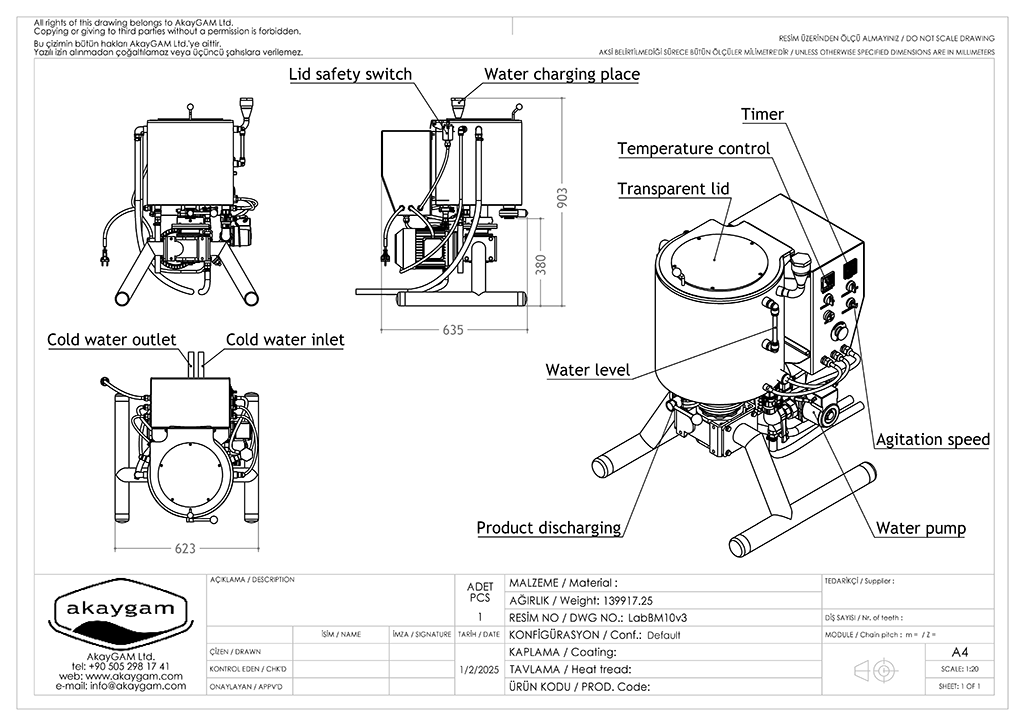
LabBM10 technical drawing
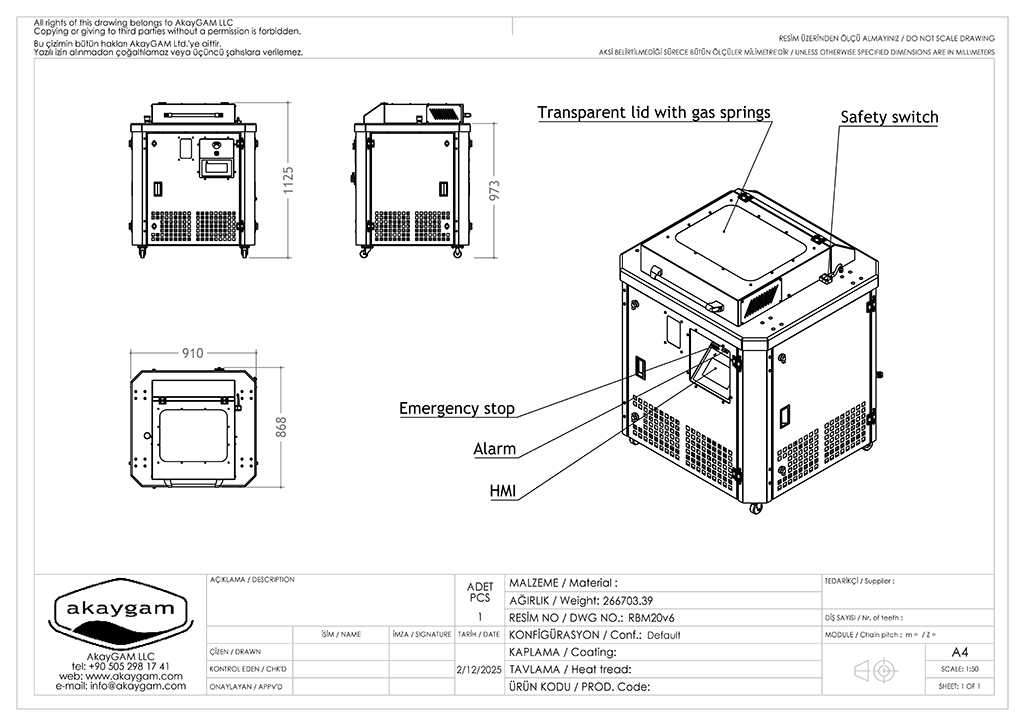
RBM20 — Single-Phase Entry — Technical Features
Role: recipe development, pastry-shop production, and small-batch refining up to 30 kg on 220 V single-phase, with built-in cooling. Above 30 kg, move to RBM40.
VIDEOBase Price 12.500,00 € (excl. VAT), EXW Istanbul
Optional devices and export packaging are not included in the base price.
RBM20 technical drawing
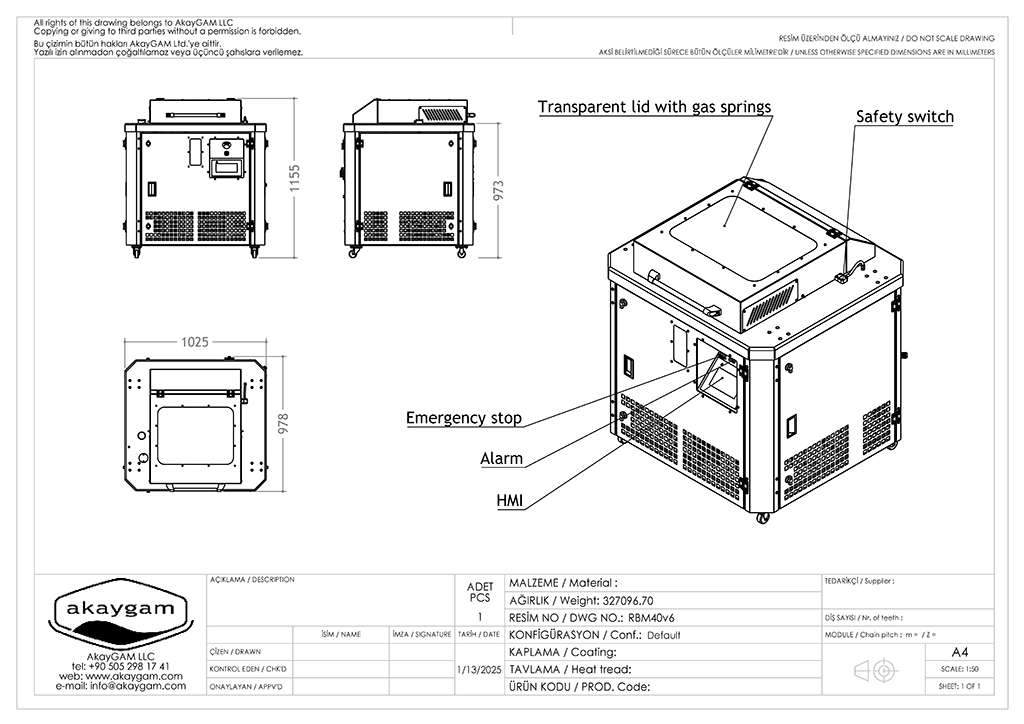
RBM40 — Single-Phase Ceiling (60 kg) — Technical Features
Role: maximum production capacity before three-phase becomes required — 60 kg per batch on 220 V single-phase. Above 60 kg, no single-phase model exists; move to RBM80 on 380 V three-phase.
VIDEOBase Price 15.000,00 € (excl. VAT), EXW Istanbul
Optional devices and export packaging are not included in the base price.
RBM40 technical drawing
RBM80 — Three-Phase Entry — Technical Features
Role: entry to 380 V three-phase production at 100 kg per batch. Move to RBM160 when batch exceeds 100 kg. Unsuitable when only single-phase supply is available.
VIDEOBase Price 18.000,00 € (excl. VAT), EXW Istanbul
Optional devices and export packaging are not included in the base price.
RBM80 technical drawing

RBM160 — Three-Phase — Technical Features
Role: 180 kg batches for daily three-phase production with built-in fan-cooled water battery — last model in the range where cooling configuration is included as standard. Move to RBM300 when batch exceeds 180 kg. Unsuitable when only single-phase supply is available.
VIDEOBase Price 23.000,00 € (excl. VAT), EXW Istanbul
Optional devices and export packaging are not included in the base price.
RBM160 technical drawing

RBM300 — Cooling-Configuration Switch — Technical Features
Role: 350 kg batches on 380 V three-phase. Transition model between fan-cooled and chiller-based cooling. Cooling configuration is specified during ordering. Last model where the fan-cooled water battery remains available. Above 350 kg, move to RBM500. Unsuitable when only single-phase supply is available.
VIDEO I VIDEO IIBase Price 27.000,00 € (excl. VAT), EXW Istanbul
Optional devices and export packaging are not included in the base price.
RBM300 technical drawing

RBM500 — Industrial — Technical Features
Role: 500 kg batches on 380 V three-phase. First model where fan cooling is no longer offered; cooling configuration is specified during ordering. Move to RBM750 when batch exceeds 500 kg. Unsuitable when no cooling configuration is specified.
Base Price 30.000,00 € (excl. VAT), EXW Istanbul
Optional devices and export packaging are not included in the base price.
RBM500 technical drawing

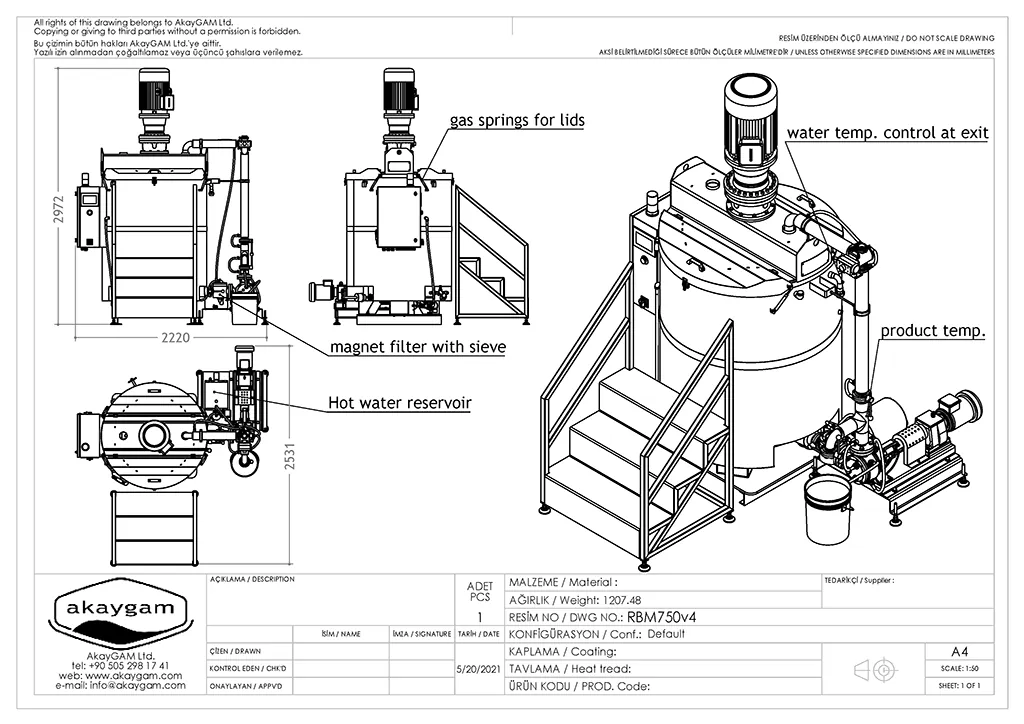
RBM750 — High-Capacity — Technical Features
Role: 750 kg batches on 380 V three-phase. cooling configuration follows RBM500. Move to RBM1000 when required batch exceeds 750 kg.
Base Price 34.000,00 € (excl. VAT), EXW Istanbul
Optional devices and export packaging are not included in the base price.
RBM750 technical drawing
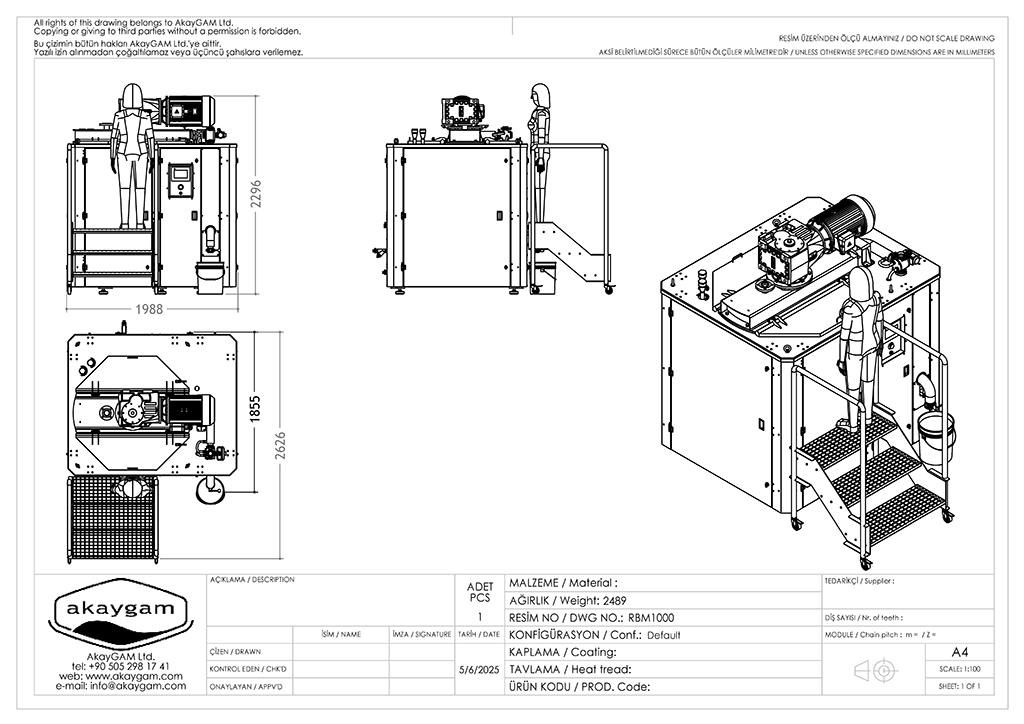
RBM1000 — Range Ceiling (1000 kg) — Technical Features
Role: 1000 kg per batch — largest model in the range, 380 V three-phase. Same cooling configuration as RBM500 and RBM750. Choose RBM1000 only when required batch exceeds 750 kg.
Base Price 38.000,00 € (excl. VAT), EXW Istanbul
Optional devices and export packaging are not included in the base price.
RBM1000 technical drawing
Related equipment
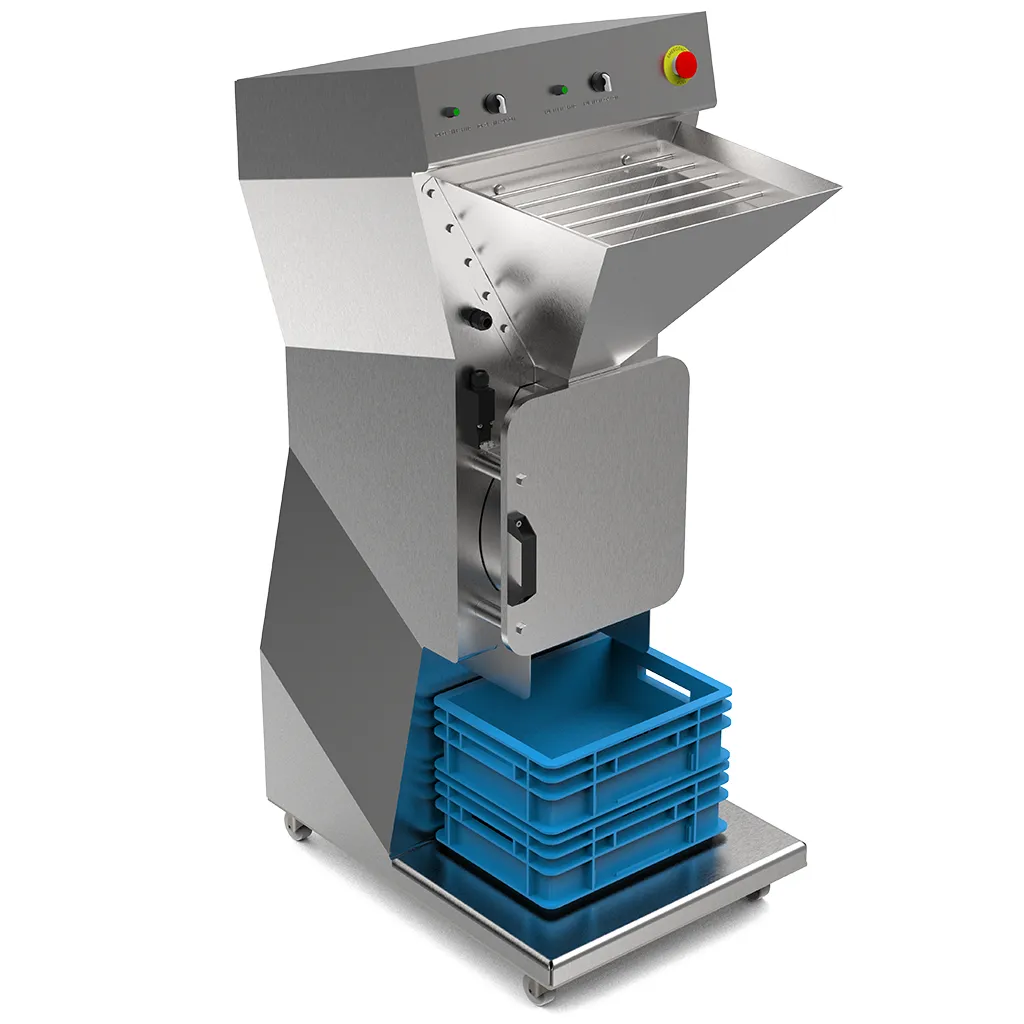
A ball mill cannot reduce raw materials larger than approximately 1.5–2 mm. Cocoa nibs and roasted nuts must be reduced to paste in an upstream impact mill before loading. Skipping pre-grinding extends refining time and increases media wear.
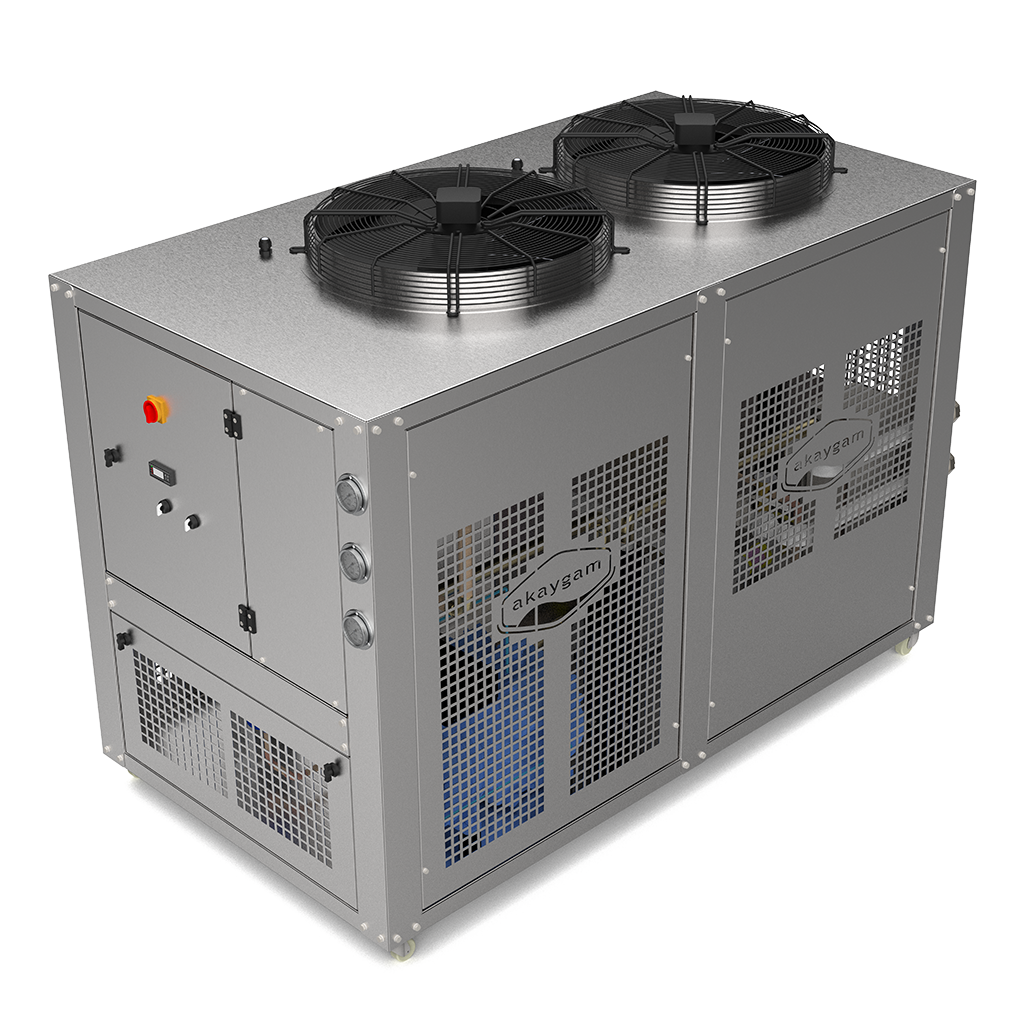
For RBM500, RBM750, and RBM1000, an external cold-water source is required unless the integrated chiller option is fitted. The external source may be a process chiller, cooling tower, mains water, or process-water loop where supply temperature and flow remain stable. Unstable water conditions cause process-temperature drift during refining.
Frequently Asked Questions
Answers to common questions about AkayGAM ball mill refiners.
What particle size can a chocolate ball mill achieve?
AkayGAM refiners typically reach a chocolate particle size of 18–25 µm. The result is set by refining time: longer cycles drive the particle size toward 18 µm. Higher fat content raises the circulation rate, so a given fineness is reached in less time, and well pre-ground starting material shortens it further. Below approximately 25 µm the chocolate is not grainy to the palate.
How long does a ball mill batch take?
Typical chocolate refining cycles in a ball mill run 1.5 to 4 hours, depending on starting particle size, target fineness, fat content, batch weight, and model. Pre-grinding cocoa nibs or roasted nuts to a paste before loading shortens the cycle. Coarse or incompletely pre-ground starting material extends the cycle substantially and increases media wear. All AkayGAM chocolate ball mill models include an operator-set grinding timer; the operator defines and repeats the cycle duration based on prior trials, not on inline particle-size measurement.
Does a ball mill replace a conche?
No. A chocolate ball mill performs refining — particle size reduction — but does not perform conching. Conching develops aroma, removes moisture, and drives off volatile acids accumulated during fermentation and roasting; these steps require a downstream liquid chocolate conche. For compound coatings and basic couvertures, ball mill refining can feed tempering directly with acceptable quality. For fine flavor dark, milk, or single-origin chocolate, skipping the conche leaves residual acidity, sharp flavor notes, and underdeveloped texture. Plan the conche as a separate process step.
Does AkayGAM offer a continuous ball mill refiner?
No. AkayGAM produces batch chocolate ball mill only — nine models from 15 kg to 1000 kg per batch. Continuous one-pass chocolate ball mills, where chocolate mass flows through the grinding chamber in a single pass at fixed throughput, are not in this range. Above 1000 kg per batch no AkayGAM model applies; that scale requires continuous refining lines from other suppliers. Batch refining suits multi-recipe production, R&D, and producers who change formulations frequently. Continuous refining suits single-recipe high-volume production lines.
What fat content does a ball mill require?
Chocolate ball mill refining is a wet grinding process requiring a continuous fat phase to keep the chocolate mass circulating through the grinding media. Most chocolate and fat-based formulations run at ~30% fat or higher. Below this, viscosity rises, circulation slows, and pump load increases; the batch still reaches target fineness, but refining time and energy cost per batch rise sharply. If viscosity climbs during a run, add cocoa butter or a compatible vegetable fat to restore flow.
Do I need a chiller for my chocolate ball mill?
A chiller is not mandatory at any capacity. Cooling depends on the model:
External connection keeps the brazed plate heat exchanger installed as the water-jacket interface; the customer connects a chiller, cooling tower, mains water, or process water loop. From RBM300 upward, ordering a model without specifying one cooling configuration means the machine cannot be commissioned.
What power supply is required for an AkayGAM chocolate ball mill?
The LabBM10, RBM20, and RBM40 chocolate ball mills run on 220 V single-phase — suitable for pastry shops, R&D kitchens, and small workshops without industrial three-phase. All larger chocolate ball mill models (RBM80 through RBM1000) require 380 V three-phase. Installed power ranges from 2.3 kW (LabBM10) to 27.5 kW (RBM1000). Confirm supply type and voltage before ordering — a single-phase facility cannot run RBM80 or above, and a transformer or converter is not specified for these models.
Can a ball mill process cocoa nibs, sugar, or dry powders directly?
No. A chocolate ball mill is a wet refiner, not a dry grinder. It is designed for material that is already pumpable, with a continuous fat phase; around 30% fat or higher keeps refining time and energy cost in the normal range. Cocoa nibs and roasted nuts must be reduced to paste in an upstream impact mill before loading; loaded directly, they cannot circulate through the system and overload the pump and grinding shaft. Sugar in standard crystalline form is normally below 2 mm and is loaded directly with the recipe alongside cocoa butter, cocoa mass, and milk powder; pre-grinding it in a sugar mill is optional and shortens the refining cycle, lowering energy cost per batch. Dry powders (cocoa powder, milk powder, lecithin) are wetted by liquid fat in a melting tank or pre-mixer before loading. Loading dry material directly causes agglomeration at the inlet, blocked circulation, and incomplete refining.
Can a chocolate ball mill also refine nut pastes and fat-based spreads?
Yes. AkayGAM ball mill refiners are designed primarily for chocolate refining, but the same wet grinding principle handles hazelnut paste, praline cream, peanut butter, tahini, almond paste, and similar fat-based spreads and fillings. The water-jacketed temperature control holds processing temperature for all fat-based products. Roasted nuts must be pre-ground to a coarse paste in an impact mill before loading; loading whole nuts overloads the pump and prevents circulation.
What is the difference between a chocolate ball mill refiner and a roll refiner?
A batch chocolate ball mill refiner processes chocolate as a fluid mass in a closed vessel using steel balls as grinding media. Suited to recipes with moderate to high fat content, flexible batch chocolate refining, and products such as nut spreads that are difficult to handle on roll refiners. A five-roll refiner processes the mass as a drier flake and reaches finer particle sizes more efficiently at higher throughput, but requires higher capital investment, tighter recipe control, and is poorly suited to frequent recipe changeovers. Choose a ball mill for small-to-medium chocolate production, R&D, artisan manufacturing, and fat-rich formulations; choose roll refiner for high-volume single-recipe production.
What maintenance and warranty does an AkayGAM chocolate ball mill need?
Scheduled maintenance keeps refining time and temperature control constant:
Warranty: 1 year against construction defects from delivery. Wear parts replaced on their service interval are not construction defects. Lead time: 3–4 months, built to order.