
Chocolate Lentils Forming Machine
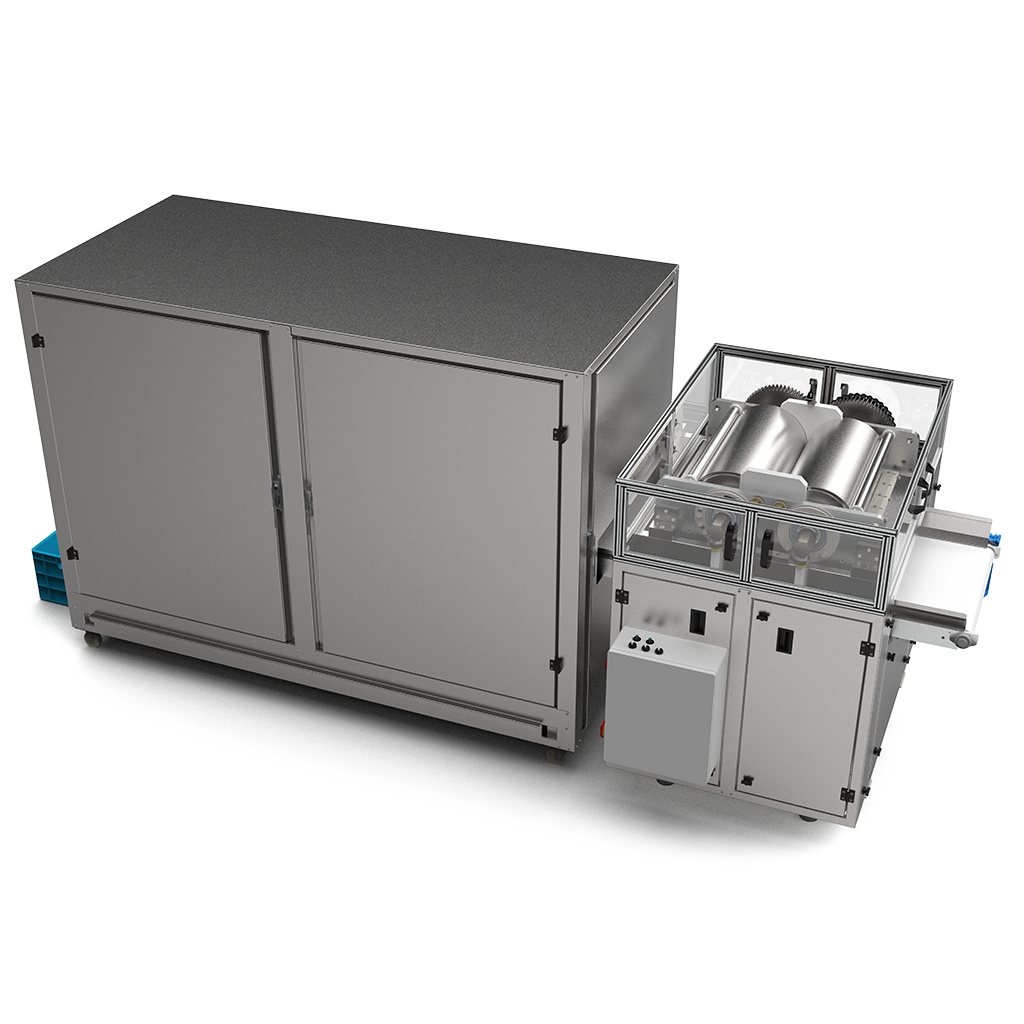
The RD600 is a roller depositor that forms chocolate lentils, dragee centers, and similar shaped pieces between two glycol-cooled cavity drums. Chocolate is fed into the forming zone under level-sensor control; the cavities engrave the top profile while the bottom remains flat. A de-webbing unit downstream of the drums separates the formed pieces from the thin connecting web and recovers the trim. The output is the lentil center, not the finished product — pieces typically pass to a coating pan for sugar-shell panning. The decision this page drives is twofold: how many forming-pair frames to mount on the chassis (1, 2, or 3 — sets the throughput) and what cavity geometry to engrave on the drums (6 mm, 12 mm, or custom — sets the piece size). Both are fixed at the order, not field-changeable.
VIDEOShare
 RD600
RD600

Forming-pair frames: 1, 2, or 3 pairs decide capacity
Forming-pair count is the throughput knob. Each pair is a complete glycol-cooled cavity-drum module mounted on the same chassis, sharing level-sensor feeding and the de-webbing unit. Adding pairs widens the forming bandwidth proportionally. The pair count is fixed at the order — adding a pair afterwards requires returning the machine to the factory, not a field upgrade.
| Forming pairs | Capacity (600 mm drums) | Power | Eliminates if… |
|---|---|---|---|
| 1 pair (RD600 base) | ~200 kg/h | 380 V three-phase, 4 kW | Order book is above ~200 kg/h continuous (capacity ceiling) |
| 2 pairs | ~400 kg/h | 380 V three-phase, ~8 kW | Order book is below ~200 kg/h or above ~400 kg/h |
| 3 pairs | ~600 kg/h | 380 V three-phase, ~12 kW | Order book is below ~400 kg/h (chassis cost and forming-drum spares are over-specified) |
Cavity geometry: 6 mm, 12 mm, or custom
Cavity geometry is engraved on the forming drums and selected at quotation. 6 mm lentil cavity for small drops or buttons used as inclusions or topping-format pieces. 12 mm lentil cavity for standard dragee centers feeding a coating pan. Custom cavity for proprietary piece geometry sized to the customer's piece weight and shape. Cavity choice is permanent for that drum set — different piece sizes require a separate drum set, not a field-adjustable changeover. Drum length (400 mm or 600 mm) is selected at the same time and scales the per-pair throughput proportionally; the RD600 designation refers to the 600 mm drum-length variant shown.
What the RD600 forms — and what it doesn't
The RD600 forms shaped chocolate centers with a defined top profile and a flat bottom: lentils, dragees, or custom buttons sized for downstream panning. Two product categories are out of scope:
Flat-bottomed loose drops, chips, or buttons deposited on a belt — that is what the chocolate drop line produces, using a depositor onto a cooling belt rather than cavity drums. The RD600's cavity-drum design is over-specified for it: the engraved cavities, level-sensor feeding loop, and de-webbing unit add cost without producing different output for unshaped drops.
Filled centers — the roller forms a single-product solid piece. It does not co-extrude two products and cannot place a filling inside a chocolate shell. Center-filled molded chocolates use the SML500, MML100, or NGOSD16SV-ML one-shot molding lines instead.
Position in the production line
Upstream chain: ball mill refiner → chocolate storage tank → industrial tempering machine → RD600 forming-zone hopper. The tempering machine is an industrial unit — neither a wheel-type batch temperer (drains between cycles, breaks the level-sensor feed loop) nor the highest-grade continuous tempering machine required by one-shot molding-line depositors (over-specified for downstream-coated lentils). A chiller supplies glycol to the forming drums to hold a stable forming temperature; without a stable drum temperature, piece weight drifts and the de-webbing cut becomes inconsistent within minutes. Downstream, formed lentils pass to a coating pan for sugar-shell panning, which should run in a cool, dehumidified room for a stable shell.
Forming and de-webbing in one pass
Chocolate exits the cavity drums as a continuous thin web that carries the formed pieces. The de-webbing section breaks the connecting web, releases individual lentils, and routes the trim to the collection trays for return to the feed system. Drum-temperature stability, drum-rotation synchronization, and de-webbing cooling together control piece weight, edge cleanliness, and surface finish. Drift in any one of these — most commonly drum temperature when the glycol supply is undersized — causes smearing, sticking, or weight variation within minutes.
Warranty and Lead Time
The RD600 carries a 1-year warranty against manufacturing and construction defects. Lead time is 3–4 months from order, as forming-pair count, cavity geometry, and drum length are engraved and built into the chassis at manufacture and are not field-changeable.
Model Specifications
RD600 Chocolate Lentils Forming Machine – Technical Features
Role: forms shaped chocolate centers — lentils, dragees, custom buttons with an engraved top and flat bottom — for downstream panning. Switch to a chocolate drop line for flat-bottomed loose drops on a belt; switch to a one-shot molding line for filled centers. Forming-pair count (1/2/3) sets throughput; cavity geometry and drum length are engraved at order. 380 V three-phase, 4 kW per forming pair.
Price Contact us for pricing
Export packaging is not included in the base price.
Cavity geometry, drum length, forming-pair count, and export packaging are quoted at order.
RD600 Technical Drawing

Related equipment
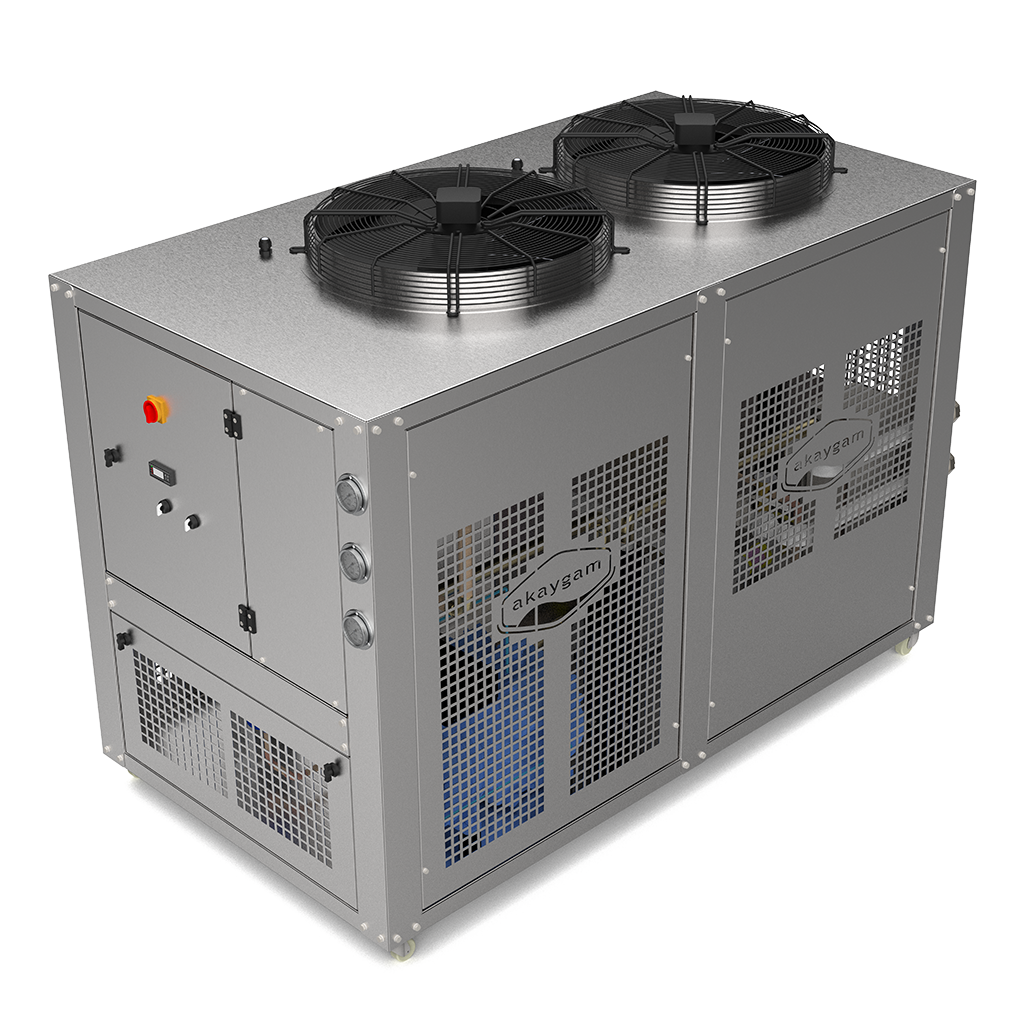
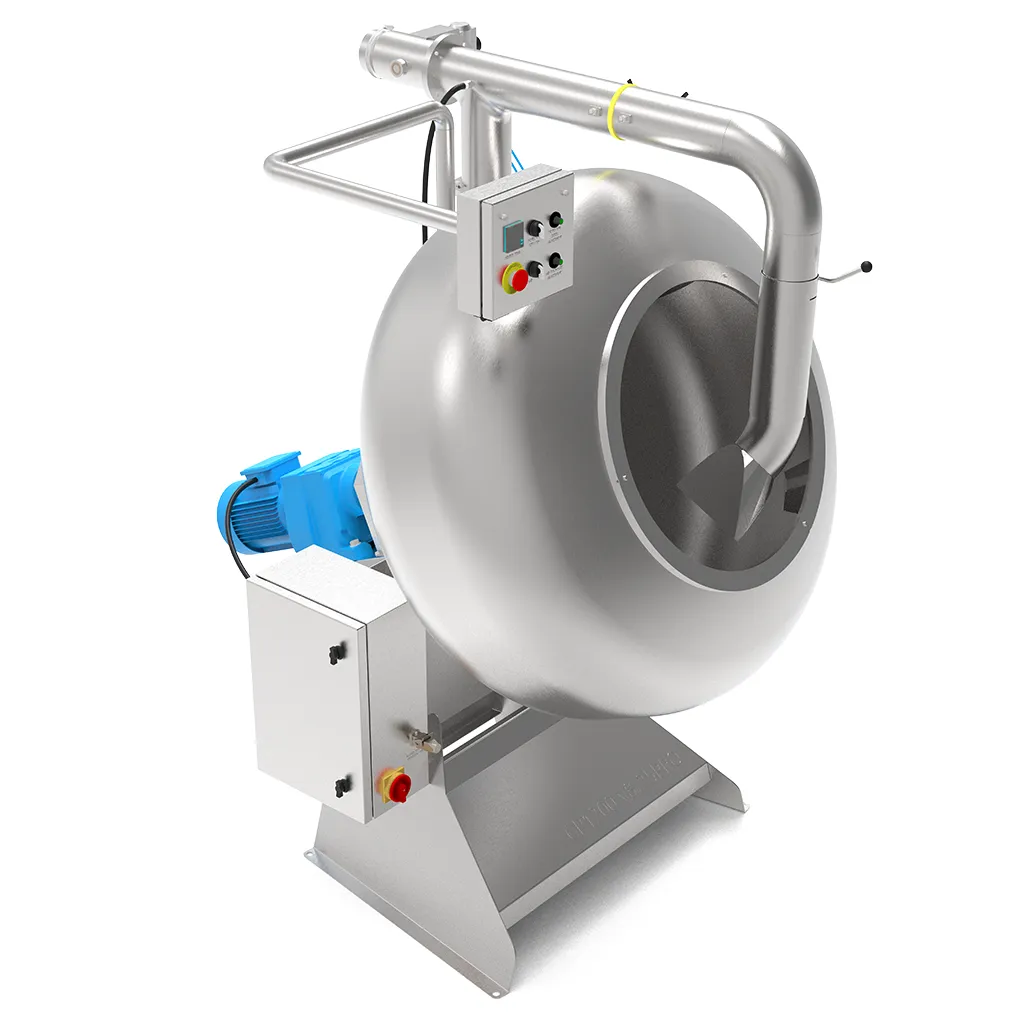
A chiller supplies the glycol circuit to the forming drums; sizing the chiller for the forming-pair count is critical because a single 1-pair RD600 and a 3-pair RD600 have very different cooling loads. A storage tank holds refined chocolate ahead of the industrial tempering machine and provides steady feeding to the level-sensor hopper. After forming, a coating pan applies the sugar shell — panning operations require a cool, dehumidified room for a stable shell finish.

Frequently Asked Questions
Answers to common questions about the AkayGAM RD600 chocolate lentils forming machine.
1, 2, or 3 forming-pair frames — which configuration?
Throughput target decides. Frames share one chassis, level-sensor feeding, and the de-webbing unit; only forming bandwidth scales:
Picking 1 pair above ~200 kg/h continuous hits the capacity ceiling; picking 2 or 3 pairs for a workshop order book wastes chassis cost and forming-drum spares. Pair count is fixed at order — adding a pair later means returning the machine to the factory, not a field upgrade.
What cavity geometry should I order?
Cavity geometry is engraved on the forming drums and selected at quotation: 6 mm lentil (small drop/button), 12 mm lentil (standard dragee center), or custom geometry sized to the customer's piece weight and shape. Cavity choice is permanent for that drum set — different piece sizes require a separate drum set, not a field-adjustable changeover. Ordering a single 6 mm cavity when the product range later expands to 12 mm forces a second drum set; ordering an oversize cavity when the target piece is smaller wastes deposit weight and produces lentils that won't fit the downstream coating pan loading.
What drum length should I order — 400 mm or 600 mm?
Drum length sets the per-pair throughput proportionally. 600 mm drums (the RD600 default shown on this page) deliver ~200 kg/h per forming pair; 400 mm drums deliver proportionally less per pair on the same chassis. Drum length is selected at quotation alongside cavity geometry — it is not a separate model. Match drum length to the smallest pair count that meets the throughput target; over-specifying the drum length only inflates the chassis footprint without raising output beyond what the chosen forming pair count delivers.
What feeds the RD600 from upstream?
Conditioned chocolate from a chocolate storage tank, fed to the level-sensor-controlled forming-zone hopper through an industrial tempering machine — neither a wheel-type batch temperer (drains between cycles, breaks the level-sensor feed loop) nor the highest-grade continuous tempering machine required by one-shot molding-line depositors (over-specified for downstream-coated lentils). Compound (non-tempered) chocolate is acceptable when the downstream coating step provides the surface finish; tempered chocolate is required when the lentils ship without coating.
What does the RD600 produce — and what doesn't it?
What is the warranty and lead time on the RD600?
1 year against manufacturing and construction defects. Lead time is 3–4 months from order, as forming-pair count, cavity geometry, and drum length are engraved and built into the chassis at manufacture and are not field-changeable.