
Chocolate Melting Tank for Callets or Blocks
A chocolate melting tank melts solid chocolate and holds it at workable temperature. The molten chocolate is transferred by an integrated chocolate pump to tempering, forming, and coating equipment. Model selection is driven by input format and electrical supply. Wrong model means agitator motor overload and mechanical impact on the tank bottom when a CMT is fed with blocks, a heated grid designed for blocks on a CBM1000 fed with callets, or a tank that will not run on a single-phase site.
VIDEOChocolate Melting Tank Selection: First Decision
Input format determines the group. Capacity and electrical supply determine the model.
Callets, drops, or rework on 220 V single-phase → CMT100 / CMT200. Vertical cylindrical reservoir. Variable-speed agitation. Integrated chocolate pump. No insulation. Loading solid blocks into a cylindrical CMT model can overload the agitator motor and stop the drive. Choose a 380 V model if batch size exceeds 200 kg.
Callets, drops, or rework where 400 kg covers one shift's consumption → CMT400. Dual supply: 220 V single-phase or 380 V three-phase. Sized so a single load lasts one shift without a mid-run refill stop on lines drawing up to 50 kg/h. Same architecture as CMT100/200 in a larger reservoir. Not insulated. Will not handle solid blocks.
Callets, drops, or rework where consumption exceeds 400 kg per shift → CMT600. Dual supply: 220 V single-phase or 380 V three-phase. Sized to absorb shift consumption above 400 kg without a refill stop. Choose CMT400 if 400 kg covers the shift; the extra 200 kg of buffer is unused capacity at higher energy cost. Not insulated; heater duty cycle is higher than CMT1000INS in continuous operation. Will not handle solid blocks.
High-volume callet feeding on continuous lines → CMT1000INS. 380 V three-phase required. Glass wool insulation around the water jacket lowers heater duty cycle during continuous operation. Stainless steel lobe pump and 1500-micron sieve filter standard. Two standard inlet fittings: bypass return and upstream feed. Will not run on single-phase supply. Will not handle solid blocks.
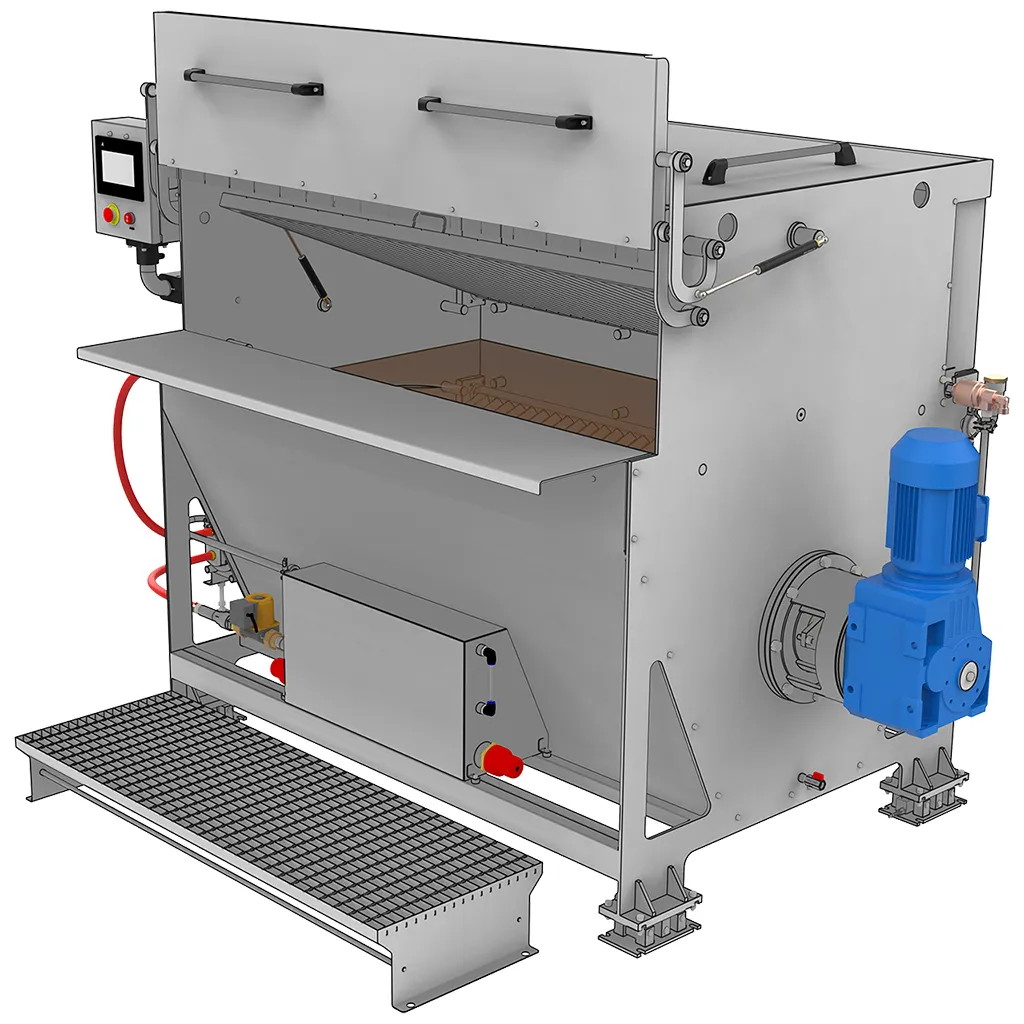
Solid chocolate blocks → CBM1000 only. Rectangular reservoir with horizontal agitator. Separate heated melting grid applies heat at the block surface. Glass wool insulated. 380 V three-phase required. Optional load cells for weight-based batch control. There is no single-phase block melter and no smaller block melter in this range. Loading callets-only into a CBM1000 means paying for a heated grid designed for solid blocks rather than free-flowing material.
Share
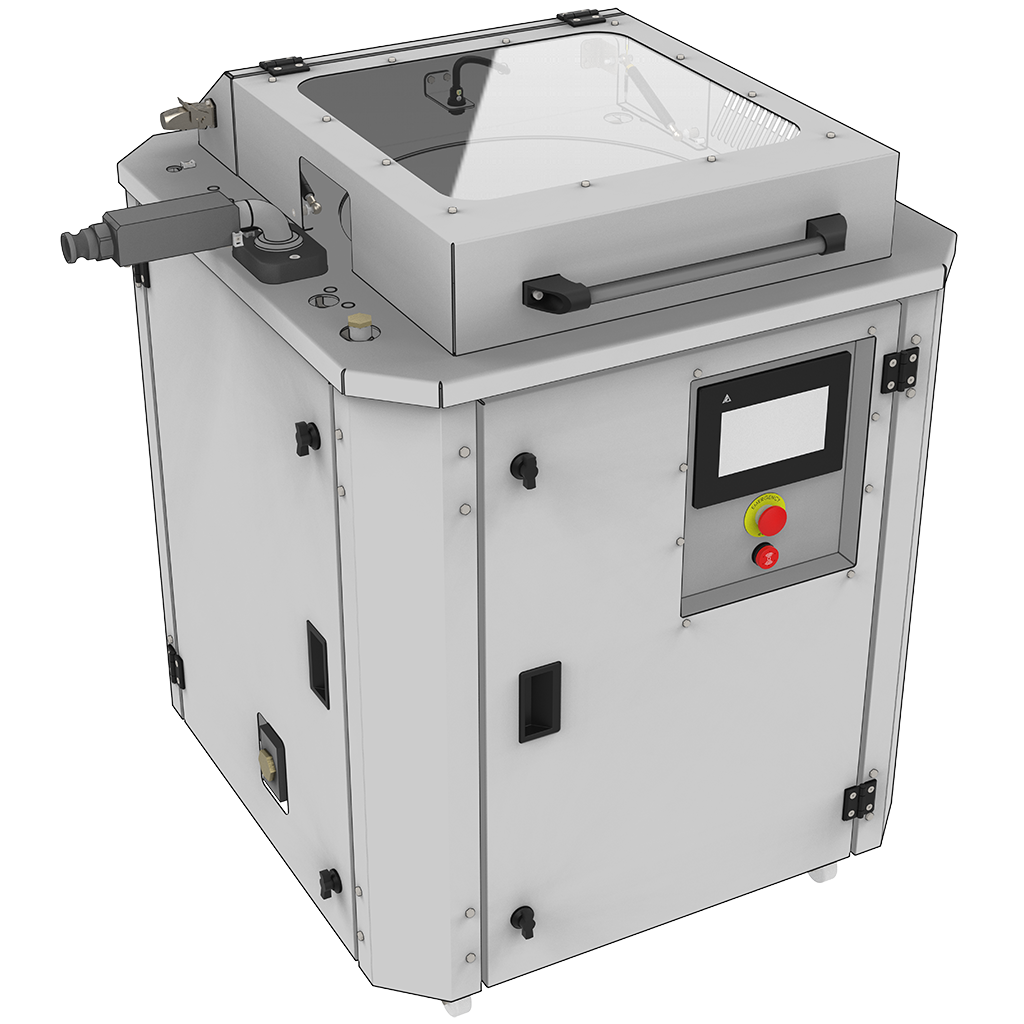 CMT100
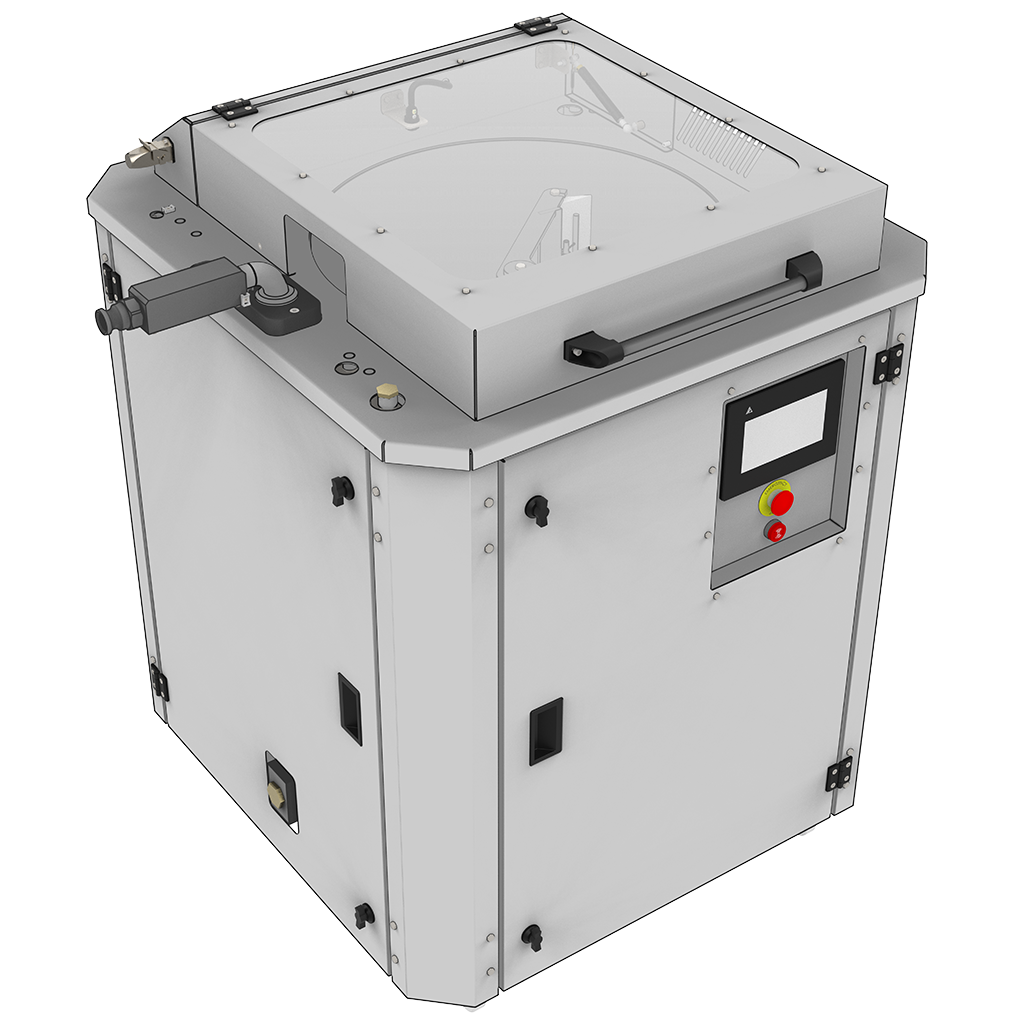 CMT200
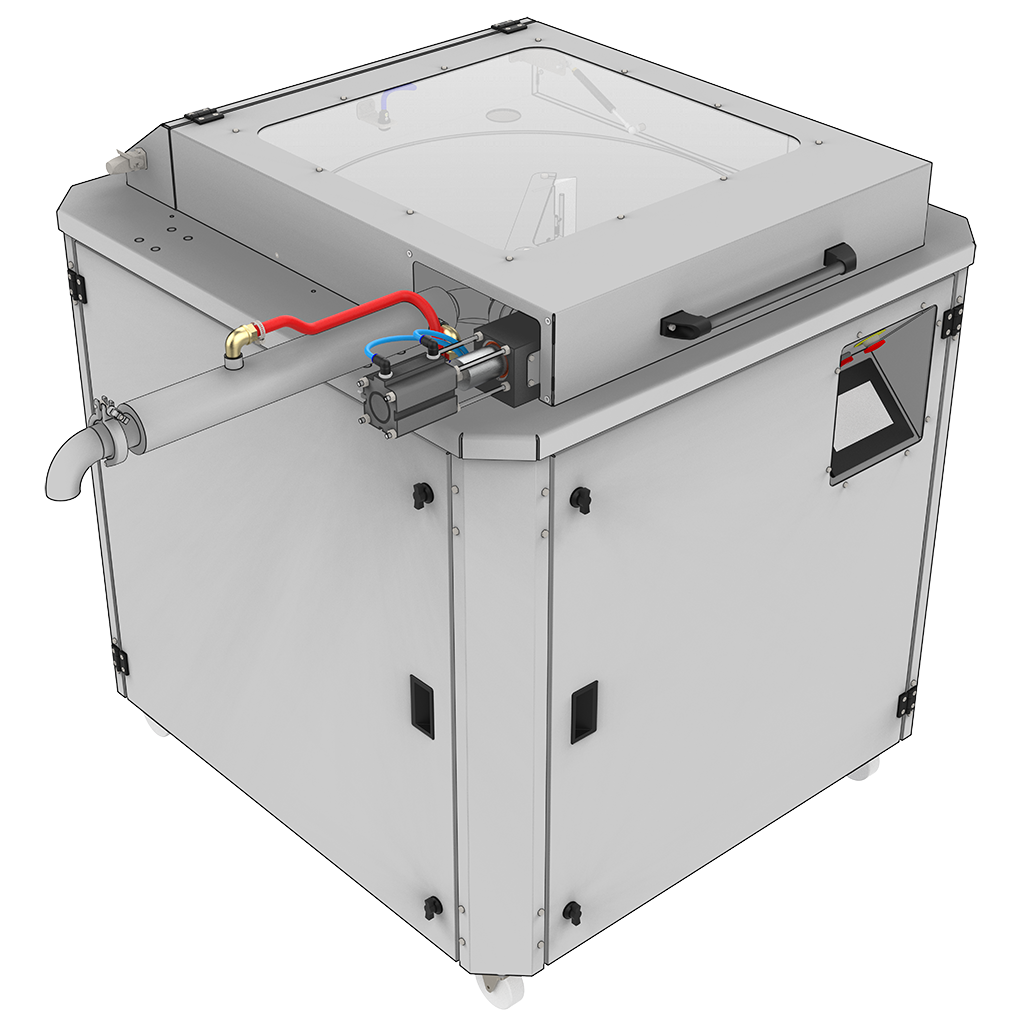 CMT400
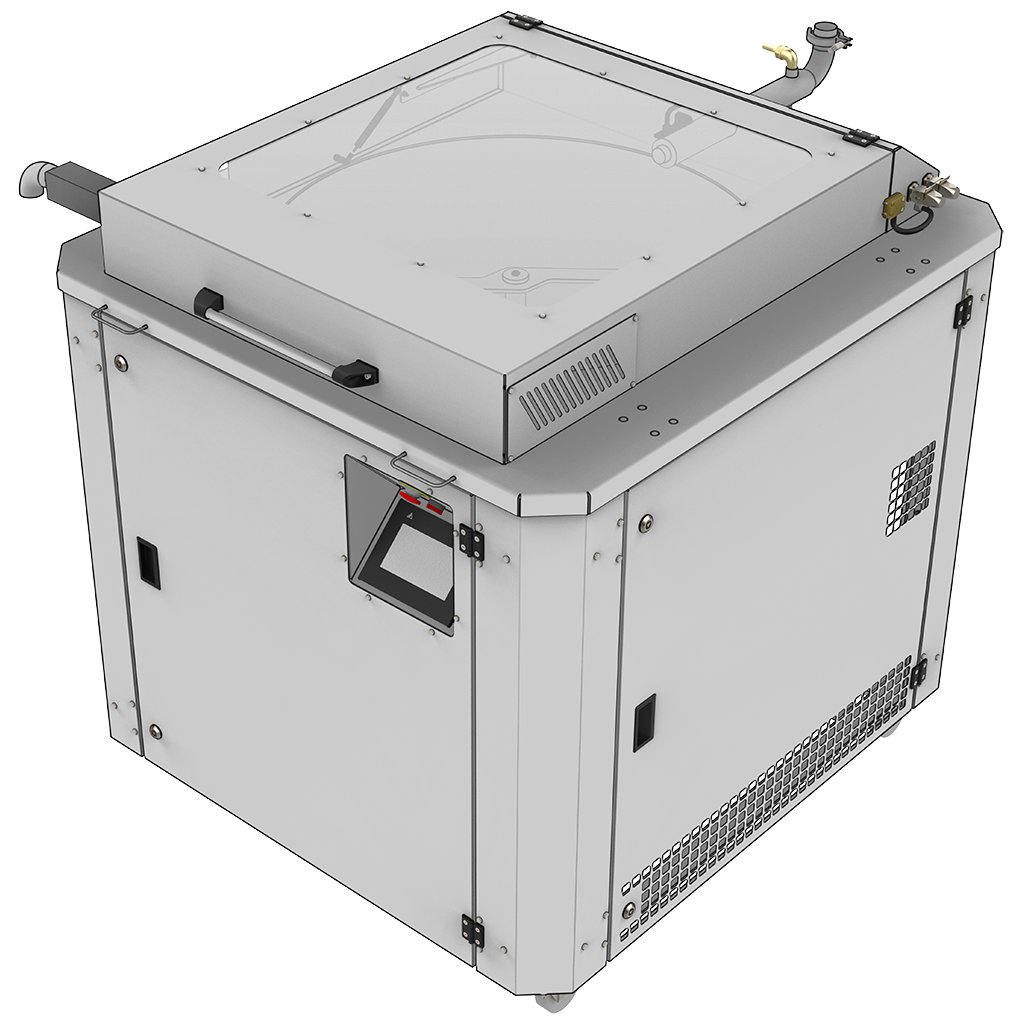 CMT600
 CMT1000INS
 CBM1000
Cylindrical vs Rectangular Melter: Choose One
Cylindrical CMT — CMT100 / CMT200 / CMT400 / CMT600 / CMT1000INS. Vertical reservoir. Variable-speed agitation keeps free-flowing material in motion under jacket heat. Accepts callets, drops, and rework. Capacity 100–1000 kg. Single-phase available up to 600 kg. Loading solid blocks into a cylindrical CMT model can overload the agitator motor and stop the drive, and extends melt time beyond a workable cycle.
Rectangular CBM1000. Sole model for solid chocolate blocks. A separate heated grid applies heat at the block surface; the rectangular reservoir below holds the molten chocolate under horizontal agitation. 380 V three-phase required. Gear pump standard; stainless steel lobe pump optional. Optional load cells for weight-based batch control. Loading callets-only into a CBM1000 means paying for a heated grid designed for solid blocks rather than free-flowing material.
Insulation: Energy Saving
Glass wool insulation around the water jacket limits heat exchange with the room in both directions. Heat loss from the jacket falls. Room temperature has less influence on the jacket. Heater duty cycle drops during continuous operation. Energy consumption per hour falls. Less waste heat enters the room.
The benefit applies during every operating hour — active melting, transfer, or holding. CMT100, CMT200, CMT400, and CMT600 are not insulated. CMT1000INS is insulated and also adds the stainless steel lobe pump, 1500-micron sieve filter, and standard bypass-return and upstream-feed inlet fittings. The CBM1000 is also glass wool insulated. A non-insulated cylindrical CMT model in continuous operation consumes more energy per hour and releases more waste heat into the production area.
Model Range — Comparison
One row eliminates one model. Read the “Eliminates if…” column first.
| Model | Capacity | Power | Supply | Input | Insulation | Pump | Sieve Filter | Eliminates if… |
|---|---|---|---|---|---|---|---|---|
| CMT100 | 100 kg | 2.4 kW | 220 V / 1-phase | Callets / drops / rework | No | Gear | No | You load solid blocks, or batch size exceeds 100 kg |
| CMT200 | 200 kg | 3.8 kW | 220 V / 1-phase | Callets / drops / rework | No | Gear | No | You load solid blocks, or batch size exceeds 200 kg |
| CMT400 | 400 kg | 4.5 kW | 220 V or 380 V | Callets / drops / rework | No | Gear | No | You load solid blocks, or shift consumption exceeds 400 kg |
| CMT600 | 600 kg | 5.5 kW | 220 V or 380 V | Callets / drops / rework | No | Gear | No | Shift consumption fits in 400 kg (CMT400 sufficient), or you need lower energy use per hour |
| CMT1000INS | 1000 kg | 12.7 kW | 380 V / 3-phase | Callets / drops / rework | Yes | Lobe (SS) | Yes (1500 µm) | You load solid blocks, or supply is single-phase only |
| CBM1000 | 1000 kg | 13.5 kW | 380 V / 3-phase | Solid blocks | Yes | Gear (lobe opt.) | No (optional) | Your chocolate arrives as callets or drops |
After Melting: Temporary Hold and Transfer
CMT models can hold the melted batch while feeding downstream equipment. Do not select a CMT when long-duration storage or production-line buffering is the primary duty; select an ST storage tank by required hold volume and holding duration. Using melting-duty equipment only for holding adds thermal and mechanical capacity that the process does not require.
Recirculation: Reheating Required Before Re-Entry
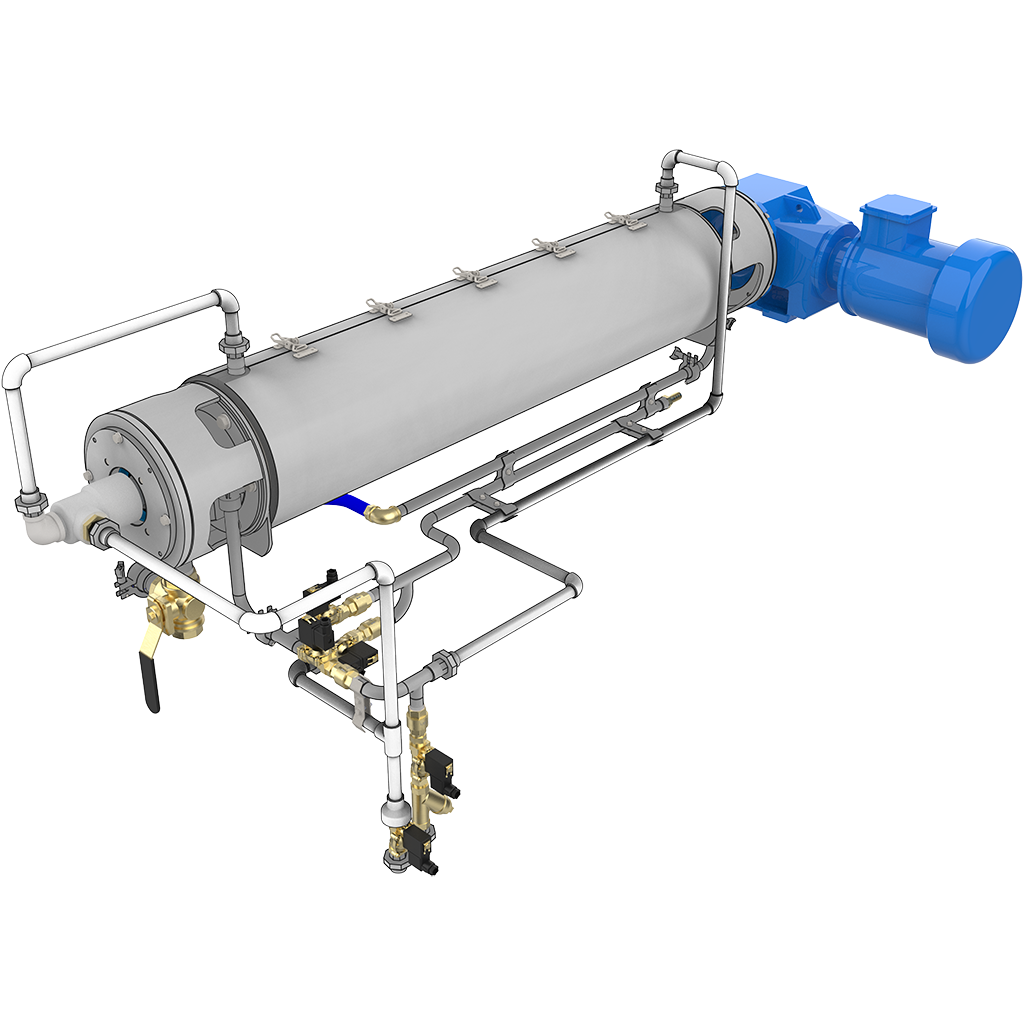
Chocolate returning from a tempering bypass loop arrives at 29–32°C. Feeding this directly into a tank held at 40–50°C causes localised crystallisation at the inlet. A decrystallization tube in the return line reheats the stream to tank temperature before re-entry.
On CMT100, CMT200, CMT400, and CMT600, the water-jacketed inlet assembly is an optional fitting. On the CMT1000INS, two inlet fittings are standard — one for bypass return, one for upstream equipment such as a ball mill or conche. Skipping the decrystallization step destabilises tank temperature and disturbs feed accuracy to the tempering machine.
Chocolate Melting Tank Position in the Production Line
Chocolate melting tanks install upstream of tempering systems, enrobers, depositors, and storage tanks. The chocolate pump feeds downstream equipment directly. Full melting is not required before transfer — once a stable liquid phase is established, the pump can run while remaining solid chocolate continues to melt under agitation and jacket heating. Starting the pump before a continuous liquid phase is established stalls it against the solid load. Undersize the tank relative to line consumption rate and downstream equipment runs dry before the next batch is ready.
Maintenance, Cleaning, and Warranty
Jacket water treatment: Run the water jacket with 30% FDA-approved glycol to prevent calcium scale and mud build-up. This protects the PID-controlled electric heaters from premature burnout under the thermal load of the melt phase. Plain water lets scale foul the jacket and lowers heater efficiency.
Pump and scraper: Check the integrated pump seals — gear-type on CMT100–CMT600 and CBM1000, lobe-type on the CMT1000INS — as part of the preventative maintenance schedule. The spring-loaded sidewall scrapers self-adjust against the wall and wear negligibly; no scheduled scraper replacement is required.
Cleaning at recipe changes: Never flush with water — water seizes high-cocoa-content chocolate. Pump out residual chocolate, then flush the tank and pipework with warm cocoa butter or food-grade fat-based solvent at holding temperature, pump out the flush, and wipe inner surfaces. Skipping the flush carries flavour and colour from the previous batch into the next.
Warranty & lead time: AkayGAM melting tanks carry a 1-year warranty against manufacturing and construction defects. Lead time is 3–4 months from order, as units are built to the required capacity, voltage, and piping specification.
Model Specifications
Common to all models
Tab specifications below show only the parameters that differ between models.
CMT100 Compact Chocolate Melting Tank – Technical Specifications
For small batches, pilot trials, and manual feeding. Processes callets, drops, and rework. Single-phase only. Not insulated. Not rated for solid blocks or batch sizes above 100 kg.
Base Price 11.000,00 € (excl. VAT), EXW Istanbul
Optional devices and export packaging are not included in the base price.
CMT100 Chocolate Melting Tank – Dimensions
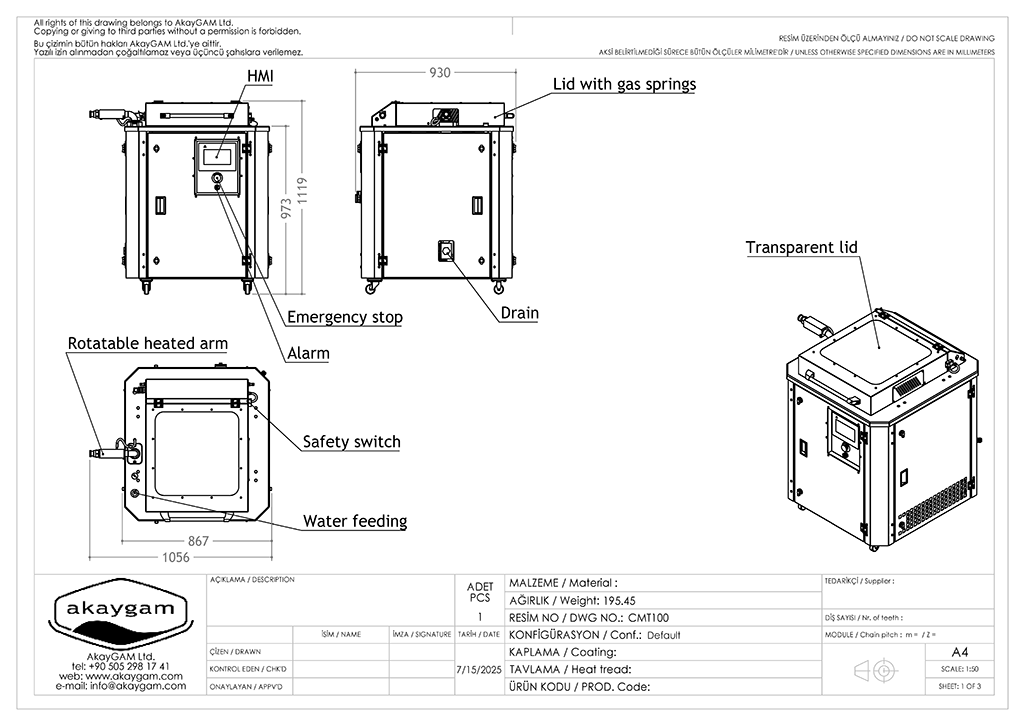
CMT200 Cylindrical Chocolate Melting Tank – Technical Specifications
For daily batch production where 100 kg is exhausted within one tempering cycle. At 50 kg/h downstream consumption, a 200 kg batch covers four hours of feeding before reloading. Single-phase only. Not insulated. Not rated for solid blocks or batch sizes above 200 kg.
VIDEOBase Price 13.000,00 € (excl. VAT), EXW Istanbul
Optional devices and export packaging are not included in the base price.
CMT200 Chocolate Melting Tank – Dimensions
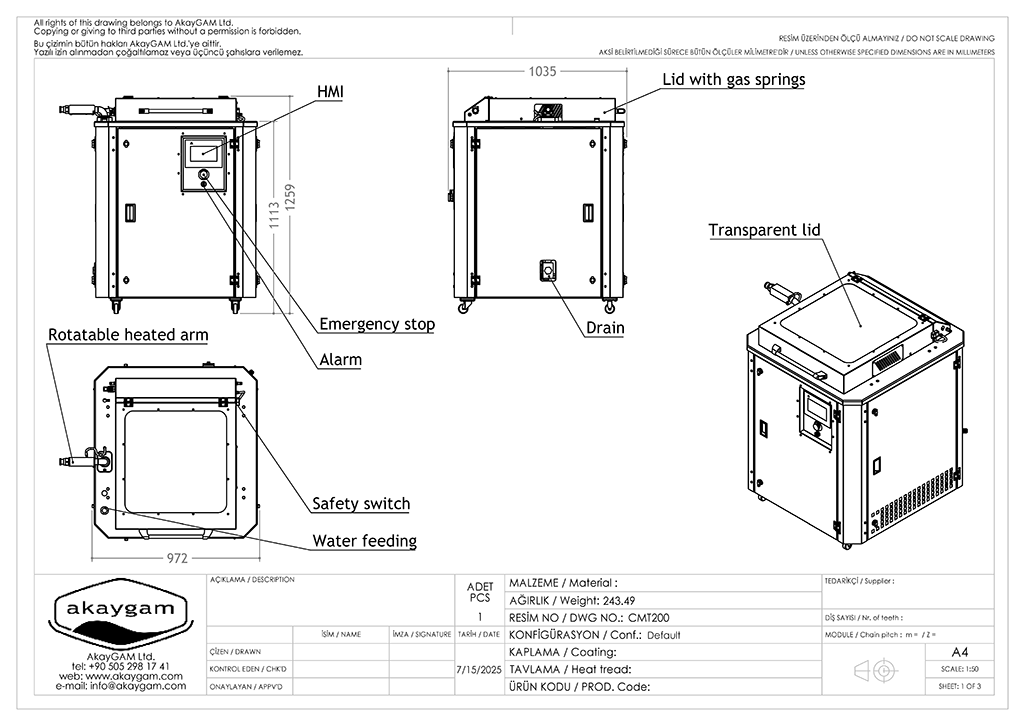
CMT400 Chocolate Melting and Holding Tank – Technical Specifications
Sized for shifts that consume up to 400 kg of chocolate. A single load covers one shift on lines drawing up to 50 kg/h, without a mid-run refill stop. Holds the molten chocolate at working temperature and feeds it to tempering, enrobing, or depositing equipment. Accepts 220 V single-phase or 380 V three-phase supply. Not insulated. Not rated for solid blocks or shift consumption above 400 kg.
Base Price 15.000,00 € (excl. VAT), EXW Istanbul
Optional devices and export packaging are not included in the base price.
CMT400 Chocolate Melting and Holding Tank – Dimensions
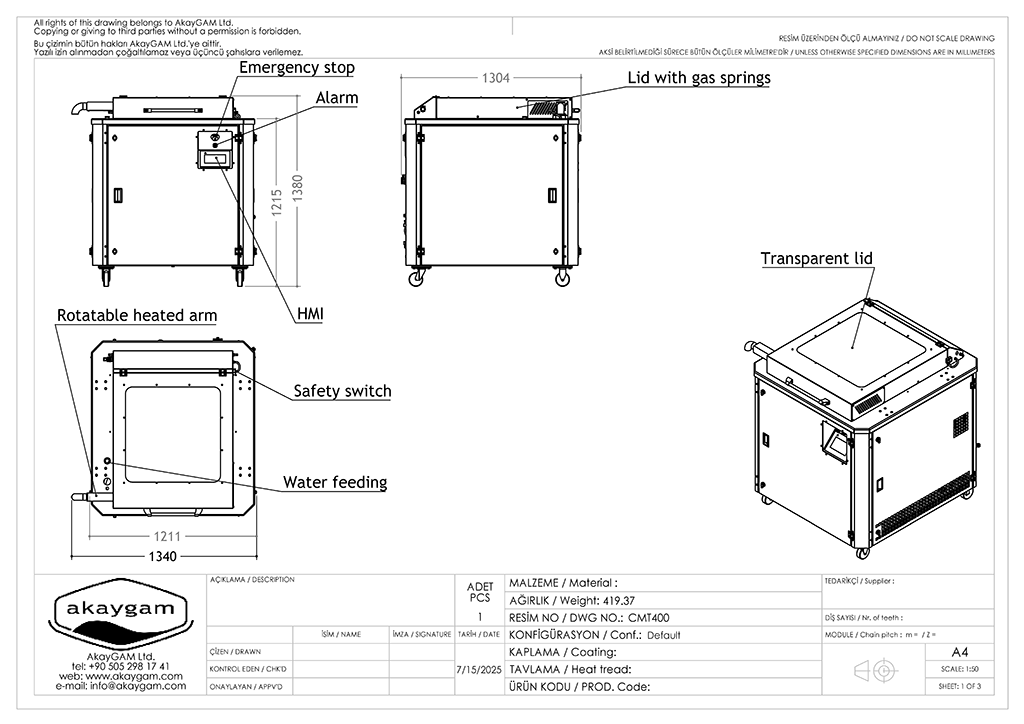
CMT600 Chocolate Melting Tank – Technical Specifications
Sized for shifts that consume more than 400 kg of chocolate. The extra 200 kg of buffer above the CMT400 absorbs shift consumption without a refill stop. Choose CMT400 if a single 400 kg load covers the shift; the extra capacity is unused at higher energy cost. Accepts 220 V single-phase or 380 V three-phase supply. Not insulated; heater duty cycle is higher than CMT1000INS in continuous operation.
Base Price 17.000,00 € (excl. VAT), EXW Istanbul
Optional devices and export packaging are not included in the base price.
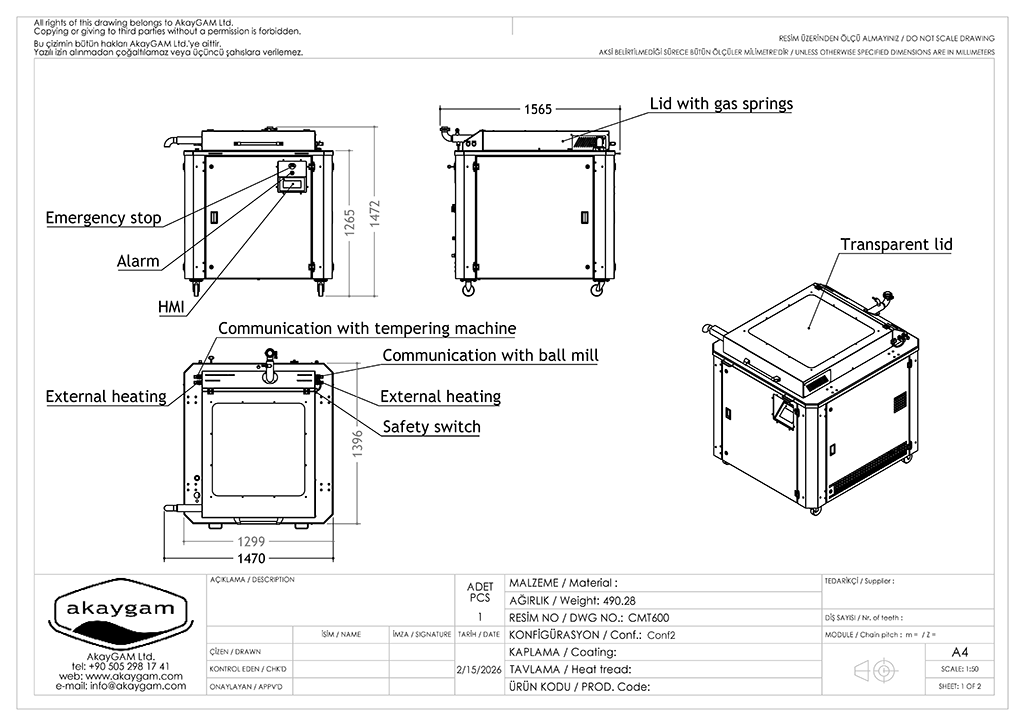
CMT600 Chocolate Melting Tank – Dimensions
CMT1000INS Insulated Chocolate Melting Tank – Technical Specifications
For continuous production lines requiring large-volume melting, thermal stability, and clean downstream transfer. Glass wool insulation around the water jacket lowers heater duty cycle during continuous operation, reducing energy consumption and waste heat. 380 V three-phase required. Not rated for solid blocks; not available on single-phase supply.
Base Price 23.000,00 € (excl. VAT), EXW Istanbul
Optional devices and export packaging are not included in the base price.
CMT1000INS Insulated Chocolate Melting Tank – Dimensions

CBM1000 Chocolate Block Melter – Technical Specifications
For direct loading and controlled melting of solid chocolate blocks. A separate heated melting grid applies heat at the block surface. The rectangular reservoir below holds the molten chocolate under horizontal agitation. Glass wool insulated. 380 V three-phase required. Not optimised for callet-only operations; not available on single-phase supply.
Base Price 25.000,00 € (excl. VAT), EXW Istanbul
Optional devices and export packaging are not included in the base price.
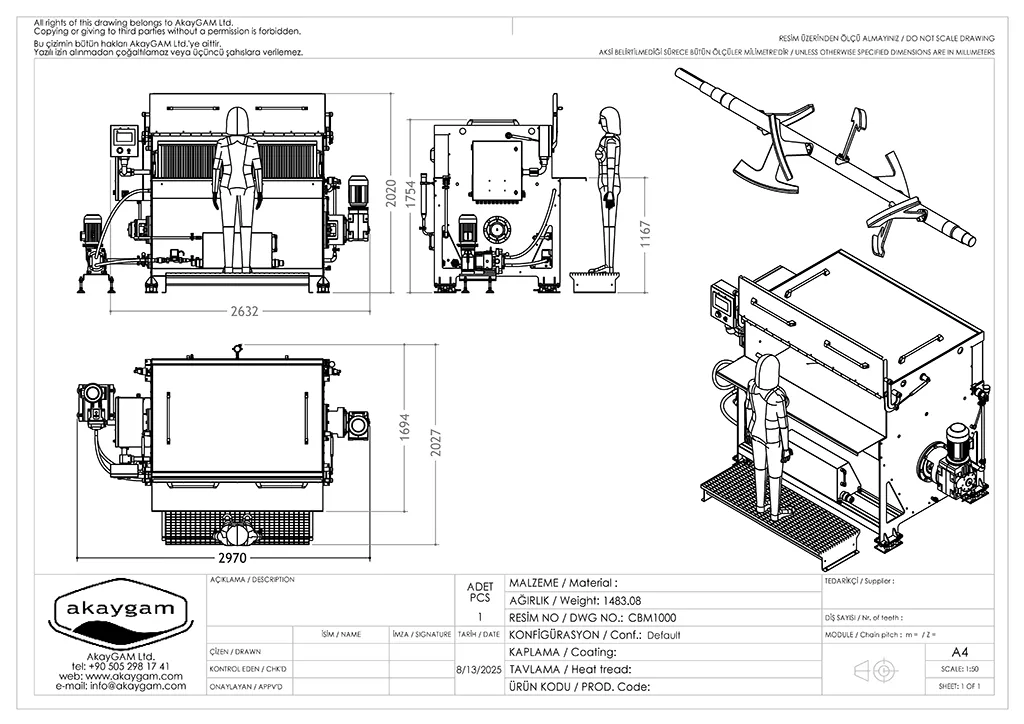
CBM1000 Chocolate Block Melter – Dimensions
Related equipment
Melting tanks feed downstream storage tanks, tempering machines, and coating systems. Tempered chocolate returning through a bypass loop arrives below tank temperature; without reheating, it disturbs heat control and breaks feed accuracy to the tempering machine. A decrystallization tube in the return line reheats the stream before recirculation and stabilises tank conditions.

Frequently Asked Questions
Answers to common questions about AkayGAM chocolate melting tanks.
What is a chocolate melting tank used for?
Chocolate melting tanks are water-jacketed process vessels. They melt solid chocolate and hold the molten chocolate for downstream feeding. After melting, the molten chocolate is transferred by an integrated chocolate pump to the next stage. They sit upstream of storage, tempering, forming, and coating equipment. Jacket heating and agitation maintain consistent viscosity through the downstream feeding cycle. Without a melting tank in this position, downstream tempering or forming equipment runs dry between batches.
What is the difference between a cylindrical chocolate melter and a chocolate block melter?
The difference is input format and how heat is introduced. Cylindrical CMT models accept callets, drops, and rework. The cylindrical reservoir and agitation keep free-flowing material in motion under jacket heat. The CBM1000 accepts solid chocolate blocks. A separate heated melting grid applies heat at the block surface from above; the rectangular reservoir below holds the molten chocolate under horizontal agitation. Loading solid blocks into a cylindrical CMT model can overload the agitator motor and stop the drive. Loading callets into the CBM1000 means paying for a heated grid designed for solid blocks rather than free-flowing material.
Which model size is right for my production?
Decide input format first, then capacity and supply:
A non-insulated tank in continuous operation consumes more energy per hour. Loading solid blocks into a cylindrical CMT model can overload the agitator motor and stop the drive. The CBM1000 will not run on single-phase supply.
Which model is suitable for solid chocolate blocks?
The CBM1000 only. It uses a separate heated melting grid and a rectangular reservoir layout. No cylindrical CMT model is rated for direct solid-block loading. Forcing a block into a cylindrical CMT model risks agitator motor overload, mechanical impact on the tank bottom, and extended melt cycles. The CBM1000 requires 380 V three-phase; there is no single-phase block melter in this range.
Can liquid couverture or recirculated chocolate be fed into a cylindrical CMT model?
Yes, but connection method and reheating differ by model. On CMT100–600, a water-jacketed chocolate inlet assembly is available as an optional fitting. On the CMT1000INS, two inlet fittings are standard — one for bypass return, one for upstream equipment. In both cases, chocolate returning from a tempering bypass at 29–32°C must be reheated to tank holding temperature (40–50°C) before re-entry. Feeding cold return directly into a warm tank causes localised crystallisation at the inlet. A decrystallization tube in the return line handles the reheating step.
Can these tanks be used as holding or buffer tanks?
Yes. All cylindrical CMT models can hold already-liquid chocolate at process temperature between batches while feeding downstream equipment. A melting tank in this role draws more energy than a dedicated storage tank, since its jacket and agitator are rated for the demands of the melting phase rather than steady-state holding. If long-duration storage or production-line buffering is the primary duty, select an ST storage tank by required hold volume and holding duration.
What is the difference between a chocolate melting tank and a chocolate storage tank?
The distinction is the primary process duty, not appearance — the two machines are visually identical. A chocolate melting tank is selected when the phase transition from solid to liquid is the primary duty: loading cold callets, drops, or rework and converting them to a liquid mass. A chocolate storage tank is selected when temperature-controlled holding of already-liquid chocolate, buffer volume, and holding duration are the primary duties. Page ownership follows the buyer's primary process requirement: select the CMT or CBM range for solid-to-liquid conversion, and the ST range for holding and line buffering. A melting tank used only for holding adds thermal and mechanical capacity the holding duty does not require.
Can rework chocolate be melted in these tanks?
Yes, in cylindrical CMT models provided rework is loaded in a format that circulates reliably under agitation — broken pieces, chips, or shavings. For large solid rework blocks, the CBM1000 is the appropriate choice. Loading solid rework blocks into a cylindrical CMT model causes the same agitator motor overload and mechanical impact on the tank bottom as loading new chocolate blocks.
When does a line need more than one melting tank?
Two tanks in series allow continuous operation: one feeds the line while the second loads and melts. This eliminates the production stop between batches that a single tank creates. At 200 kg/h line consumption, a single 400 kg tank empties in roughly two hours — a second 400 kg tank in rotation removes that constraint. Two tanks in parallel serve separate chocolate types simultaneously, where a single tank with recipe change would require a full CIP cycle between types. A single 1000 kg CMT1000INS or CBM1000 replaces two smaller tanks in series when batch size matches consumption rate and the recipe does not change between runs.
Can chocolate be transferred before full melting is complete?
Yes. Once a stable liquid phase is established, the integrated chocolate pump can feed downstream equipment while remaining solid chocolate continues to melt under agitation and jacket heating. Starting the pump before a continuous liquid phase is established will stall it against the solid load.
What does the INS option add over the non-insulated cylindrical CMT models?
Glass wool insulation around the water jacket limits heat exchange with the room in both directions, yielding continuous-operation benefits:
The benefit applies during every operating hour, independent of hold duration. CMT100, CMT200, CMT400, and CMT600 are not insulated; CMT1000INS is. The CMT1000INS also adds the stainless steel lobe pump, 1500-micron sieve filter, and standard bypass-return and upstream-feed inlets.
What maintenance and warranty do AkayGAM chocolate melting tanks need?
Warranty: 1 year against manufacturing and construction defects. Lead time: 3–4 months, built to the required capacity, voltage, and piping specification.