
Powdered Sugar Grinder
The sugar mill pulverizes granulated sugar into powdered sugar with an average particle size around 300 µm through high-speed impact grinding. It sits upstream of the ball mill refiner in chocolate production lines. Rotor configuration is driven by required throughput: throughput up to 200 kg/h uses the hammer rotor; above 200 kg/h requires the pin mill rotor. Selecting the hammer rotor for a high-capacity line creates a sugar supply bottleneck that the ball mill cannot compensate for.
Rotor Selection: First Decision
Hammer rotor — up to 200 kg/h. Cross-shaped swinging hammers break sugar by impact against a toothed liner ring. Simpler configuration. Suited for small workshops, artisan producers, and intermittent runs where ball mill capacity is 200 kg/h or below. Do not select this rotor if your downstream ball mill operates above 200 kg/h — the hammer rotor will become the limiting step in every batch and force the ball mill to wait.
Pin mill rotor — up to 1000 kg/h. Rows of hardened 16MnCr5 steel pins on a rotating disc intermesh with fixed pins on the stator, generating simultaneous impact and shear. Produces tighter particle size distribution than the hammer configuration. Add the water-cooled housing option when the pin mill rotor runs continuously without extended pauses — without cooling, chamber heat accumulates, sugar softens, and product begins to stick to internal surfaces.
Share
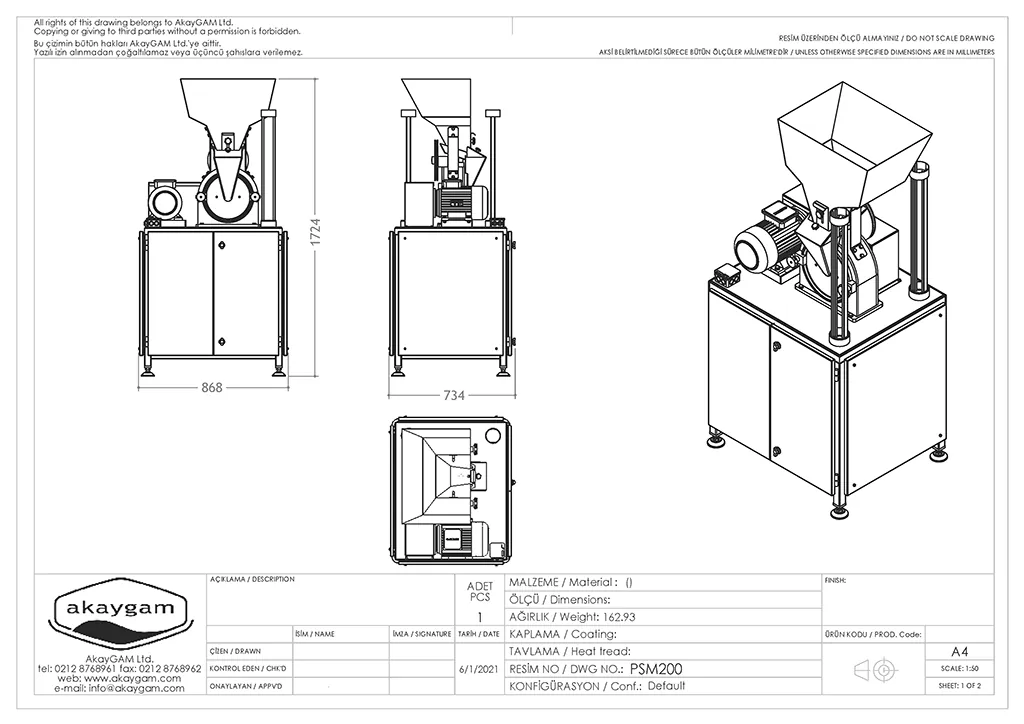
 PSM200
Rotor Configuration Comparison
| Configuration | Max throughput | Grinding mechanism | Particle size distribution | Water cooling | Eliminates if… |
|---|---|---|---|---|---|
| Hammer rotor | 200 kg/h | Impact against toothed liner ring | Wider distribution | Not required | Ball mill throughput exceeds 200 kg/h, or consistent fineness is critical |
| Pin mill rotor | 1000 kg/h | Impact and shear between rotating and fixed pin rows | Tighter distribution | Required for continuous runs | Ball mill throughput is 200 kg/h or below and runs are intermittent |
Suitable and Unsuitable Inputs
The powdered sugar mill handles dry, free-flowing granulated sugar and dry crystalline ingredients of similar hardness. Do not use it for fatty, oily, or hygroscopic materials. Cocoa nibs, roasted nuts, and cocoa paste release oil during grinding, coat the chamber walls, clog the rotor assembly, and require full disassembly to clean.
Powdered Sugar Mill Position in the Production Line
The powdered sugar mill sits upstream of the ball mill refiner. Powdered sugar with an average particle size around 300 µm enters the ball mill alongside cocoa paste, cocoa butter, and lecithin for fine refining to the 18–25 µm target fineness of finished chocolate. Skipping this step and feeding granulated sugar directly forces the ball mill to do coarse and fine grinding simultaneously — this extends the refining cycle and accelerates wear on the grinding media. This mill is not suitable for fatty materials such as cocoa nibs or roasted nuts; those require a separate cocoa nib grinder before the ball mill.
Maintenance, Safety, and Warranty
Dust collection and filters: Empty the integrated dust collection bins before they fill, and inspect the magnetic safety filter on a regular schedule so metal fragments cannot pass into the discharge flow or generate sparks. Fine sugar dust is combustible; keep the area clean and the machine earthed against static buildup.
Rotor and pin wear: The 16MnCr5 hardened steel pins and the swinging hammers are high-friction wear parts. Worn impact surfaces reduce grinding efficiency and widen the particle size distribution, sending coarser sugar to the downstream ball mill and lengthening its refining cycle. Inspect the impact surfaces on a routine schedule and replace before distribution drifts out of range. Do not wash the chamber with water — sugar dissolves and recrystallises on internal surfaces; clean by dry brushing and vacuuming only.
Warranty & lead time: The PSM200 carries a 1-year warranty against manufacturing and construction defects, excluding normal wear parts such as pins, hammers, and liner rings. Lead time is 3–4 months from order, as units are configured to the required rotor and cooling specification.
PSM200 Powdered Sugar Grinder – Technical Features
For pre-grinding granulated sugar before ball mill refining. Configurable with hammer rotor (up to 200 kg/h) or pin mill rotor (up to 1000 kg/h). Integrated dust collection and magnetic filter standard. Water-cooled housing optional and required for continuous high-capacity pin mill operation. Not suitable for fatty, oily, or hygroscopic materials.
Base Price 7.500,00 € (excl. VAT), EXW Istanbul
Optional devices and export packaging are not included in the base price.
PSM200 Powdered Sugar Grinder – Technical Drawing
Related equipment
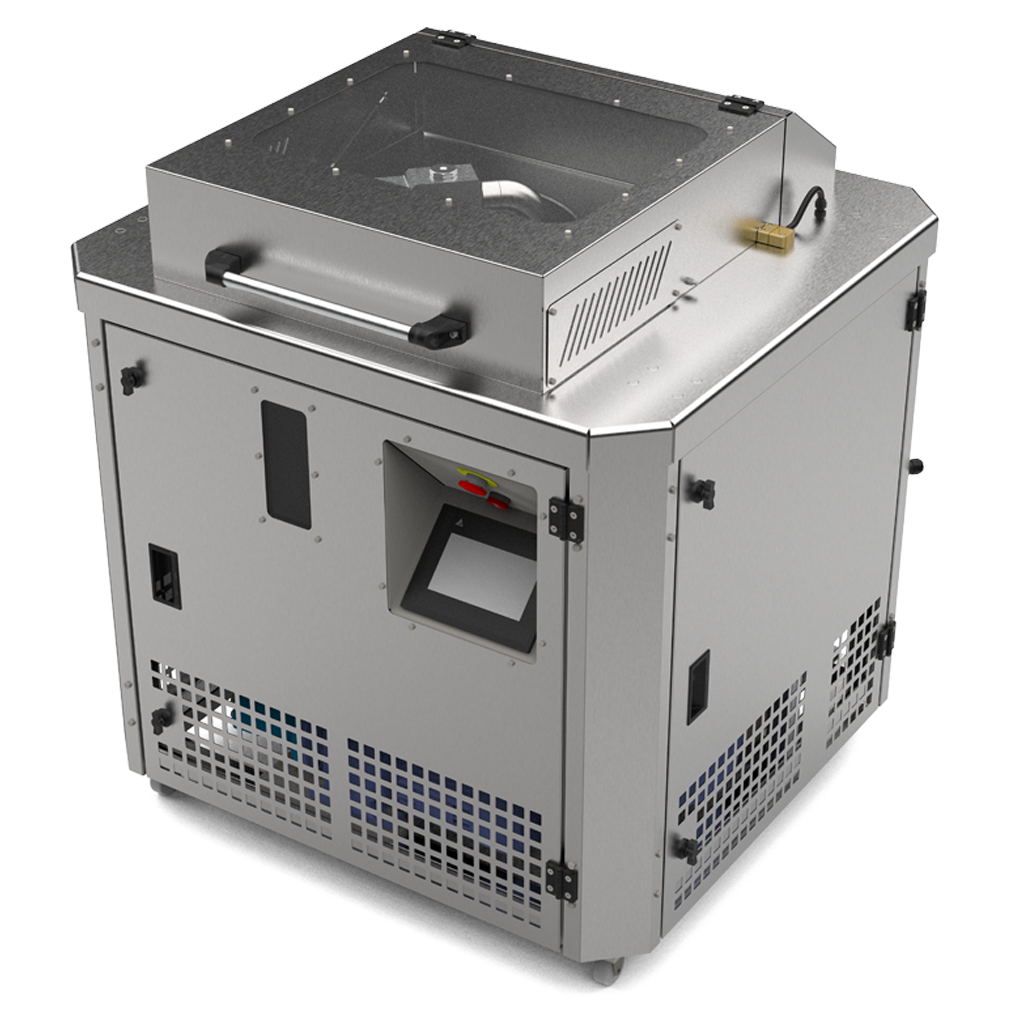
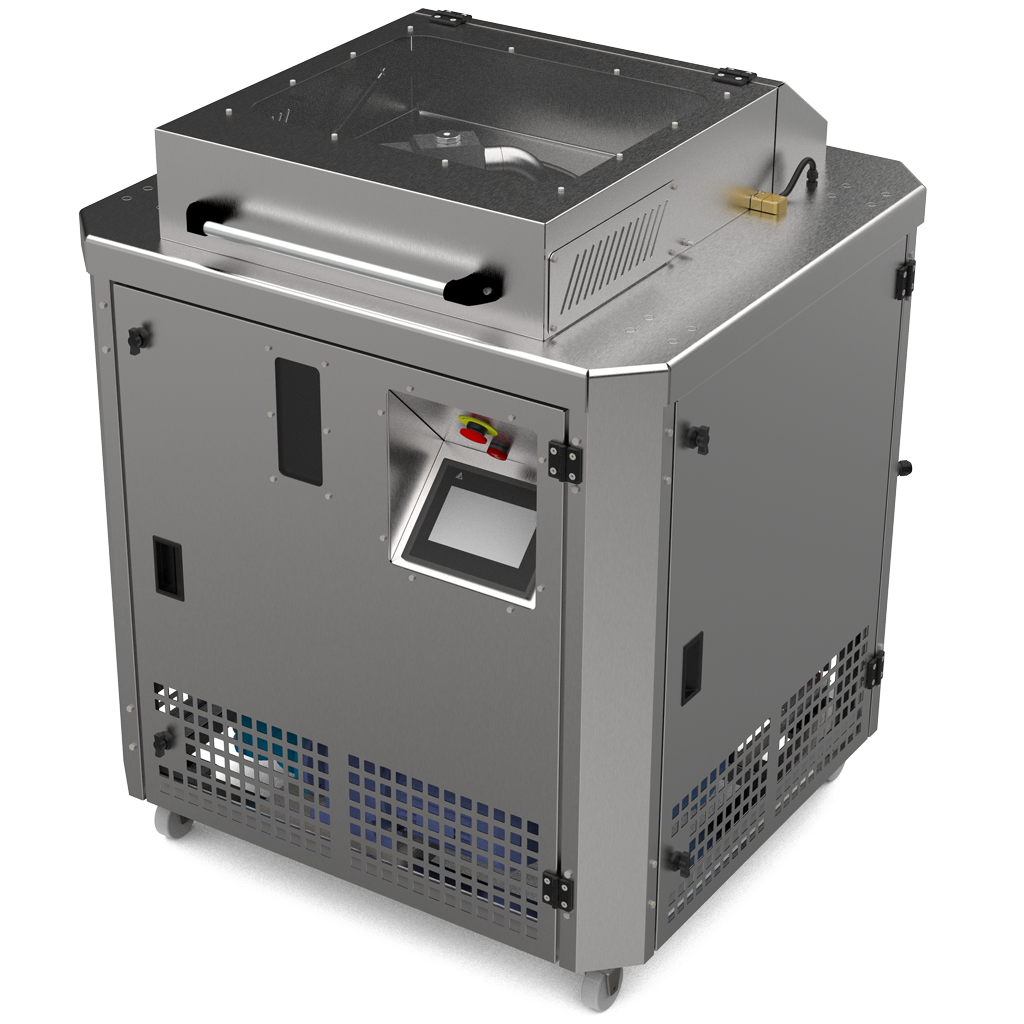
The powdered sugar mill feeds pre-ground powdered sugar directly to the chocolate ball mill refiner. Pre-grinding to an average particle size around 300 µm reduces the mechanical load on the ball mill and shortens the time required to reach the 18–25 µm target fineness of finished chocolate. Ball mill models from the RBM range cover throughput from small laboratory batches through to high-volume industrial refining lines.


Frequently Asked Questions
Answers to common questions about the AkayGAM powdered sugar grinder.
Why use a powdered sugar grinder instead of feeding granulated sugar directly to a ball mill?
Granulated sugar crystals are significantly harder than the fat-based chocolate mass that surrounds them during ball milling. Feeding granulated sugar directly forces the ball mill to do two jobs: breaking down large crystals and refining the mass to the target particle size. This extends refining time, increases energy consumption per batch, and accelerates wear on the grinding media. Pre-grinding to an average particle size around 300 µm means the ball mill handles fine refining only.
What is the difference between the hammer rotor and the pin mill rotor?
The difference sets maximum throughput and particle distribution:
Selecting the hammer rotor for lines operating above 200 kg/h creates a throughput bottleneck that the downstream ball mill cannot compensate for.
What fineness does the PSM200 produce?
Typical output fineness is approximately 300 µm average particle size depending on rotor type, feed rate, and sugar moisture content. This range is suitable for ball mill refining, where sugar is further reduced to the 18–25 µm target fineness of finished chocolate. Running the mill above rated capacity to increase throughput will coarsen output and push particle size outside the target range.
Is sugar dust a safety concern during grinding?
Yes. Fine sugar particles suspended in air are combustible. Sugar dust clouds in confined spaces can ignite and cause a dust explosion if an ignition source — including static discharge — is present. The PSM200 addresses this with integrated dust collection filters that capture airborne particles, a magnetic filter that retains metal fragments which could generate sparks, and an enclosed grinding chamber that limits dust dispersion. Operators should follow standard food-grade dust safety practices: keep the grinding area clean, avoid dust accumulation on surfaces and in ducts, and ensure the machine is properly earthed to prevent static buildup.
Why does the high-capacity configuration need water cooling?
Impact grinding converts mechanical energy to heat. At low throughputs this heat dissipates naturally through the housing walls. At higher throughputs — particularly with the pin mill rotor running continuously — heat generation exceeds natural dissipation and chamber temperature rises. Sugar begins to soften and clump, and prolonged heat exposure causes it to caramelise on internal surfaces, blocking the mill and requiring a full cleanout. Water cooling of the main housing removes excess heat during continuous operation, maintaining stable product temperature and preventing buildup on chamber walls.
Can the PSM200 grind other ingredients besides sugar?
The PSM200 handles dry, free-flowing granulated sugar and dry crystalline ingredients of similar hardness only. Do not process:
These release oil under high-speed impact, which coats the chamber walls, clogs the rotor assembly, and requires full disassembly to clean. For pre-grinding nuts or nibs, use a dedicated cocoa nib grinder.
Where does the powdered sugar grinder sit in a chocolate production line?
Upstream of the ball mill refiner. Granulated sugar enters the PSM200, is ground to powdered sugar with an average particle size around 300 µm, and then fed into the ball mill together with cocoa paste, cocoa butter, and lecithin. Skipping this step and feeding granulated sugar directly to the ball mill forces it to handle coarse breaking and fine refining simultaneously — this extends refining time, increases energy per batch, and accelerates wear on grinding media.
What maintenance and warranty does the PSM200 sugar mill need?
Warranty: 1 year against manufacturing and construction defects, excluding normal wear parts (pins, hammers, liner rings). Lead time: 3–4 months, configured to the required rotor and cooling specification.