
Chocolate Tempering Machine
A wheel-type chocolate tempering machine, or wheel temperer, crystallizes real chocolate into stable Form V cocoa butter and holds that state through molding, dipping, or enrobing. The range covers tabletop chocolate tempering machines for artisan workshops and small-batch production (TTWBTM20 family) and a floor-standing wheel chocolate temperer for batches above 20 kg (WBTM50). Model selection is driven by two constraints in this order: batch size and downstream operation. Selecting the 20 kg unit for batches above 20 kg forces refills mid-process and requires repeated melting and tempering cycles between loads, slowing production rhythm and increasing handling. Selecting a configuration without a vibration table for polycarbonate molding leaves trapped air in the cast, producing pinholes on the finished surface.
VIDEOChocolate Tempering Machine Selection: First Decision
Batch size determines the model. Downstream operation determines the configuration.
Up to 20 kg, dipping or hand-decoration without polycarbonate moulding → TTWBTM20-Default. Tabletop wheel temperer with removable lid. Tempered chocolate is dipped manually from the tank. No vibration table — adequate when the line already has one or when the work is dipping, hand-decoration, or R&D. Choose Conf1 or Conf2 instead when polycarbonate moulding apply.
Up to 20 kg, polycarbonate moulding → TTWBTM20-Conf1 / Conf2. Conf1 adds an integrated vibration table — required for moulding in polycarbonate; without it, deposited chocolate retains air and surfaces show pinholes. Conf2 adds a hinged gas-spring lid for ergonomic operation — easier to open and close, stays open hands-free between dips, and removes manual lid handling from each cycle. For buyers who do not need ergonomic lid handling, Conf1 covers the same vibration-table function at lower cost.
Up to 20 kg with integrated enrobing → TTWBTM20-Conf3. Conf3 integrates an enrobing belt; tempered chocolate flows from tank to belt with no transfer step — chosen when coating is the primary operation. WBTM50 is floor-standing, ships with the vibration table standard, and covers batches above 20 kg up to 50 kg. Above 50 kg, no batch model exists in the range; a continuous screw temperer is required.
Up to 50 kg batch tempering → WBTM50.
Share
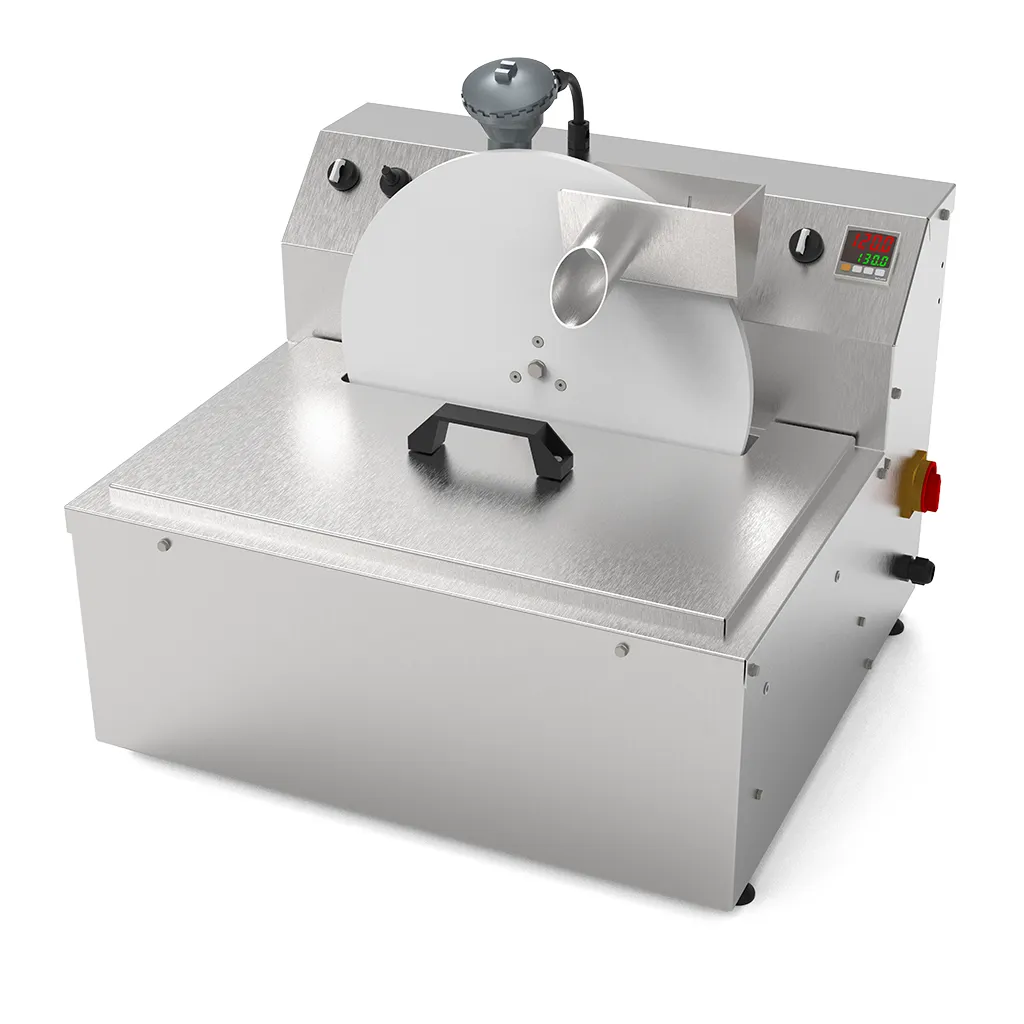 TTWBTM20-Default
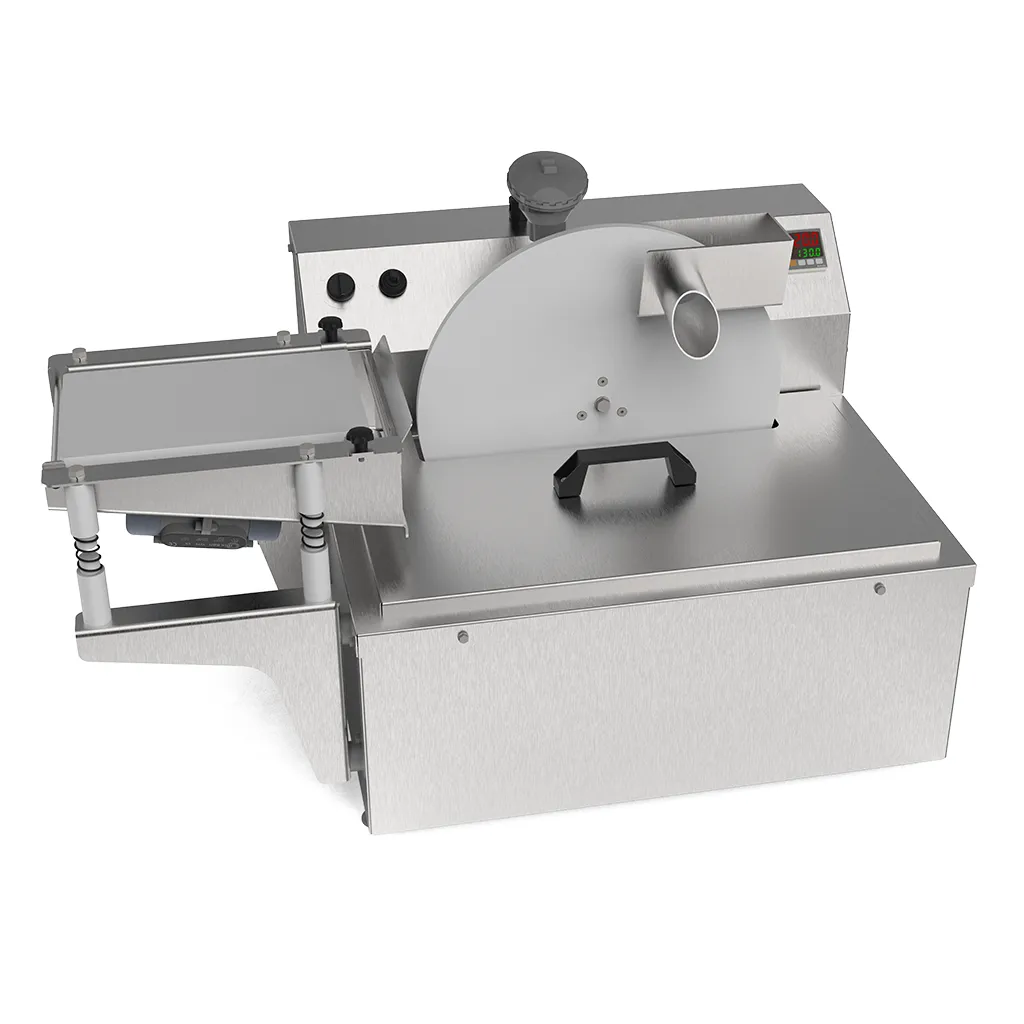 TTWBTM20-Conf1
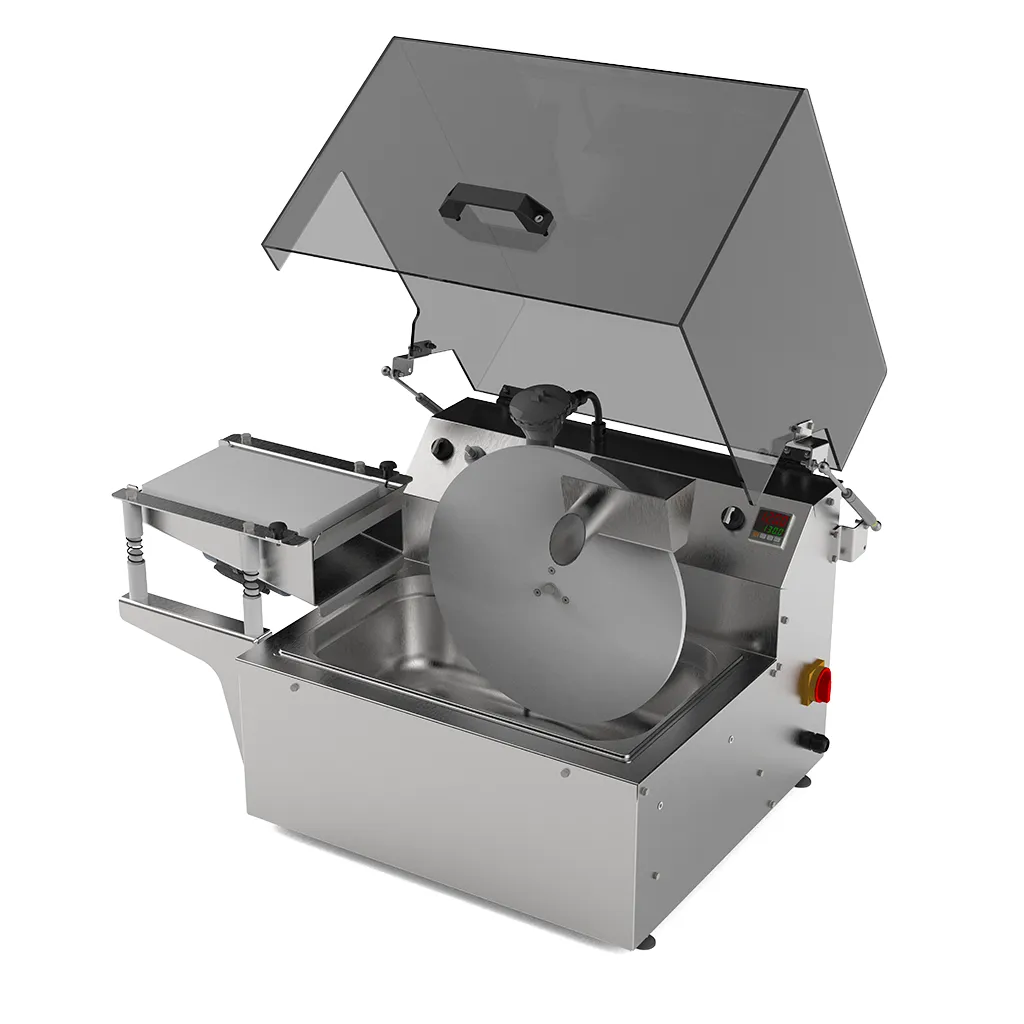 TTWBTM20-Conf2
 TTWBTM20-Conf3
 WBTM50
Model Range — Comparison
Five wheel-type chocolate temperers cover 20–50 kg batch production. One row eliminates one model. Read the “Eliminates if…” column first.
| Model | Capacity | Power | Vibration table | Lid | Belt | Eliminates if… |
|---|---|---|---|---|---|---|
| TTWBTM20-Default | 20 kg | 0.5 kW | Optional | Removable | Optional | Polycarbonate molding without an external vibration table, or batch >20 kg |
| TTWBTM20-Conf1 | 20 kg | 0.7 kW | Included | Removable | Optional | Frequent lid handling makes operation tiring, or batch >20 kg |
| TTWBTM20-Conf2 | 20 kg | 0.7 kW | Included | Hinged gas-spring | Optional | Ergonomic lid handling not required, or batch >20 kg |
| TTWBTM20-Conf3 | 20 kg | 0.8 kW | Optional | Hinged gas-spring | Included | Coating is not the primary operation, or batch >20 kg |
| WBTM50 | 50 kg | 1.5 kW | Included | Standard | Optional | Tabletop space only (no floor footprint), or batch >50 kg (no larger wheel temperer in this range) |
Process constraints that apply to every model
Real chocolate only. These machines temper cocoa-butter-based chocolate. Compound coatings use vegetable fats, do not crystallize, and do not require cocoa-butter tempering — they solidify by simple cooling. The heated tank can hold compound at working temperature, but buying a temperer for compound-only operations means paying for unused crystallization control. A melter and holding tank cover that role at lower cost.
Ambient temperature: 20–25 °C. Above 25 °C, temper becomes less stable, process time increases, and maintaining crystal consistency becomes more difficult. The machine cannot compensate for room temperature. In warm climates, install air conditioning in the working area or production will be inconsistent.
Seed chocolate required. The seed method depends on adding pre-crystallized chocolate (typically 1–2% of batch weight) to fully melted chocolate. Without seed, the wheel cannot generate Form V crystals on its own — fan cooling alone produces unstable Form IV that sets dull and blooms within days.
Verify temper before molding. Apply a thin layer to a metal surface at 20–22 °C. Tempered chocolate sets glossy and non-tacky within 3–5 minutes. If it sets matte or stays soft past five minutes, lower the working temperature, add more seed, and retest. Skipping this check wastes the entire batch if temper is wrong.
Raise melt temperature in stages, not straight to maximum. When solid chocolate is loaded, the temperature sensor sits in air, not in product, and reads the air temperature rather than the chocolate. Increase the melting setpoint gradually as the chocolate liquefies. Only once the sensor is submerged in liquid chocolate should the setpoint be raised to the maximum melting temperature. Setting maximum melt temperature on a solid load makes the heater drive against an air reading and scorches the chocolate against the tank surface before the sensor ever measures the product.
Working principle
Solid couverture or pre-melted chocolate is loaded into the open tank. A PID-controlled dry heating element brings the mass to full melt (typically 45–50 °C for dark, 40–45 °C for milk and white) to dissolve all existing crystals. Fan-assisted cooling then drops the temperature toward the working range while the wheel agitates continuously. Pre-crystallized seed chocolate is added during cool-down to nucleate Form V crystals. The wheel distributes seed crystals through the mass; PID control holds the working temperature for the rest of the session.
Wheel Temperer Position in the production line
Upstream: a liquid chocolate conche or chocolate storage tank supplies fully refined, conched chocolate at storage temperature. The temperer is the last conditioning step — chocolate enters as a uniform liquid and leaves as a tempered working mass.
Downstream: tempered chocolate moves directly to molding, depositing, dipping, or enrobing. Place the machine within reach of the forming station. Long transfer distance cools the chocolate and destabilizes crystals before they reach the mold; the cast then sets dull regardless of how well the temperer ran.
Maintenance and Warranty
Heating is dry, not water-jacketed. A PID-controlled dry heating element heats the tank, so there is no water circuit, no glycol, and no jacket descaling. This removes the scale and heater-fouling maintenance that water-jacketed melters and storage tanks require.
Cleaning at recipe changes. The open tank, wheel, and any enrobing belt are cleaned between incompatible recipes — for example dark to white. Never wash with water; chocolate seizes on contact. Scrape out residual chocolate warm, then wipe the tank, wheel, and belt with warm cocoa butter or food-grade fat-based solvent. A hairdryer or heat gun softens hardened chocolate on surfaces so it wipes away cleanly. Skipping the clean carries colour and flavour from the previous batch into the next.
Warranty & lead time. AkayGAM wheel temperers carry a 1-year warranty against manufacturing and construction defects. Lead time is 3–4 months from order, as units are configured to the selected vibration table, lid, and enrobing belt options.
Model Specifications
Common to all models
Tab specifications below show only the parameters that differ between models.
TTWBTM20-Default tabletop wheel-type chocolate temperer - technical features
Role: 20 kg tabletop unit, base configuration. No vibration table, no enrobing belt, removable lid. Not suitable when molding in polycarbonate molds without an external vibration table — deposited chocolate retains air and surfaces show pinholes. Above 20 kg per batch, move to WBTM50. 220 V single-phase, 0.5 kW.
Price 2.400,00 € (excl. VAT), EXW Istanbul
Export packaging is not included in the base price.
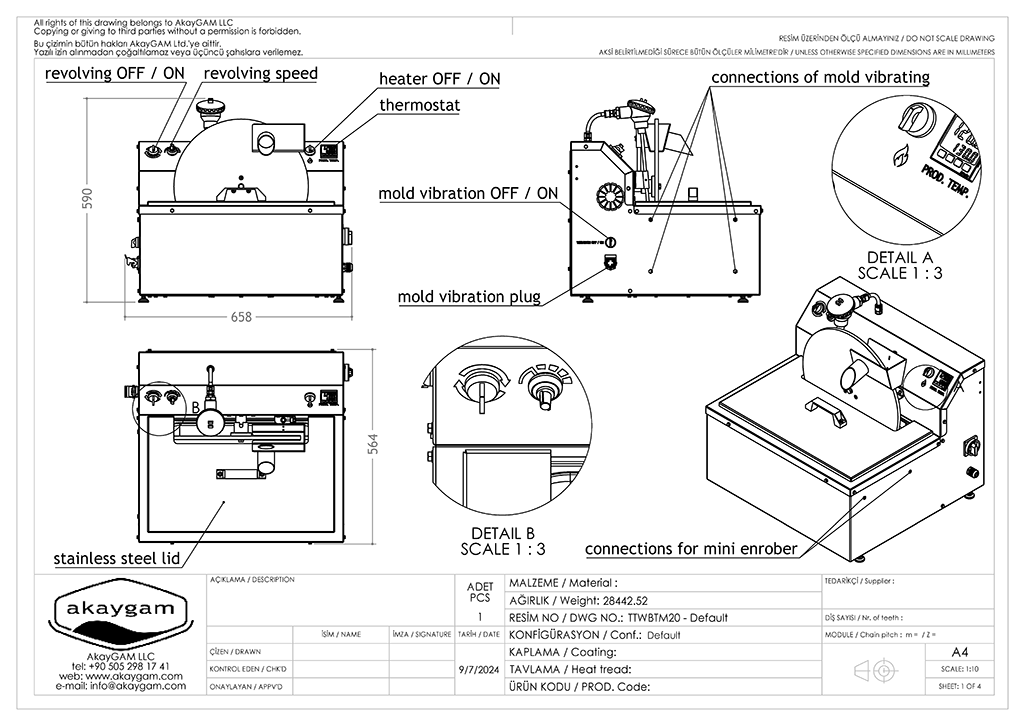
TTWBTM20-Default technical drawing
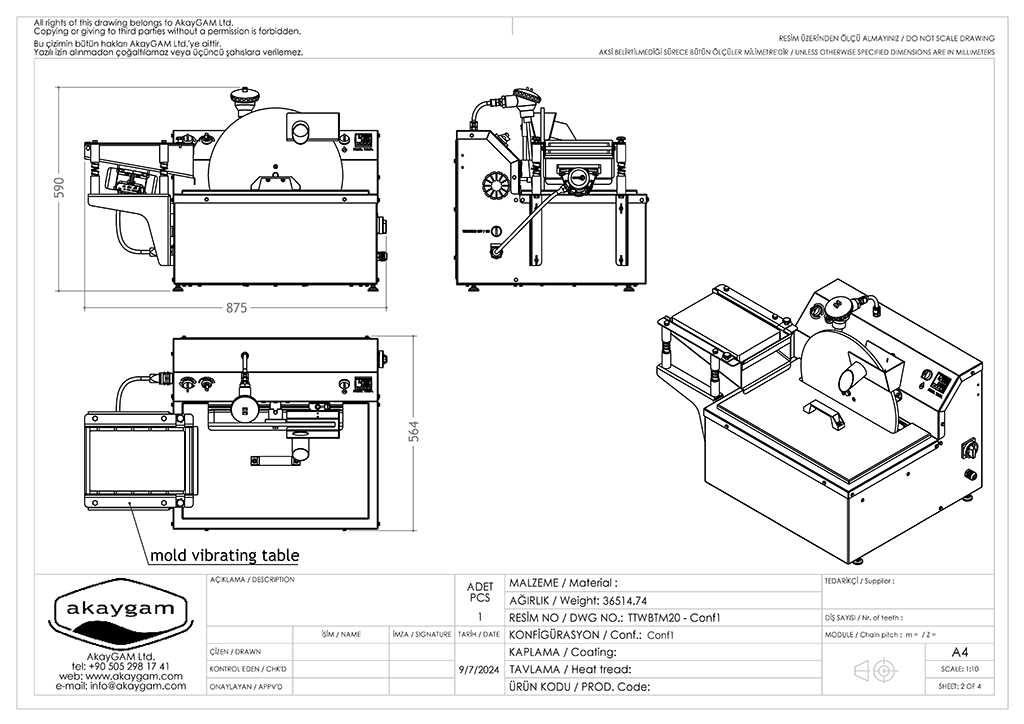
TTWBTM20-Conf1 wheel-type chocolate temperer with vibration table - technical features
Role: 20 kg tabletop unit with mold vibration table. Default choice for polycarbonate mold work. Conf2 becomes the better fit when ergonomic lid handling is needed — the hinged gas-spring lid is easier to open and close and removes manual lid handling from each cycle. Above 20 kg per batch, move to WBTM50. 220 V single-phase, 0.7 kW.
Price 3.000,00 € (excl. VAT), EXW Istanbul
Export packaging is not included in the base price.
TTWBTM20-Conf1 technical drawing
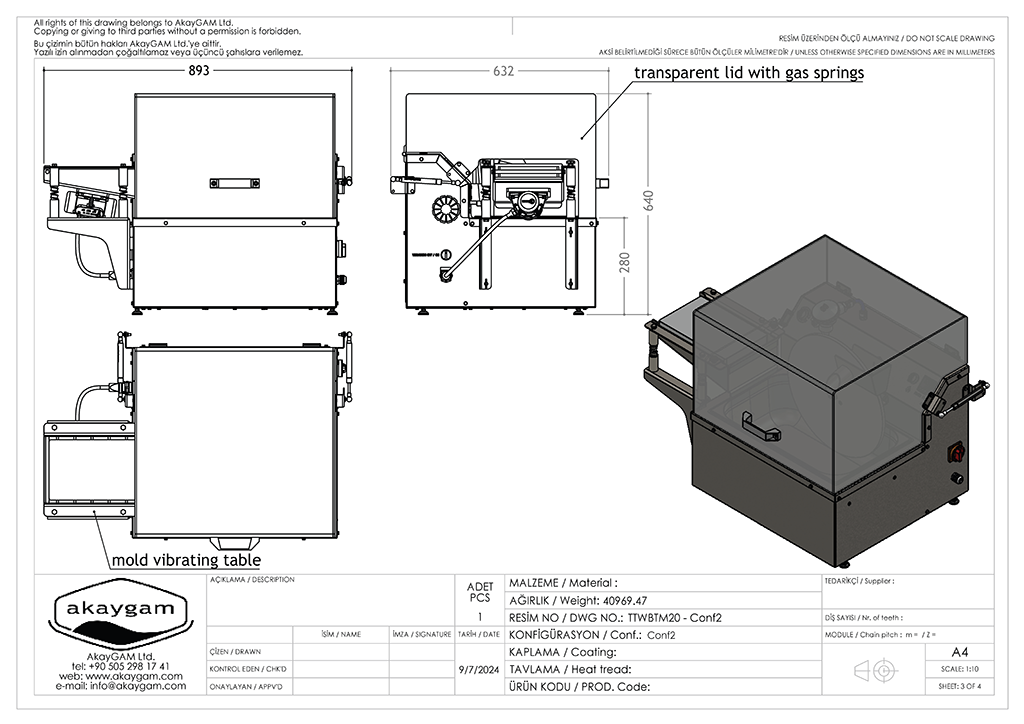
TTWBTM20-Conf2 wheel-type chocolate temperer with hinged gas-spring lid - technical features
Role: Conf1 with a hinged gas-spring lid for ergonomic operation. The gas springs handle the lifting work — the lid is easier to open and close, stays open hands-free between dips, and removes manual lid handling from each cycle. For buyers who do not need ergonomic lid handling, Conf1 covers the same vibration-table function at lower cost. Above 20 kg per batch, move to WBTM50. 220 V single-phase, 0.7 kW.
Price 3.200,00 € (excl. VAT), EXW Istanbul
Export packaging is not included in the base price.
TTWBTM20-Conf2 technical drawing
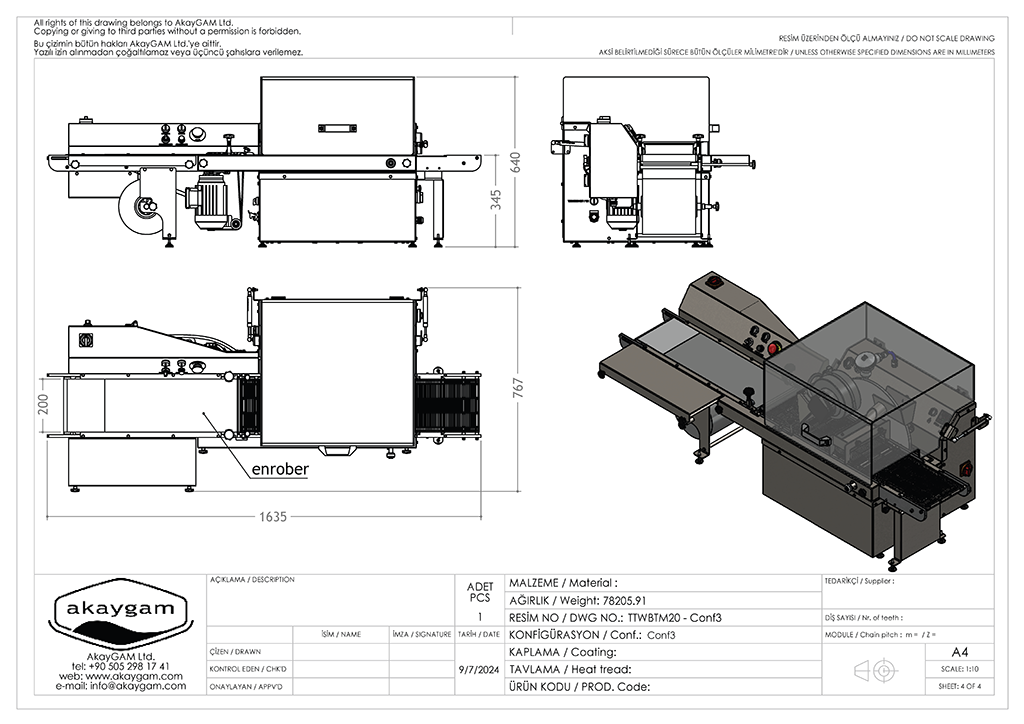
TTWBTM20-Conf3 wheel-type chocolate temperer with enrobing belt - technical features
Role: 20 kg tabletop unit with integrated enrobing belt for small-batch coating as the primary operation. Tempered chocolate flows from tank to belt with no transfer step that would otherwise risk crystal loss. Gas-spring lid included. The belt does not include a cooling tunnel — coated pieces cool separately. Not suitable when molding is the primary operation — the integrated enrobing belt adds cost without being used; choose Conf1 or Conf2 instead. Above 20 kg per batch, or for continuous higher-volume coating, move to WBTM50 paired with a standalone enrober. 220 V single-phase, 0.8 kW.
VIDEOPrice 9.900,00 € (excl. VAT), EXW Istanbul
Export packaging is not included in the base price.
TTWBTM20-Conf3 technical drawing
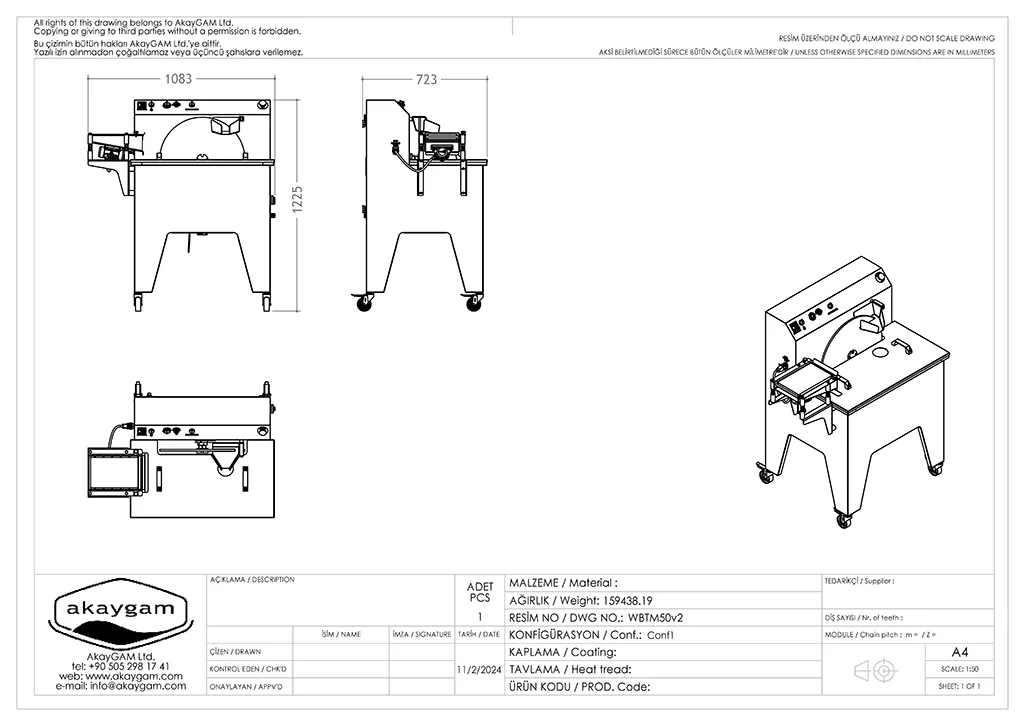
WBTM50 floor-standing wheel-type chocolate temperer - technical features
Role: 50 kg floor-standing unit for batches above 20 kg or production where repeated reloads interrupt molding rhythm. 2.5× the working volume of the TTWBTM20 in a single load. Mold vibration table standard. A TTWBTM20 used in this role requires repeated melting and tempering cycles between loads, slowing production rhythm and increasing handling. Not suitable when only tabletop space is available — the floor footprint will not fit. Above 50 kg per batch, no larger wheel temperer exists in this range; a continuous screw temperer is required. 220 V single-phase, 1.5 kW.
Price 5.500,00 € (excl. VAT), EXW Istanbul
Export packaging is not included in the base price.
WBTM50 technical drawing
Related equipment
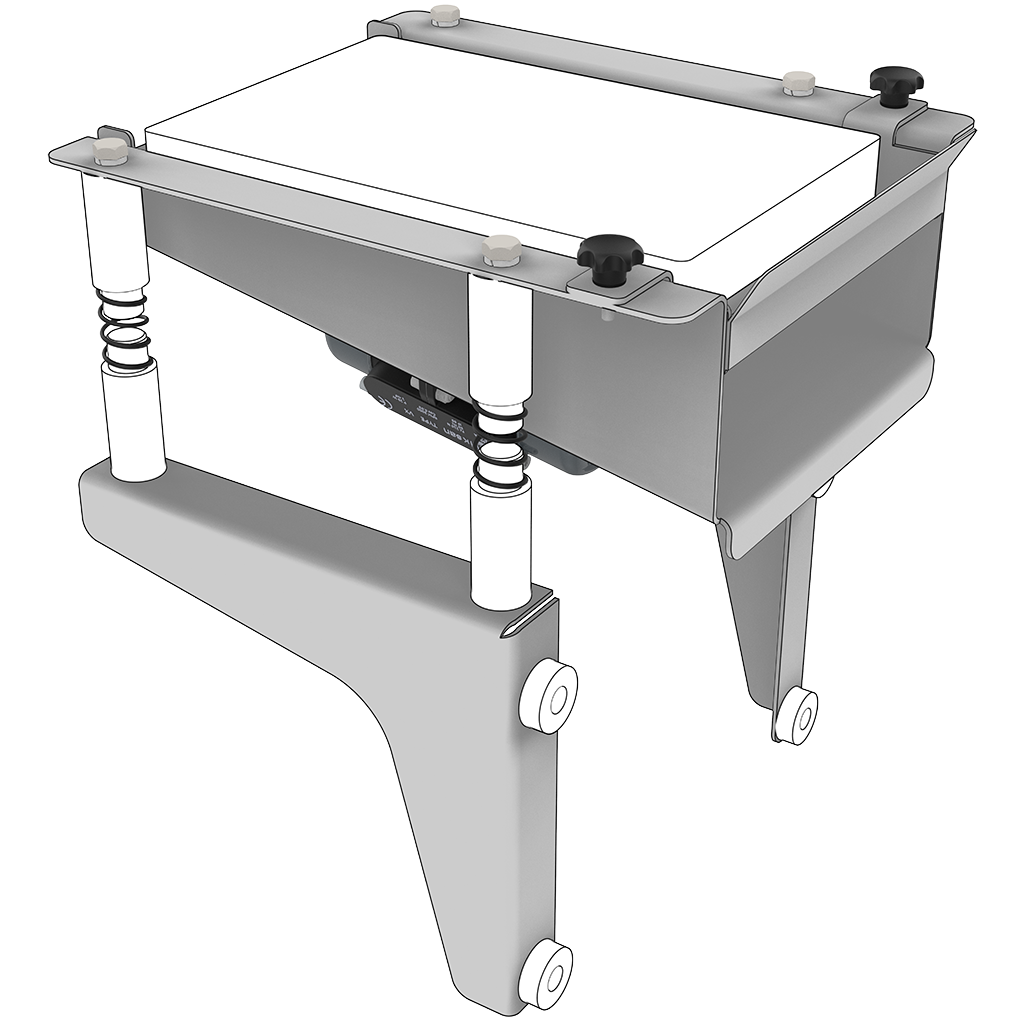
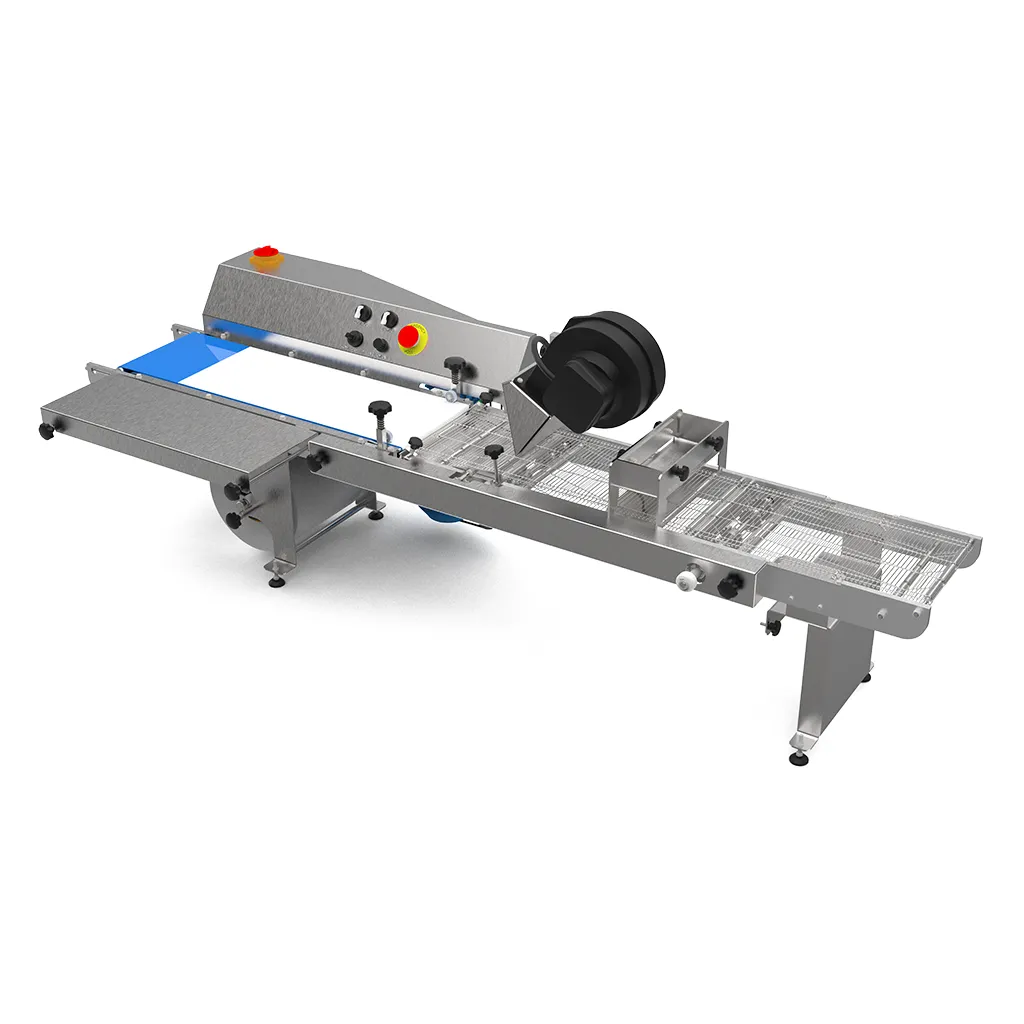
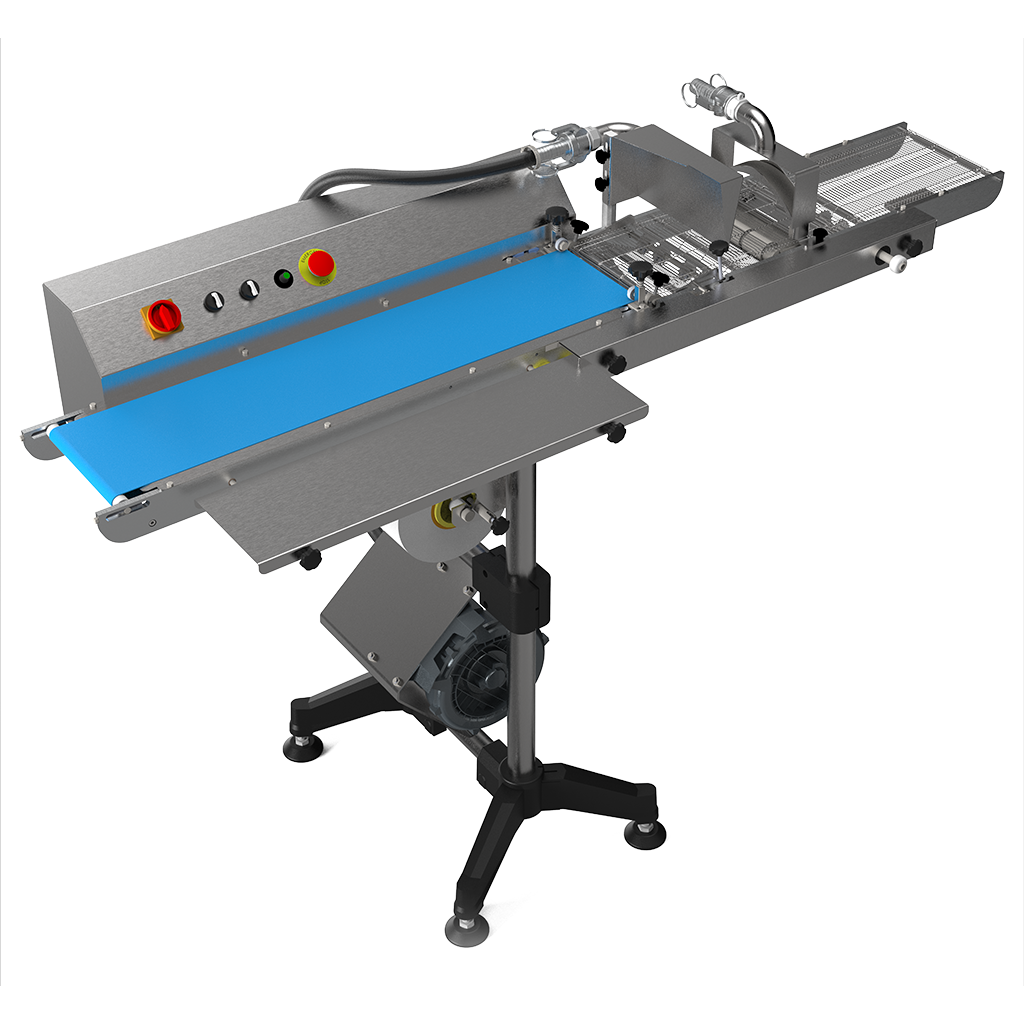
A wheel temperer cannot deliver glossy molded pieces from polycarbonate molds without a vibration table — air trapped at deposit produces visible pinholes. The vibration table is included in Conf1, Conf2, and WBTM50; for the Default unit, it must be added separately. For coating volumes beyond what the TTWBTM20-Conf3 belt handles, or to pair continuous coating with WBTM50 capacity, a standalone chocolate enrober is required. Skipping it forces manual dipping at higher labor cost and inconsistent coating thickness.
Frequently Asked Questions
Selection, process, and operating constraints for the wheel-type chocolate tempering machine range.
Which wheel temperer model should I choose?
Selection works in three levels. (1) Batch size — up to 20 kg → TTWBTM20; above 20 kg → WBTM50. (2) Downstream operation — molding in polycarbonate molds → vibration table required (Conf1 minimum); coating as the primary operation → Conf3 with integrated enrobing belt; vibration table already in use or molding not the primary operation → Default. (3) Lid operation (within the TTWBTM20 molding path) — standard removable lid → Conf1; ergonomic hinged gas-spring lid → Conf2. Selecting a model below your batch size forces refills mid-process and requires repeated melting and tempering cycles between loads, slowing production rhythm and increasing handling.
What is chocolate tempering and what happens without it?
Tempering controls cocoa butter crystallization into stable Form V crystals. Without tempering, chocolate sets dull, soft, and sticky, develops fat bloom within days, and will not release from molds. Tempered chocolate sets glossy, snaps cleanly, releases from molds, and stores stably. Skipping the tempering step is not recoverable downstream — molded pieces must be remelted and reprocessed.
TTWBTM20 or WBTM50 — which capacity?
Same wheel-type seed tempering principle in both. TTWBTM20 (20 kg, tabletop): short runs, recipe trials, artisan workflows. WBTM50 (50 kg, floor-standing): daily output above 20 kg covered in a single load. A TTWBTM20 used for 50 kg production requires repeated melting and tempering cycles between loads, slowing production rhythm and increasing handling.
Will it temper compound chocolate?
No. These machines temper cocoa-butter-based chocolate only. Compound coatings use vegetable fats, do not crystallize, and do not require cocoa-butter tempering — they solidify by simple cooling. The heated tank holds compound at working temperature, but the wheel agitation and crystallization control are unused. A melter and holding tank cover the compound role at lower cost.
Do I need a vibration table for molding?
For polycarbonate mold work, yes. Without vibration, deposited chocolate retains air at the mold wall and surfaces show pinholes after demolding. The vibration table is included in TTWBTM20-Conf1, Conf2, and WBTM50. For TTWBTM20-Default and Conf3, it must be added separately or already in use. For dipping or enrobing, no vibration is required.
What ambient temperature is required?
20–25 °C. Above 25 °C temper becomes less stable, process time increases, and maintaining crystal consistency becomes more difficult. The machine cannot compensate for room temperature. In warm climates, install air conditioning in the working area — production will otherwise be inconsistent.
How do I verify temper before production?
Apply a thin layer of chocolate to a metal surface at 20–22 °C ambient. Tempered chocolate sets glossy and non-tacky within 3–5 minutes. If it stays soft past five minutes or sets matte, temper is insufficient. Lower the working temperature, add more seed chocolate, and retest. Skipping this check before molding wastes the entire batch if temper is wrong.
What power supply is required?
All models run on 220 V single-phase — suitable for pastry shops, R&D kitchens, and workshops without industrial three-phase. TTWBTM20-Default: 0.5 kW. Conf1 and Conf2: 0.7 kW. Conf3 (with enrobing belt): 0.8 kW. WBTM50: 1.5 kW. No transformer, converter, or three-phase supply needed.
How should the melting temperature be set when loading solid chocolate?
Raise it in stages, not straight to maximum. When solid chocolate is first loaded, the temperature sensor sits in air and reads the air temperature, not the chocolate. Increase the setpoint gradually as the chocolate liquefies; only once the sensor is submerged in liquid chocolate should it be raised to the maximum melting temperature. Setting the maximum on a solid load makes the heater drive against an air reading and scorches the chocolate against the tank surface before the sensor measures the product.
What maintenance and warranty do AkayGAM wheel temperers need?
Warranty: 1 year against manufacturing and construction defects. Lead time: 3–4 months, configured to the selected vibration table, lid, and enrobing belt options.