
Industrial Chocolate Molding Line (300–500 kg/h)
SML500 — high-capacity, fully automatic
The SML500 is a fully automatic chocolate molding line for plain or one-shot center-filled molded chocolates at 300–500 kg/h on 205 × 600 mm polycarbonate molds. The depositor is one-shot with servo-driven vertical motion; the cooling tunnel is elevator-type, which routes molds vertically rather than horizontally and keeps installation footprint compact. It sits after tempering and before demolding in a continuous industrial molding process.
Select the SML500 when production volume requires uninterrupted automatic mold circulation, automatic camera rejection, automatic demolding, and industrial mold inventories of 600+ molds. Do not select it for workshop production below 100 kg/h — the automation overhead, the 600-mold inventory, and the floor-space commitment are disproportionate at that scale; the MML100 mini molding line fits there instead. Do not select it for shell-then-fill products: it is a one-shot architecture and cannot mold a hollow shell for separate later filling. Do not select it for fillings with crunchy inclusions: the one-shot cut-off cannot deposit particulate cleanly.
VIDEOShare
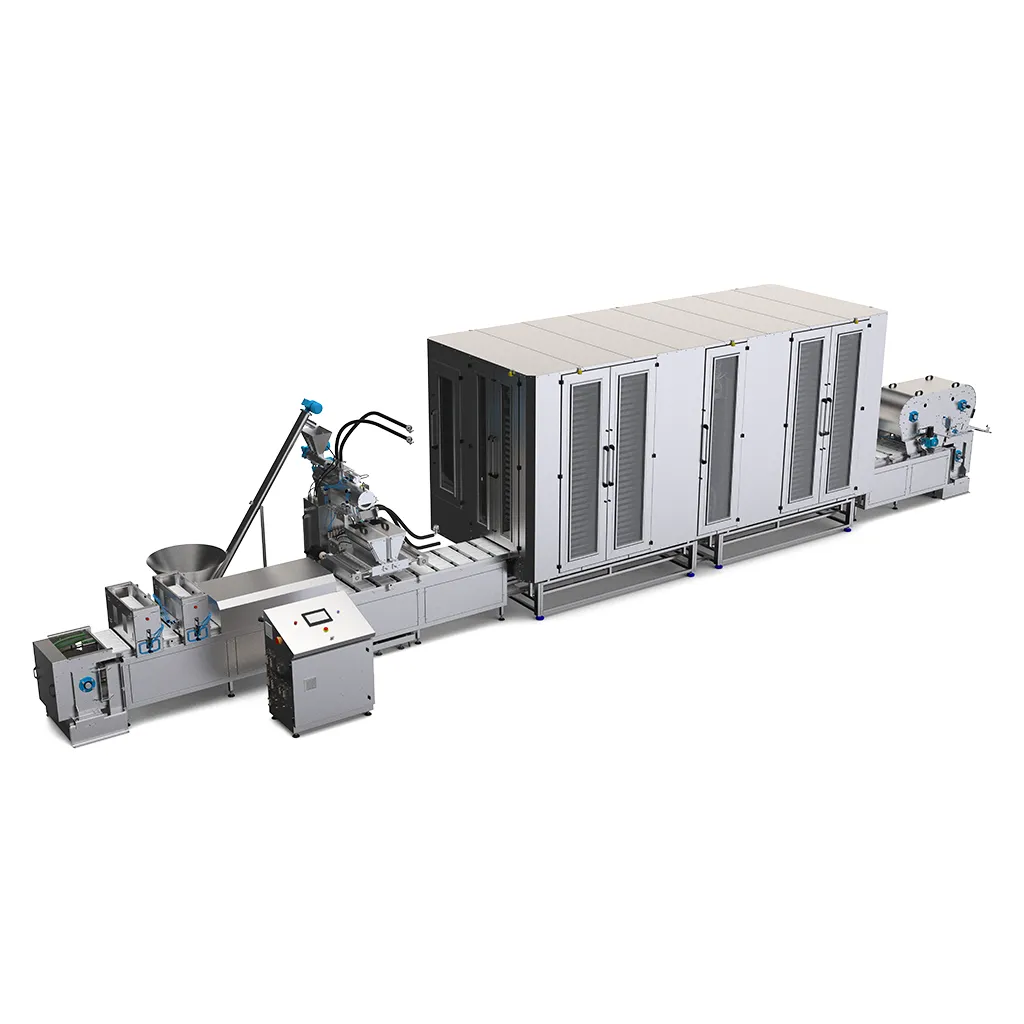 SML500

Select by requirement
Match the production requirement to one machine. Each row maps to a single model; no machine carries two roles.
| Requirement | Select |
|---|---|
| 50–100 kg/h, 175 × 275 mm molds, workshop scale | Mini Chocolate Molding Line (MML100) |
| 200–500 kg/h, 175 × 275 mm molds, manual demolding by operator | Semi-Automatic Chocolate Molding Machine |
| 300–500 kg/h continuous, 205 × 600 mm molds, fully automatic, 600+ mold inventory | SML500 (this page) |
| Hollow shell filled in a separate later step | Shell-then-fill line (different product family) |
SML500 vs MML100: throughput and automation decide
SML500 — industrial volume, fully automatic. Continuous 300–500 kg/h on 205 × 600 mm polycarbonate molds, minimum 600 molds in circulation, camera-and-sensor mold inspection with automatic rejection, IR mold-temperature gate, elevator cooling tunnel, demolding station. All variables on the HMI; no mechanical adjustment for changeover. Sized for contract manufacturers, private-label producers, and integrated confectionery plants running long shifts on a small set of recipes. Below ~200 kg/h, the automation overhead is wasted and the line is over-specified for the actual order book.
MML100 mini molding line — workshop volume, fully automatic with integrated demolding. 50–100 kg/h on 175 × 275 mm polycarbonate molds, minimum 150 in the full circulation loop (108 inside the elevator tunnel). 380 V three-phase, 10.2 kW. No camera-and-sensor mold inspection, no IR mold-temperature gate — the mini-line scale doesn't justify those gates. Right size for chocolatiers, R&D departments, and small private-label runs where the SML500 would sit idle most of the day. Above ~200 kg/h continuous, the MML100 is at its capacity ceiling and a second shift cannot fix it — the SML500 is the upgrade, not a larger MML100.
| Property | SML500 High-Capacity Line | MML100 Mini Line |
|---|---|---|
| Production capacity | 300–500 kg/h continuous | 50–100 kg/h |
| Automation | Fully automatic, HMI-only changeover | Fully automatic with integrated demolding; operator involvement at line setup |
| Mold inspection & rejection | Camera plus sensors, automatic rejection | Not provided |
| Mold temperature gate | IR sensor skips out-of-range molds without stopping | Not provided |
| Mold size | 205 × 600 mm polycarbonate (green or blue only) | 175 × 275 mm polycarbonate |
| Mold count minimum | 600 in circulation | 150 in full circulation loop (108 in elevator tunnel) |
| Power | 380 V three-phase, 25 kW | 380 V three-phase, 10.2 kW |
| Right buyer | Contract manufacturer, private-label, integrated plant | Chocolatier, R&D, small private-label runs |
| Eliminates if… | Order book is below ~200 kg/h continuous — automation is over-specified | Order book is above ~200 kg/h continuous — capacity ceiling cannot be lifted by adding shifts |
One-shot depositor or shell-then-fill: not interchangeable
The SML500 deposits in one shot: chocolate shell and filling are extruded together through concentric nozzles and set as a single unit. Fast, mechanically simple, accurate for fat-based fillings with smooth or semi-liquid texture. It cannot produce a hollow shell that is separately filled afterwards. Products that need a thin chocolate shell with a liquid center (high-fluidity ganache, alcohol-based fillings, very high filling-to-shell ratio), or layered fillings deposited in sequence, require shell-then-fill architecture — a separate line family, not the SML500. Fillings with crunchy inclusions (crushed nuts, cookie pieces, rice crisps) belong on neither: particulate material disturbs the one-shot cut-off and cannot be cleanly deposited through the shell-then-fill nozzle either.
Mold and inspection requirements
Mold size is fixed at 205 × 600 mm polycarbonate. Mold colour must be green or blue — transparent molds transmit light through the cavities and defeat the camera inspection, dropping rejection reliability to a level the line will not run safely against. Minimum 600 molds in circulation; below this number, gaps appear on the main conveyor that the line cannot fill at production speed, and continuous operation breaks down regardless of how the depositor is set. The IR sensor under the depositor reads each mold's surface temperature on arrival; molds outside the depositing window are passed through unfilled — depositing is skipped for that mold only and the line keeps running. Without the camera and IR gates, off-spec molds either contaminate output or cause depositing failures that stop the line entirely.
What the SML500 is not
Warranty and Lead Time
The SML500 carries a 1-year warranty against manufacturing and construction defects. Lead time is 3–4 months from order, as depositor configuration, cooling-tunnel length, inspection options, and utility integration are built into the line at manufacture.
Model Specifications
SML500 High-Capacity Chocolate Molding Line – Technical Features
Role: fully automatic industrial molding of plain and one-shot center-filled chocolates at 300–500 kg/h, with camera mold inspection and IR temperature gating. Switch to the MML100 below ~200 kg/h; use a shell-then-fill line for hollow shells with separate liquid centres. 205 × 600 mm green or blue polycarbonate molds, minimum 600 in circulation. 380 V three-phase, 25 kW.
Price Contact us for pricing
Export packaging is not included in the base price.
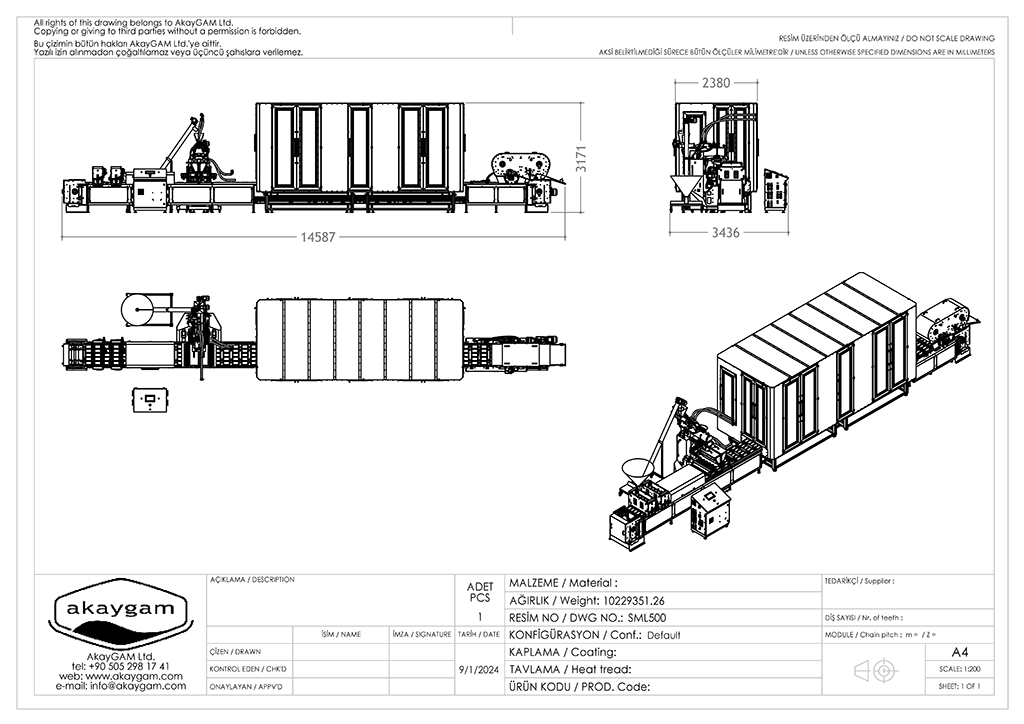
SML500 Chocolate Molding Line – Technical Drawing
Related equipment
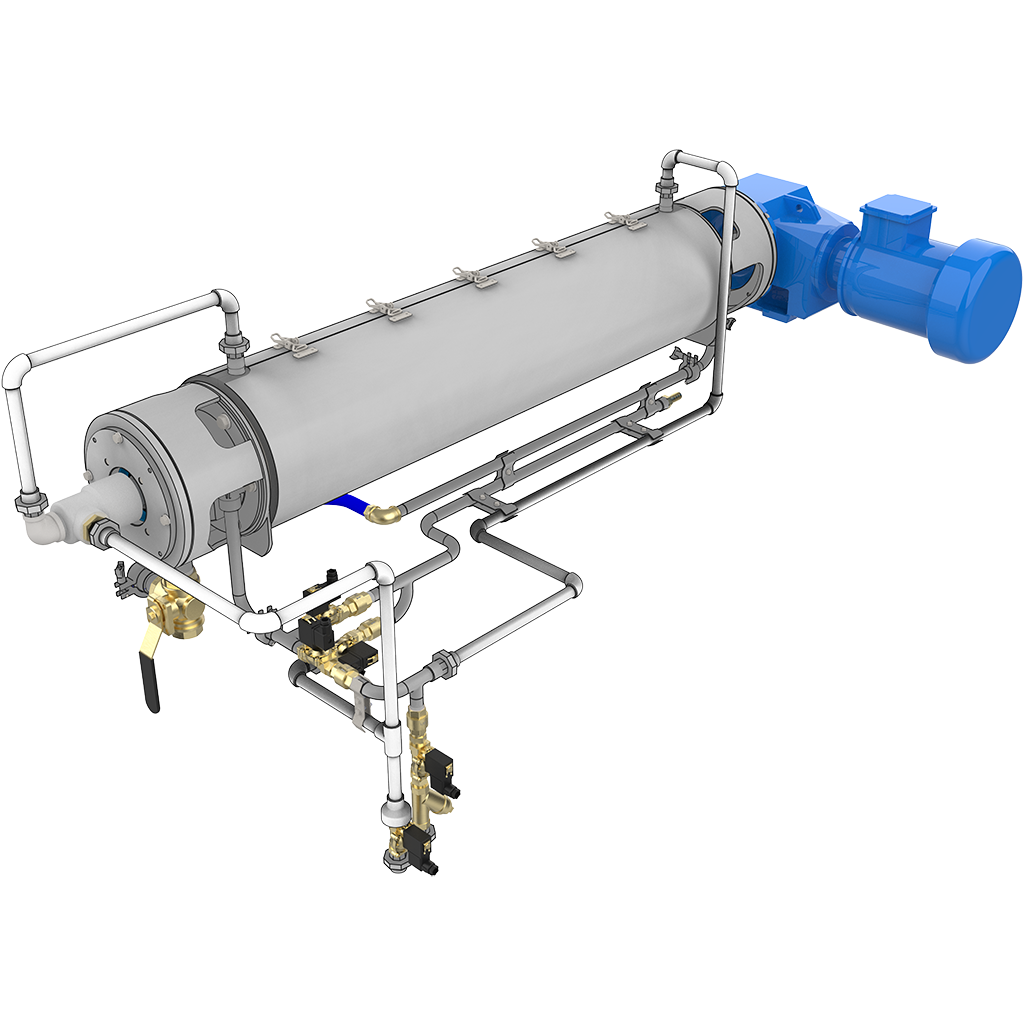
The SML500 needs tempered chocolate at the depositor inlet. Minimum upstream chain: ball mill refiner → chocolate storage tank → tempering machine → 3-way valve at the temperer outlet → SML500. The tempering machine must be a continuous tempering machine — a wheel-type temperer empties between cycles and cannot feed the SML500 depositor through a shift. A decrystallization tube sits on the bypass leg of the 3-way valve, parallel to the SML500 and not downstream of it — it reheats tempered chocolate returning to the storage tank when the depositor pauses, so the temperer keeps receiving consistent inlet conditions over a long shift. For one-shot center-filled products, a second hopper on the SML500 carries the filling stream into the second concentric nozzle. The MML100 mini molding line is the smaller alternative when the order book is below ~200 kg/h.


Frequently Asked Questions
Answers to common questions about the AkayGAM SML500 high-capacity chocolate molding line.
SML500 or MML100 — which molding line?
Throughput and mold size decide:
Picking the SML500 for workshop volume wastes the automation overhead — camera inspection and IR gate are over-specified for a small mold set. Picking the MML100 for industrial volume hits its capacity ceiling within the first shift; a second shift cannot lift it past 100 kg/h.
What products can the SML500 produce — and what can't it?
What is the production capacity of the SML500?
300–500 kg/h, depending on shot weight, depositor cycle time, and conveyor speed. Heavier products at the upper end of the shot range run nearer 500 kg/h; small praline cavities at fast cycle times run nearer 300 kg/h. Mold count below the 600-piece minimum will not sustain continuous operation regardless of capacity setting.
Which mold size is supported, and what mold colour is required?
205 × 600 mm polycarbonate molds. Green or blue only — transparent molds defeat the camera inspection by transmitting light through the cavities, dropping rejection reliability. Minimum 600 molds for continuous operation; fewer creates gaps on the main conveyor that the line cannot fill at production speed.
How does the line decide which molds to deposit into?
Two checks before each mold reaches the depositor:
Why elevator cooling tunnel instead of horizontal?
Floor-space efficiency. An elevator tunnel routes molds vertically through the cooling stack, reaching the same residence time as a horizontal tunnel in a fraction of the floor length. The SML500 fits installations where a horizontal-tunnel line would not. Plants with abundant floor length and a preference for horizontal cooling should ask about our horizontal-tunnel molding line family — separate product, not the SML500.
Can the line run with crunchy inclusions in the filling?
No. The SML500 is one-shot — particulate inclusions (crushed nuts, cookie pieces, rice crisps) obstruct the dosing path and disturb the cut-off, degrading deposit weight accuracy within the first batch. Smooth and semi-liquid fillings only on this line. Products with crunchy inclusions belong on a different forming method.
What utilities are required?
380 V three-phase, total consumption around 25 kW. Compressed air supply for pneumatic devices on the line. Final utility schedule including air consumption and chiller water requirements is confirmed during quotation against the selected options.
What feeds the SML500 from upstream?
Tempered chocolate at the design inlet condition, supplied by a continuous tempering machine that draws from a chocolate storage tank (refining upstream of that). A wheel-type temperer cannot feed the SML500 depositor — it empties between cycles and breaks the line. A decrystallization tube on the tempering bypass leg keeps the storage tank stable when the depositor pauses; without it, every depositing pause cools the tank and the temperer loses inlet stability. For filled products, a second tempered chocolate or compatible filling stream feeds the second hopper on the SML500.
Do you provide installation, commissioning, and training?
Yes. Installation supervision, commissioning, and operator training are available remotely or on-site depending on project scope and location. Scope is fixed in the order; running the line on a one-shot product without commissioning verification of the depositing cycle and mold-temperature window is the most common cause of weight-accuracy issues in the first weeks of production.
What is the warranty and lead time on the SML500?
1 year against manufacturing and construction defects. Lead time is 3–4 months from order, as depositor configuration, cooling-tunnel length, inspection options, and utility integration are built into the line at manufacture.