
Chocolate Conching Machine (Batch Liquid Conche, VMC & HMC Series)
A batch liquid chocolate conche conditions refined chocolate mass: removes residual moisture and volatile acids, redistributes cocoa butter, stabilizes viscosity. It sits after the ball mill refiner and before storage, tempering, or coating. Model selection is driven by three constraints in this order: batch size, production style, electrical supply. Selecting a model below the required batch volume forces multiple cycles per production run. Selecting a vertical model for single-recipe high-volume production caps daily output at 600 kg per batch; selecting the horizontal model for multi-recipe production forces full clean-out between every recipe and removes the throughput advantage.
Chocolate Conche Selection: First Decision
Match required batch size to nominal capacity. Loading above nominal capacity is not possible.
Multi-Recipe vs. Single-Recipe: Choose One
Multi-recipe production — VMC100 / VMC200 / VMC400 / VMC600. Vertical orbital agitation, caster-mounted, repositioned between batches, supports recipe changeovers. Typical conching cycle ~13 hours. Each batch remains isolated, so recipe switches happen at batch boundaries with a clean between incompatible types. Choose for artisan and daily production with multiple recipes.
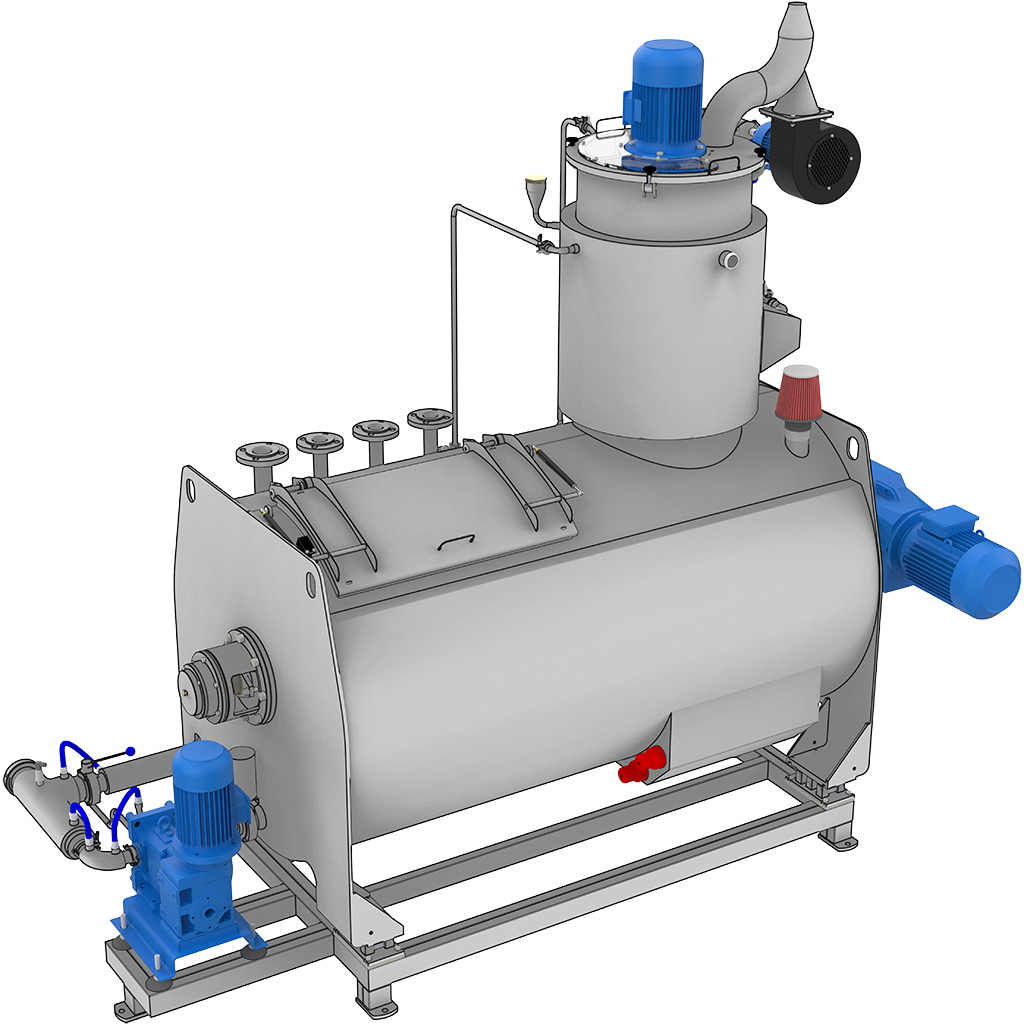
Single-recipe industrial production — HMC1000. Horizontal agitation with splashing disk and forced air extraction, fixed installation, lobe pump with sieve filter, load cells, closed-loop circulation or direct transfer to storage tank. Operator-controlled cycle time. The throughput advantage comes from running the same recipe continuously; introducing recipe changes forces full clean-out between every recipe and removes that advantage. Choose for single-recipe production at 1000 kg per batch.
Electrical Supply
220 V single-phase available: VMC100, VMC200, VMC400, VMC600. 380 V three-phase required: HMC1000 only. The 200 kg ceiling on single-phase facilities applies only to VMC100 and VMC200 (sole-supply models); VMC400 and VMC600 ship with single-phase or three-phase. If 1000 kg batches are required and only single-phase is installed, the supply must be upgraded — a transformer or converter is not specified for HMC1000.
Share
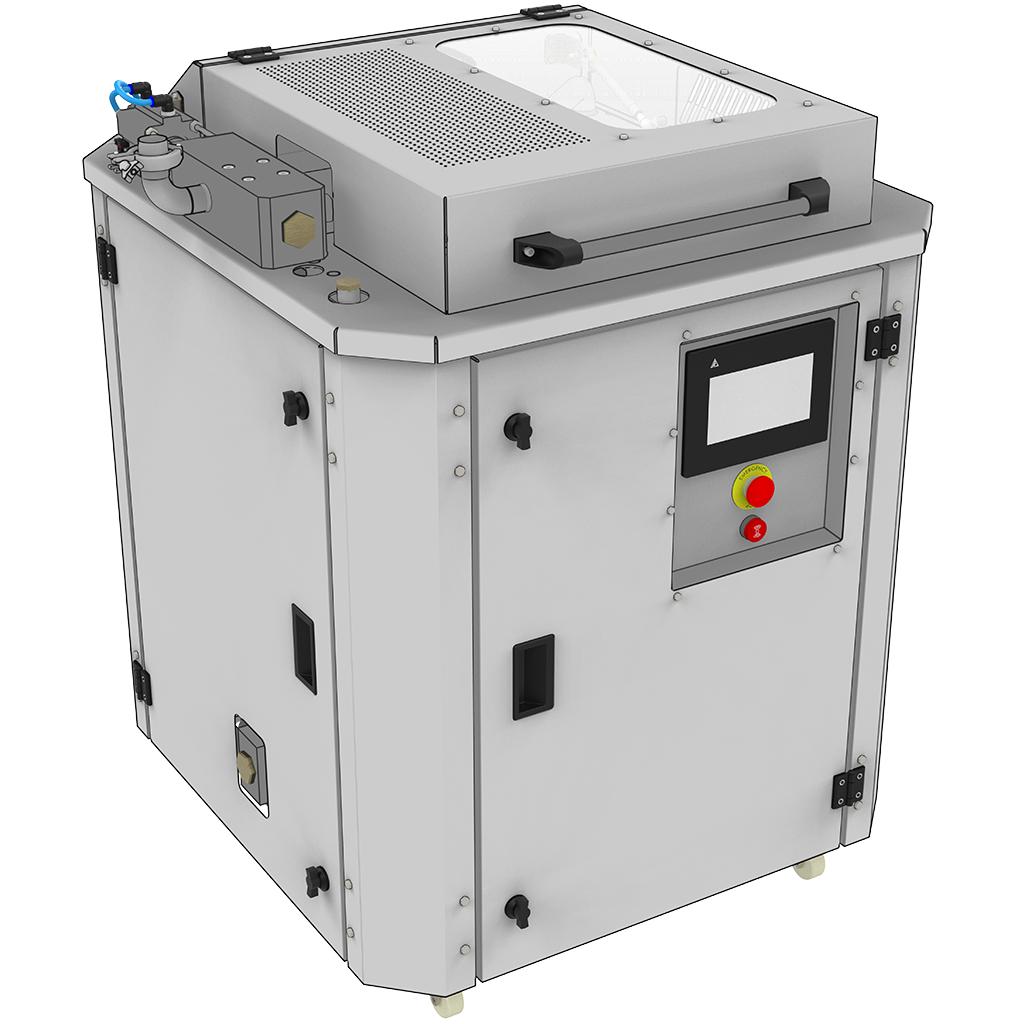 VMC100
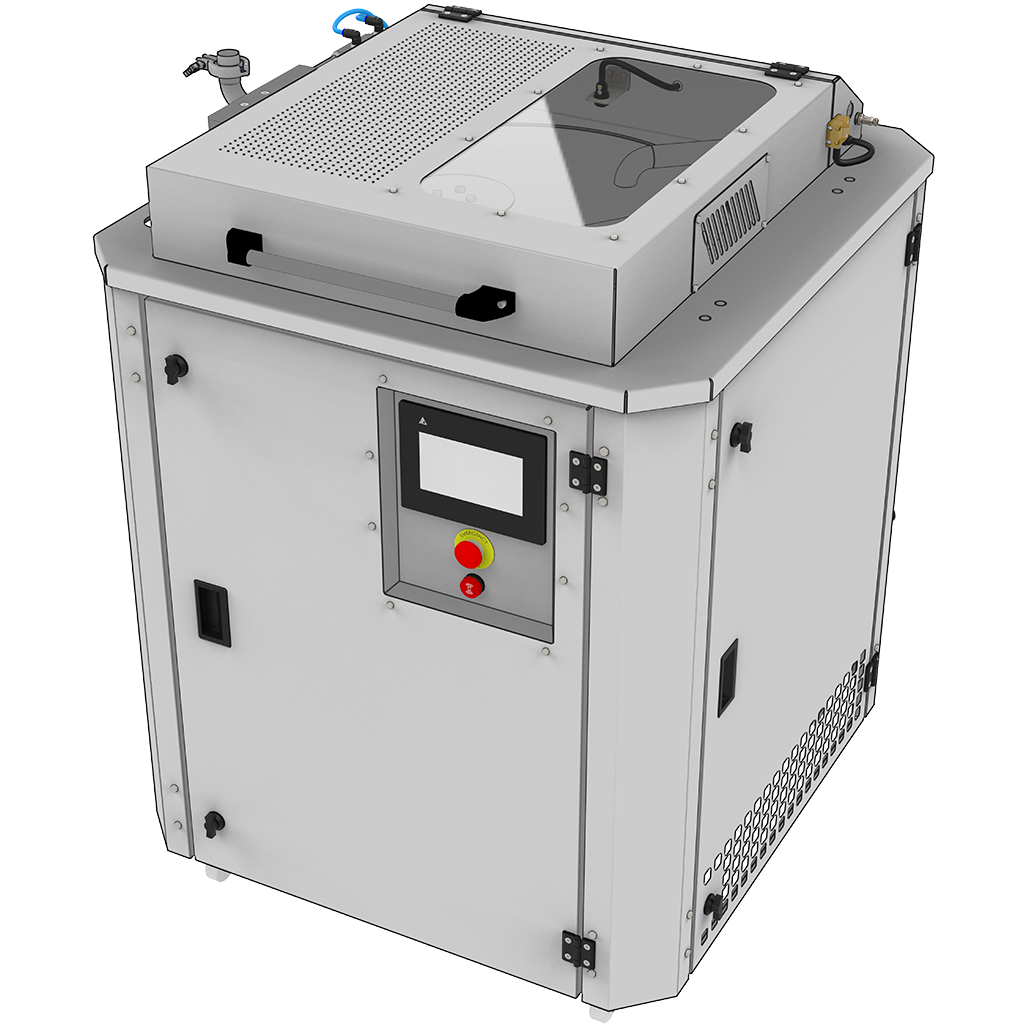 VMC200
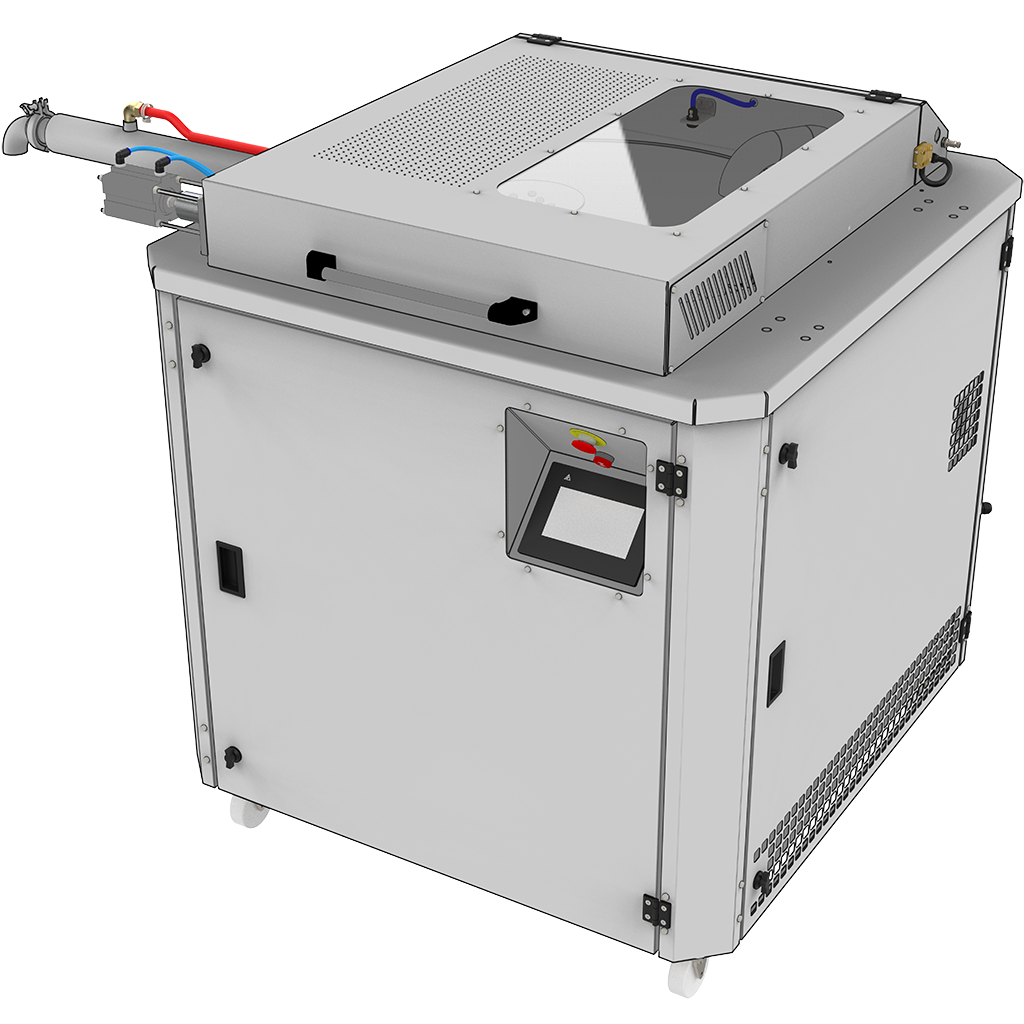 VMC400
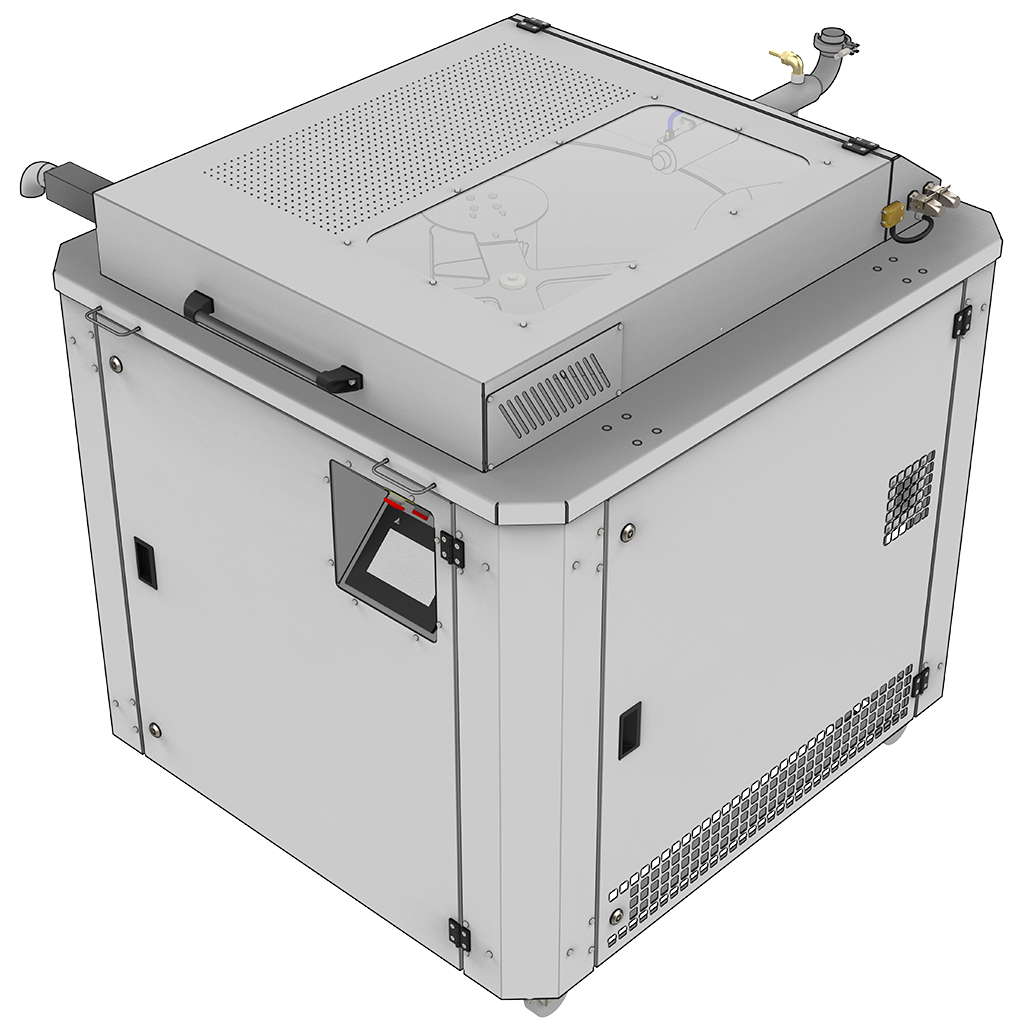 VMC600
 HMC1000
Model Range — Comparison
One row eliminates one model. Read the “Eliminates if…” column first.
| Model | Capacity | Type | Power | Supply | Process time | Eliminates if… |
|---|---|---|---|---|---|---|
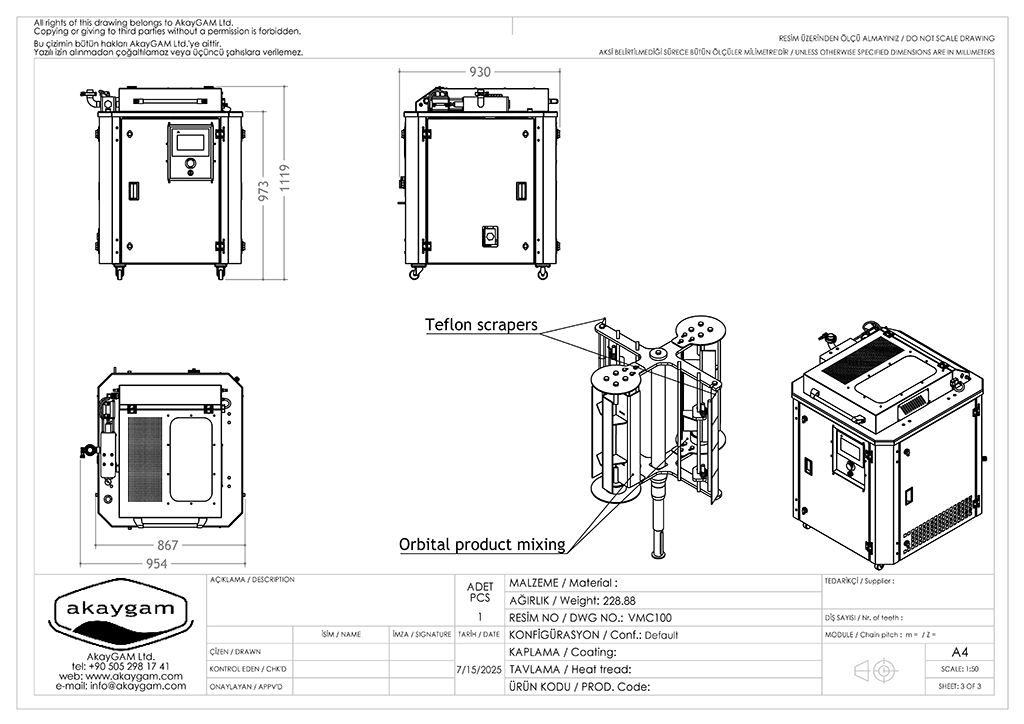
| VMC100 | 100 kg | Vertical orbital, gear pump | 3 kW | 220 V / 1-phase | ~13 h | Batch >100 kg |
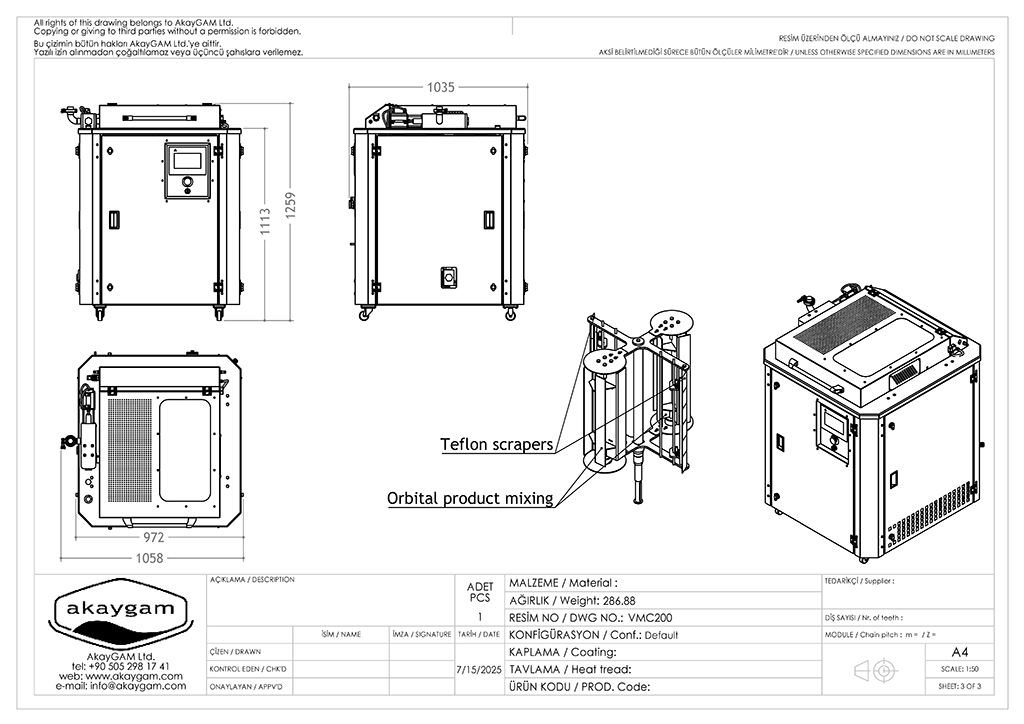
| VMC200 | 200 kg | Vertical orbital, gear pump | 4.5 kW | 220 V / 1-phase | ~13 h | Batch >200 kg (hard limit — no larger 220 V-only model exists) |
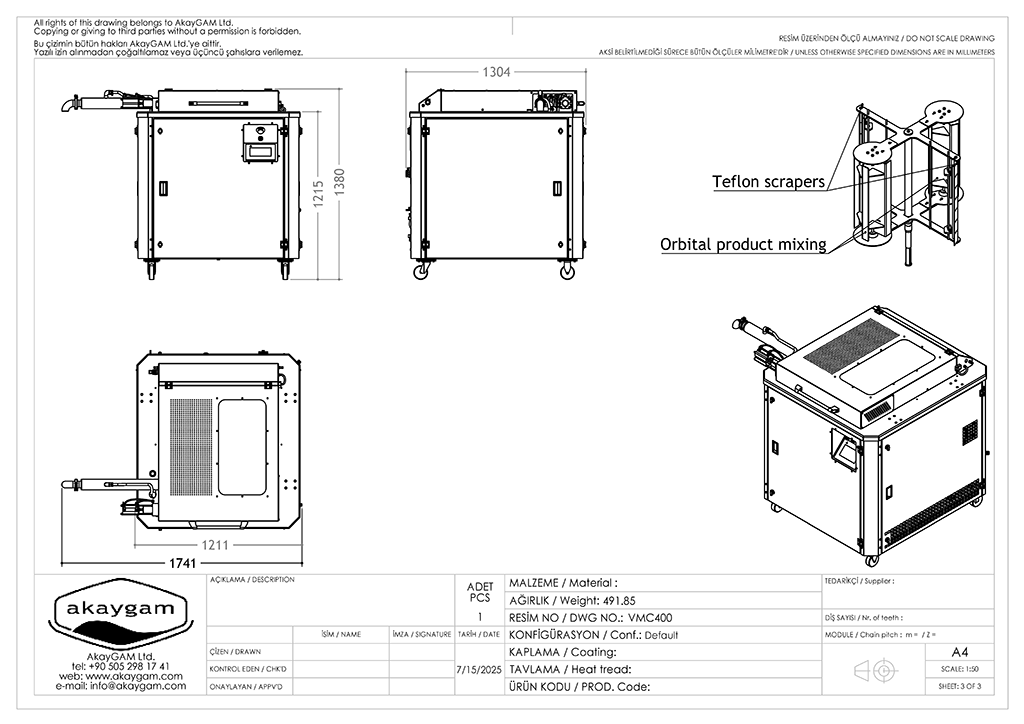
| VMC400 | 400 kg | Vertical orbital, gear pump | 5.2 kW | 220 V or 380 V | ~13 h | Batch >400 kg |
| VMC600 | 600 kg | Vertical orbital, gear pump | 5.2 kW | 220 V or 380 V | ~13 h | Batch >600 kg, or single-recipe production above 600 kg/day |
| HMC1000 | 1000 kg | Horizontal splashing, lobe pump + sieve filter, load cells | 18 kW | 380 V / 3-phase | Operator-controlled | Single-phase only, frequent recipe changes, or batch ≤600 kg |
Process constraints that apply to every model
Input must be already refined. Conching does not reduce particle size. Mass must enter at 18–25 µm from a ball mill refiner. Loading unrefined mass produces a coarse, gritty product — no setting on the conche corrects this.
Conching temperature is recipe-bound. Dark couverture: 60–80 °C. Milk chocolate: 45–55 °C — exceeding 55 °C triggers Maillard reactions and caramelization of milk solids. White chocolate: 45–55 °C — flavor compounds degrade above this range. Compound coatings (palm or palm kernel fat): 45–55 °C. Running above the recipe temperature increases browning and flavor degradation risk; running below it can reduce flavor development and moisture removal.
Bypass loop reheating. Chocolate returning from a tempering machine at crystallization temperature (~28–32 °C) must be reheated before re-entering the conche or storage tank. Direct re-entry causes localized crystallization and viscosity rise that destabilizes the next tempering cycle.
Working principle
Refined chocolate enters the heated vessel. Mechanical agitation continuously exposes the mass to air; a forced extraction circuit removes moisture vapor and volatile acids (primarily acetic acid from cocoa fermentation). PID-controlled water-jacket heating holds recipe temperature throughout the cycle. Cocoa butter redistributes around solid particles, viscosity stabilizes, and the suspension reaches a uniform rheological state.
Chocolate Conche Position in the production line
Upstream: ball mill refiner reduces particle size to 18–25 µm. Conching does not reduce particle size, so refining cannot be skipped or moved downstream.
Downstream: conditioned chocolate transfers to a storage tank for holding, or feeds directly to a tempering machine, enrober, or depositor. HMC1000 with load cells and lobe pump connects directly to storage or tempering. VMC models transfer via gear pump batch by batch.
Maintenance and Warranty
Water jacket treatment: Run the water jacket with 30% FDA-approved glycol. This prevents calcium scale and mud build-up, keeping the jacket clean and protecting the PID-controlled heaters from premature burnout across the long conching cycle. Plain water lets scale foul the jacket and shortens heater life.
Warranty & lead time: AkayGAM conching machines carry a 1-year warranty against manufacturing and construction defects. Lead time is 3–4 months from order, as units are built to the required capacity, voltage, and piping specification.
Model Specifications
Common to all models
Tab specifications below show only what differs between models or is optional.
VMC100 vertical batch liquid chocolate conche - technical features
Role: 100 kg batches for artisan producers and pilot plants. Move to VMC200 when required batch exceeds 100 kg.
Price 15.000,00 € (excl. VAT), EXW Istanbul
Export packaging is not included in the base price.
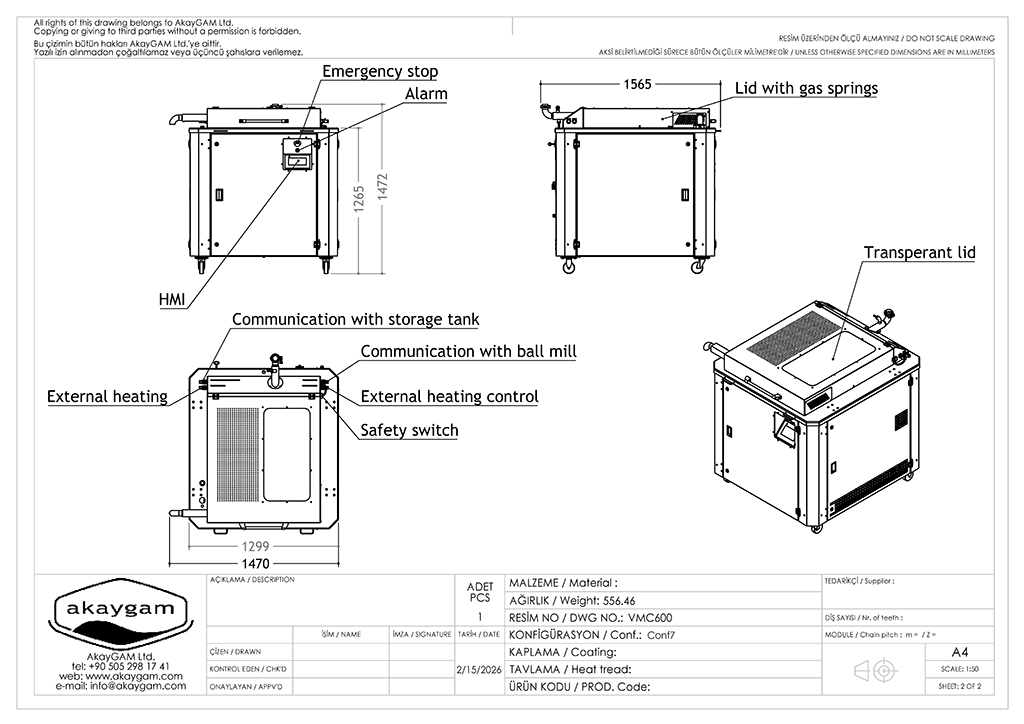
VMC100 technical drawing
VMC200 vertical batch liquid chocolate conche - technical features
Role: 200 kg batches on 220 V single-phase — last 220 V-only model in the range. Move to VMC400 when required batch exceeds 200 kg; the next step requires three-phase capability.
Price 17.000,00 € (excl. VAT), EXW Istanbul
Export packaging is not included in the base price.
VMC200 technical drawing
VMC400 vertical batch liquid chocolate conche - technical features
Role: 400 kg batches with dual electrical supply (220 V single-phase or 380 V three-phase). Move to VMC600 when required batch exceeds 400 kg.
Price 19.000,00 € (excl. VAT), EXW Istanbul
Export packaging is not included in the base price.
VMC400 technical drawing
VMC600 vertical batch liquid chocolate conche - technical features
Role: largest vertical model — 600 kg batches with dual electrical supply. Move to HMC1000 when required batch exceeds 600 kg. VMC600 suits multi-recipe production; choosing it for single-recipe high-volume production limits throughput because each batch remains isolated, while HMC1000 with closed-loop circulation runs the same recipe continuously.
Price 21.000,00 € (excl. VAT), EXW Istanbul
Export packaging is not included in the base price.
VMC600 technical drawing
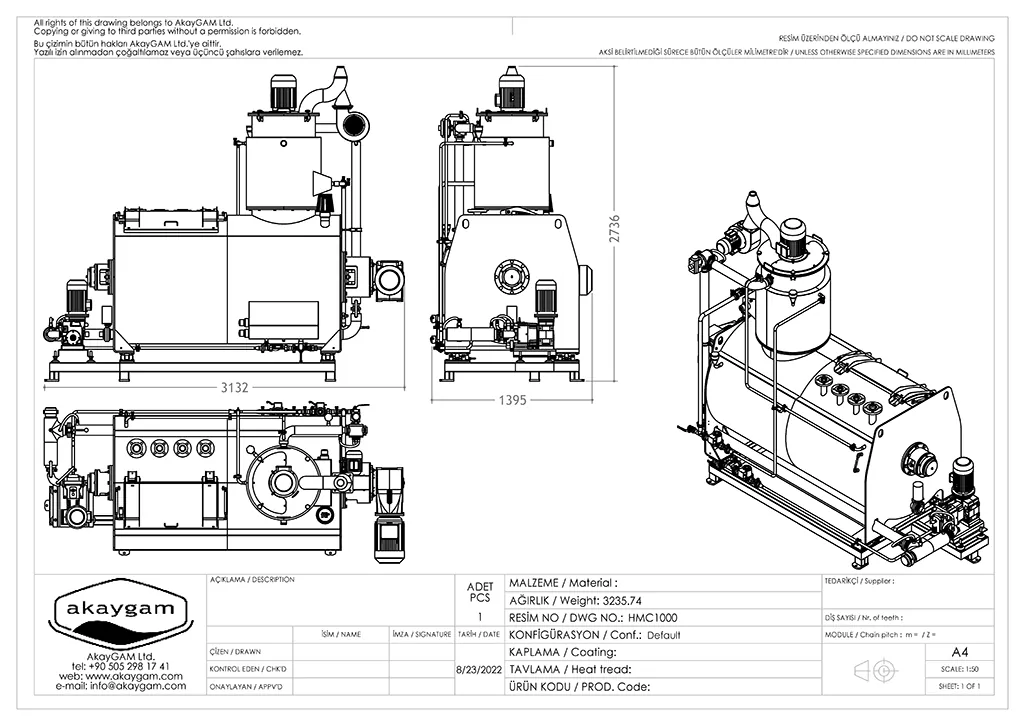
HMC1000 horizontal batch liquid chocolate conche - technical features
Role: 1000 kg batches in fixed industrial installations running a single recipe at high volume. Requires 380 V three-phase supply. Not justified if batch ≤600 kg — VMC600 covers that range. Unsuitable for production with frequent recipe changes; full clean-out between recipes is required and removes the throughput advantage.
Price 42.000,00 € (excl. VAT), EXW Istanbul
Export packaging is not included in the base price.
HMC1000 technical drawing
Related equipment
Conching does not reduce particle size. Mass must arrive already refined to 18–25 µm from a ball mill refiner. Loading unrefined mass produces a coarse, gritty product — no setting on the conche corrects this.
After conching, conditioned chocolate transfers to a storage tank for holding at process temperature, or feeds directly to a tempering machine, enrober, or depositor. When using a bypass loop from a tempering machine, returning chocolate must be reheated before re-entry — direct return at crystallization temperature causes localized crystallization and destabilizes the next tempering cycle.


Frequently Asked Questions
Answers to common questions about AkayGAM batch liquid chocolate conching machines.
What does a liquid chocolate conching machine do?
A batch liquid chocolate conche conditions already-refined chocolate mass: removes residual moisture and volatile acids — primarily acetic acid from cocoa fermentation — redistributes cocoa butter around solid particles, and stabilizes viscosity. It does not reduce particle size; that step is performed upstream by a ball mill refiner. Loading unrefined mass produces a coarse, gritty product — no setting on the conche corrects this.
What is the difference between a vertical and a horizontal chocolate conche?
The difference sets batch size limits and recipe flexibility:
Specifying a horizontal conche where recipe changes are frequent forces a full clean-out between every recipe, removing its throughput advantage entirely.
What is the typical conching time?
All VMC models run a typical conching cycle of ~13 hours, recipe dependent. Actual time varies with chocolate type, batch temperature, and agitation speed. The HMC1000 cycle is operator-controlled via circulation settings and adapts to batch requirements.
At what temperature should chocolate be conched?
Conching temperatures are recipe-bound. All VMC and HMC models hold the target with PID-controlled water-jacket heating:
Running above the recipe temperature increases browning and flavour degradation risk; running below it reduces flavour development and limits moisture removal.
Does a conching machine replace a ball mill refiner?
No. A ball mill refiner reduces particle size from several hundred micrometres to 18–25 µm. The conche stabilizes the refined mass — removes moisture and volatile acids, redistributes fat, adjusts viscosity. Running chocolate through a conche without prior refining does not reduce particle size. The correct sequence is: ball mill refiner → conche → storage tank or tempering machine.
Can the VMC conches handle multiple chocolate types in sequence?
Yes. VMC models are caster-mounted and designed for flexible production environments. Each model processes one batch at a time and can be repositioned between uses. A full clean between recipe changes is required when switching between incompatible types such as dark and white. For single-recipe high-volume production, the fixed HMC1000 with closed-loop circulation is more efficient — its throughput advantage disappears as soon as recipe changes are introduced.
Where does the conche sit in the chocolate production line?
The conche sits after the ball mill refiner and before the storage tank or tempering machine. Refined mass enters the conche as a liquid suspension at 18–25 µm. After conching, conditioned chocolate transfers to a storage tank for holding or feeds directly to a tempering machine, enrober, or depositor. When using a bypass loop, chocolate returning from a tempering machine at crystallization temperature must be reheated before re-entry to the conche or storage tank — direct return causes localized crystallization and destabilizes the next tempering cycle.
Why is conching required after ball milling?
Ball milling reduces particle size to 18–25 µm but does not fully remove volatile acids or residual moisture, and it does not redistribute cocoa butter or stabilize viscosity. Skipping the conching step typically leaves sharper acidity (primarily acetic acid from cocoa fermentation), less stable viscosity, and less developed flavor. Conching converts a refined but raw-tasting mass into a smooth, balanced finished chocolate — particularly important for dark couverture and milk chocolate, where flavor development matters commercially.
What maintenance and warranty do AkayGAM conching machines need?
Run the water jacket with 30% FDA-approved glycol to prevent calcium scale and mud build-up; plain water fouls the jacket and shortens heater life, burning out the PID-controlled heaters early over long conching cycles. Warranty: 1 year against manufacturing and construction defects. Lead time: 3–4 months, built to the required capacity, voltage, and piping specification.